
Up to RM1bil in green financing available to Sarawak SMEs
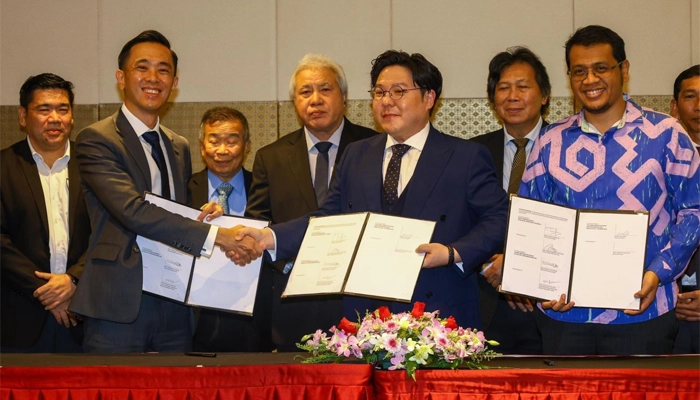
KUCHING: Green financing amounting to RM1bil will be available to Sarawak SMEs to adopt sustainable practices. This comes after a memorandum of understanding (MOU) was signed by InvestSarawak, an agency under the state International Trade and Investment Ministry, the UN Global Compact Network Malaysia and Brunei (UNGCMYB) and Alliance Bank here on Friday (Nov 10). Deputy Premier Datuk Amar Awang Tengah Ali Hasan said the MOU would extend RM1bil in green financing for Sarawakian SMEs in sustainable-trade readiness and business resiliency towards environmental, social and governance (ESG) compliance.
Sarawak Budget: RM7 million for InvestSarawak 2023 to boost state’s economy
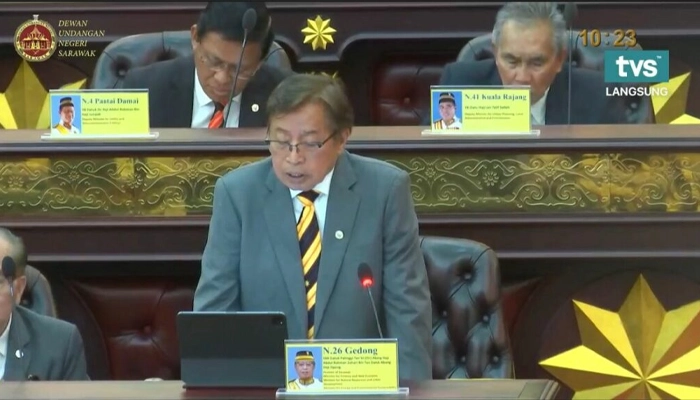
KUCHING, Nov 21: The Sarawak government remains committed to creating an ideal climate for investment through attractive policies and initiatives to shore up the confidence of both local and foreign investors. As such, a total of RM7 million has been allocated for the established InvestSarawak, an entity to attract Foreign Direct Investments (FDI) into the state. Finance and New Economy Minister, Datuk Patinggi Tan Sri Abang Johari Tun Openg said the entity is to spearhead new directions by driving in local and foreign investors to uplift the state’s economy. “In this respect, we have established InvestSarawak to promote Sarawak globally towards attracting foreign direct investment,” he said when tabling the Sarawak Budget 2023 at the Sarawak Legislative Assembly (DUN) Sitting today. On another note, the Premier also highlighted that the state will continue to provide platforms to assist young entrepreneurs to recover their businesses post-pandemic. “Various initiatives will continue to be implemented under the 2023 budget that ensures business continuity, among others, provision of soft loans, interest subsidies, financial assistance for start-ups, product development, capacity building, e-Commerce, and promotion and marketing,” he said. Among them are the Special Relief Fund, Targeted Relief & Recovery Facility (TRRF), and Penjana Tourism Fund (PTF) with an allocation of RM18 million while Skim Kredit Mikro Sarawak and Small and Medium Industries Loan Scheme (SPIKS) were granted RM14 million. – TVS
23 European Union Delegates Arrived Safely in Sarawak
Abang Johari (2nd right) at the launch of InvestSarawak while (from left) Ong, Awang Tengah and Julaihi look on. Photo: Mohd Alif Noni KUCHING: The establishment of InvestSarawak is a pivotal initiative by the Sarawak government to facilitate the ease of doing business in the state. Deputy Premier Datuk Amar Awang Tengah Ali Hasan said InvestSarawak is a one-stop centre (OSC) that aims to transform the investment landscape, increase trade and talent attraction for Sarawak. “InvestSarawak will play a key role serving as facilitator and adviser to provide invaluable local insights to all investors, both foreign and domestic. “They are also under the purview of my ministry, which is the Ministry of International Trade, Industry and Investment (MINTRED),” he said in his speech during the launching of InvestSarawak and EU Business Day 2024 networking dinner here last night (Feb 14). Invest Sarawak is the state’s investment and trade agency that will play the role of the first point of contact for all investors. In addition, it will act as the key facilitator to all investors across sectors in the development, applications and approvals for investment projects in Sarawak. Touching on the programme, Awang Tengah described it as a good effort to gather local and global thought leaders under one roof, adding that the forum held attracted over 300 participants from more than 100 companies from the European Union (EU). “Sarawak’s unique offerings and Europe’s diverse markets offer huge potentials for mutually beneficial partnerships both in investment and trade. “For the past decade, there were 19 EU investments in Sarawak, specifically from the Netherlands, Belgium and Germany, totalling RM10.66 billion in sectors such as electric and electronic (E&E), basic metal and petroleum products,” he said. Present at the launch were Premier Datuk Patinggi Tan Sri Abang Johari Tun Openg, Deputy Premier Datuk Amar Dr Sim Kui Hian, Ambassador of the EU to Malaysia Michalis Rokas, Minister of Women, Early Childhood, Community Wellbeing Development Datuk Seri Fatimah Abdullah, Utility and Telecommunication Minister Datuk Seri Julaihi Narawi, State Secretary Datuk Amar Abu Bakar Marzuki and InvestSarawak chief executive officer Timothy Ong.
Sarawak keen to work with EU in tackling climate change
Sarawak Premier Tan Sri Abang Johari Tun Openg (third left) launching InvestSarawak at the EU-Malaysia Business Day networking dinner in Kuching on Wednesday (Feb 14) night. – ZULAZHAR SHEBLEE/The Star KUCHING: Sarawak is keen to work with the European Union (EU) on mitigating climate change, says Tan Sri Abang Johari Tun Openg. The Premier said the EU had experience and technology while Sarawak’s strength was in its natural resources and renewable energy. “Although we are a small state, we feel we have the responsibility to assist in addressing climate change and reducing carbon emissions. “You are welcome to explore which areas you can collaborate with us on this and together we can help the world,” he said at the EU-Malaysia Business Day networking dinner here on Wednesday (Feb 14) night. Abang Johari said other potential areas of collaboration were in digitalisation and education. “Perhaps we can send our students to study in Europe,” he said. Abang Johari also launched InvestSarawak, the state’s investment and trade agency, at the same event. InvestSarawak will serve as a one-stop centre and first point of contact for all investors in the state. It will be the key facilitator for investors in the development, applications and approvals for investment projects in Sarawak, besides improving the ease of doing business. Deputy Premier Datuk Amar Awang Tengah Ali Hasan said InvestSarawak was a pivotal initiative which aimed to transform the investment landscape, increase trade and improve talent attraction in the state. “It will play a key role serving as facilitator and adviser to provide invaluable local insights to all investors, both foreign and domestic,” he said.
Sarawak’s energy transition: Navigating the technological frontier for sustainable progress
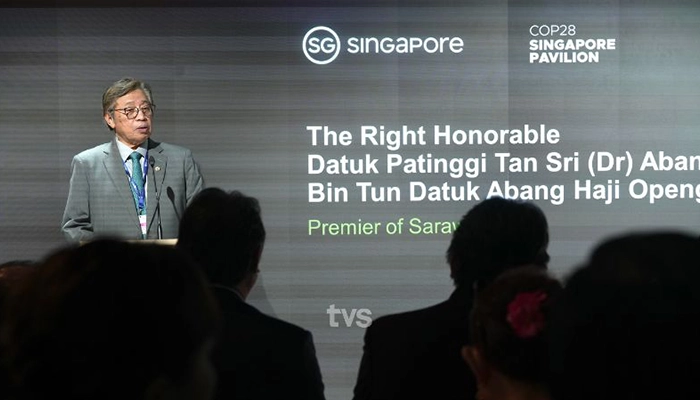
DUBAI, Dec 5: The synergy between technology and resources is crucial for Sarawak’s energy goals, emphasising the strategic utilisation of technological advancements and efficient resource management. Premier of Sarawak, Datuk Patinggi Tan Sri Abang Johari Tun Openg, emphasizes the significance of this transition as he highlights Sarawak’s technological aspirations focus on hydrogen production, a crucial component in the renewable energy landscape. “It’s a question of technology – harnessing the full spectrum of available resources. For instants three years ago, 1kg of hydrogen, requires 60kw of power. “But now we are working with Petronas, in doing our research, it can come down to 38kw,” he told this to reporter when visiting the Malaysian Pavilion after witnessing a Memorandum of Understanding between InvestSarawak and Surbana Jurong Pte Ltd in conjunction with the United Nation Climate Change Conference (COP28) in Dubai. This achievement is attributed to cutting-edge technology, particularly the incorporation of a new membrane in the electrolysis process. Abang Johari expresses optimism for significant cost reductions in hydrogen production over the next five years, anticipating a decrease in power costs. This move positions hydrogen as a more economical and environmentally friendly energy source. Sarawak’s commitment to incorporating hydrogen into its energy portfolio is evident in ongoing public transport initiatives within the region. “The conversion of H2O into hydrogen and oxygen is fueling public transport, with ongoing tests of Autonomous Rail Rapid Transit (ART) and buses powered by hydrogen,” he said. This transition to hydrogen-powered transportation not only signifies a significant step towards reducing carbon emissions but also underscores Sarawak’s commitment to embracing innovative solutions for a sustainable future. In tandem with technological advancements in hydrogen production, Sarawak is diversifying its energy sources. A pioneering approach involves the utilization of wood pallets as a biomass power source, adding a new dimension to Sarawak’s energy matrix and ensuring a diversified and resilient power supply. Abang Johari added that the state is actively involved in reforestation efforts, creating carbon sinks through the replanting of forests. This dual approach, combining technological innovation and environmental conservation, positions Sarawak at the forefront of sustainable energy transitions. – TVS
EU official praises green energy push by Malaysia’s Sarawak
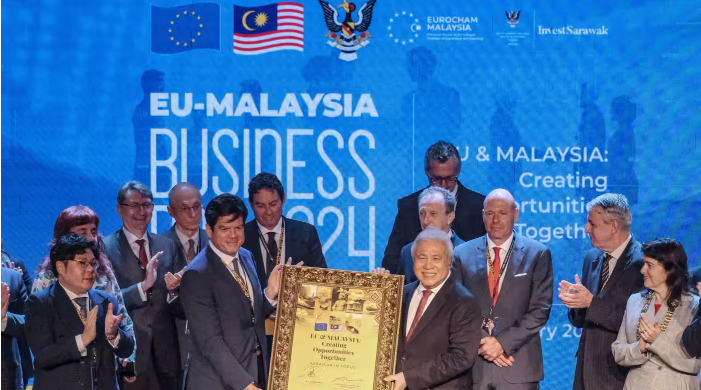
Bloc commits to mobilize $10.8bn for ASEAN sustainable projects Six major ports function as crucial transhipment hubs that play integral roles in the state’s supply chain by NURUL SUHAIDI KUCHING, Malaysia — Sarawak, a resource-rich state in Malaysia with an ambitioussustainable energy agenda, is drawing interest from the European Union, but the 27-nation group’s top official in the country says the bloc needs new cooperativemechanisms for its companies to take advantage of the opportunity. “We have seen the opportunities and the vision of the state, bringing in hydrogen,sustainable transition to green energy and energy transition,” Michalis Rokas, the EUambassador to Malaysia, said in a speech at the EU-Malaysia Business Day 2024 eventheld on Feb. 14 in Kuching, the capital of Sarawak, which is located on the island ofBorneo.Malaysia is the EU’s third largest trading partner in ASEAN, while the EU is the fourthlargest destination for Malaysian exports. The EU is also the second largest source offoreign direct investment for Malaysia at 25.2 billion euros in 2022. Still, Rokas acknowledged the limited presence of European businesses in Sarawak. Tobridge this gap, he proposed a “blending” model whereby European companies wouldtake the lead in strategic investments, while the EU would provide financial supportthrough grants, guarantees and concessional loans through the European InvestmentBank (EIB). This approach aims to de-risk projects and attract private capital,accelerating Sarawak’s green ambitions.Rokas also said the potential partnership aligns with the EU’s Indo-Pacific Strategy,which emphasizes fostering partnerships with regional countries on issues like climatechange and clean energy. Sarawak’s focus on developing hydrogen production,sustainable aviation fuel, and transitioning away from fossil fuels resonates with theEU’s own sustainability goals. The EIB has been active in Southeast Asia for over three decades, financing projects invarious sectors such as energy, transport, climate action and infrastructure. In 2022, itopened a regional representative office in Jakarta to further strengthen its engagementin Indonesia, Vietnam, Cambodia, Laos and the Philippines. Nikkei Asia understandsthat the bank has been attempting to operate in Malaysia since 2020. Its application ispending government approval for a framework agreement.Rokas also said during his speech that the EU and its 15 member states with a presencein Malaysia will be working on a plan to propose a Global Gateway flagship project inSarawak.Meanwhile, the state’s deputy premier Awang Tengah Ali Hassan welcomed thepotential partnership, highlighting the existing trade relationship between Sarawak andthe EU, which stood at 2.1 billion euros in 2022. He emphasized the state’s commitmentto renewable energy, with a target of generating at least 60% of its power from cleansources by 2030. Sarawak, abundant in oil, gas and timber, is the only Malaysian state with more than70% renewables in its energy mix, mainly from hydroelectric dams. It has threeoperational large-scale hydroelectric dams, with a fourth, Baleh, under construction.The total installed capacity of the operational large-scale hydroelectric dams in Sarawakis 3,452 megawatts. Once Baleh is completed, the total capacity will increase to 4,737MW.Last year, Sarawak announced plans to sell one gigawatt of renewable energy toSingapore via a 700km undersea cable by 2032.“We seek to establish a stronger connection between Sarawak and Europe,” Awang saidat the business event. “I hope this will serve as a venue to forming new networks andposing new paths which yield fruitful outcomes towards an inclusive economy.” Headded that Sarawak’s green push has led to collaborations with global players fromSouth Korea and Japan to develop the hydrogen industry in the state.Sarawak is already embarking on two major hydrogen production projects — withJapan’s Eneos and Sumitomo Corp. on one called H2ornbill, and South Korea’sSamsung Engineering, Posco and Lotte Chemical on another dubbed H2biscus — in theport town of Bintulu, where one of the world’s largest LNG complexes is located.The Sarawak state legislative assembly building and Sarawak River in Kuching, Malaysia. (Photo by Norman Goh)4/2/24, 2:01 PM EU official praises green energy push by Malaysia’s Sarawak – Nikkei Asiahttps://asia.nikkei.com/Business/Energy/EU-official-praises-green-energy-push-by-Malaysia-s-Sarawak 5/5Get our Asia daily briefing newslettersnewsletter@nikkeiasia.com RegisterThe two projects will have the potential to produce up to 238,000 tonnes of greenhydrogen annually, generating an estimated 2.4 billion ringgit to Sarawak’s grossdomestic product by 2030, according to Abang Johari, the state’s premier during hisannual new year address in January.Sarawak also boasts, according to the premier, ASEAN’s first integrated hydrogenproduction plant and refueling station, powering hydrogen buses in Kuching since 2018and a tram on a test basis beginning last year.Also, a third hyrdogen project is based in Rembus, near Kuching, for domestic use andis expected to be fully operational in 2025, according to state-linked company SEDCEnergy and the Sarawak Economic Planning Unit. On Monday, SEDC Energy signed anagreement with Gentari, a subsidiary Malaysia’s state energy conglomerate Petronas todevelop the Sarawak H2 Hub in Bintulu, according to a statement by Gentari.Total hydrogen industry investment in Sarawak is estimated to be worth at $4.2 billion,an SEDC Energy spokesperson told Nikkei Asia.Hydrogen produced in Sarawak is known as green hydrogen — produced via electrolysisand powered by renewable electricity from hydroelectric dams. Additionally, the state ispioneering the production of crude algae oil for sustainable aviation fuel usingmicroalgae.Timothy Ong, the chief executive of the newly established state investment promotionagency InvestSarawak said at a panel session that Sarawak is not only in competitionwith other regions of Malaysia, but with countries like Vietnam, Indonesia, Thailandand Singapore as well.“Although a lot of people come to Sarawak for renewable energy, I can comfortably tellyou today that we have more demand than available supply when it comes to renewableenergy,” Ong said. He added it is important for the state to understand that investmentbenefits must trickle down to the people of Sarawak and companies and not just remainin the hands of foreign or domestic investors.
China’s emissions, efficiency targets under threat after falling short in 2023
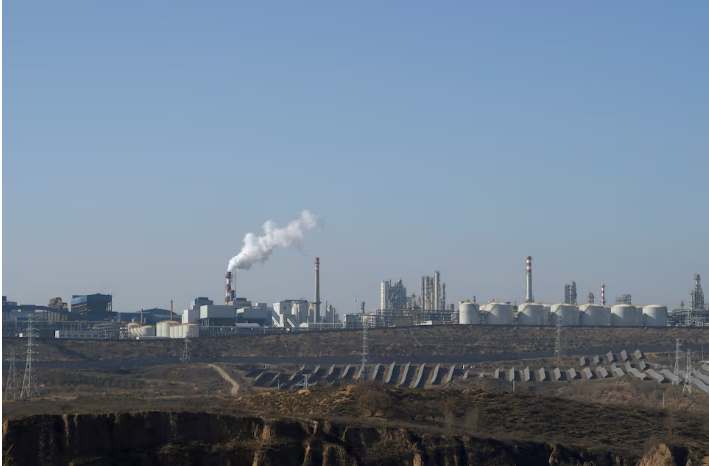
Bloc commits to mobilize $10.8bn for ASEAN sustainable projects SINGAPORE, March 12 (Reuters) – China is falling short on key targets for tackling climate-warming emissions, and analysts said Beijing’s credibility in global climate talks could be at risk unless it redoubles its efforts to get back on track. The Chinese government has rarely missed targets in the past. But now, driven primarily by energy security concerns, it has shown little political will to address the emissions gap, analysts said. China’s National Development and Reform Commission (NDRC), a planning agency, promised last week to “redouble efforts in energy conservation and carbon reduction” this year after it “fell short of expectations” in 2023. Analysts say it is well behind on its goal to slash energy intensity by 13.5% and carbon intensity by 18% between 2021 and 2025. The intensity rates – measuring how much energy is consumed and how much carbon dioxide emitted per unit of economic growth – are a key part of the country’s pledge to bring emissions to a peak before 2030 and to net zero by 2060. Keeping its targets within reach would require “concerted efforts across all sectors to bridge the gap”, said Jom Madan, senior research analyst with the consultancy Wood Mackenzie. But the planning commission set targets for 2024 that fall far short of what is needed. For energy intensity, the commission mandated only a 2.5% reduction. It set no new target for carbon intensity, and made no new moves to curb the use of coal – the most polluting fossil fuel. Madan predicted that China might “come close … but not quite achieve its targets” on energy efficiency. If the country misses its 2025 targets, it could raise doubts worldwide about its ability to rein in emissions. The country also risks a “serious loss of diplomatic credibility,” said lead analyst Lauri Myllyvirta of the Centre for Research on Energy and Clean Air. “China has long emphasised its ability to implement the country’s commitments, while criticising others for setting lofty targets,” he said. The NDRC did not respond to a request for comment. As the world’s biggest carbon polluter and second-largest economy, China has faced growing international pressure to show more climate ambition. It has resisted, arguing that it is already doing more than most fast-developing countries. China’s rising emissions account for 35% of the world’s annual total. On a per capita basis, the emissions level is 15% higher per capita than the OECD average, the International Energy Agency said last week. To meet its goals, Beijing should focus on efficiency improvements in industry and construction, and offer more financial support for companies to replace or retrofit outdated facilities, Madan said. Expanding the carbon market would also help, he added. NEW REALITY Officially, China’s energy intensity fell 0.5% in 2023, the country’s statistics bureau said last month, missing a 2% target. The gap would have been worse, but China last month removed non-fossil fuels such as nuclear and renewable energy from the equation to focus on tackling fossil fuels. China is applying this definition retroactively, Myllyvirta said. Without the change, the energy intensity calculation would have shown an increase of 0.5%. Myllyvirta estimated that China would need to cut energy intensity by 6% in 2024 and 2025 to meet the 2021-2025 target – far higher than the 2.5% goal set this week. Energy intensity might matter less in the future, however, said Ma Jun, director of the Beijing-based Institute of Public and Environmental Affairs. The change in how it is calculated “reflects a new reality” for China, in which economic growth is increasingly driven by the renewables sector, and fossil-fuel dependent industries will come under more pressure to boost efficiency, Ma said. “That means carbon intensity is going to matter more,” he said. Although China set no new targets for carbon intensity, the country’s economic growth implies the measure will fall about 3% this year, analysts said. However, after dropping 4.6% from 2020 to 2023, carbon intensity would need to drop about 7% this year and next to reach the 2025 goal, Myllyvirta said. Missing climate targets is unusual for China, which has made job promotions contingent on environmental progress to encourage workers and agencies to meet goals. In 2022, China’s corruption watchdog warned that some regions were providing fraudulent energy and carbon intensity figures that were overly positive. Pressure to comply with intensity targets also caused economic disruptions in 2010, with provinces cutting power supplies to energy-intensive industries and forcing homes to ration electricity. Without a major boost to its climate efforts now, “meeting the five-year intensity targets by 2025 will be very challenging,” said Li Shuo, director of the China Climate Hub at the Asia Society Policy Institute in Washington. “This year’s government work report certainly did not signal that level of decisiveness,” Shou said.
Germany launches green subsidies for industry
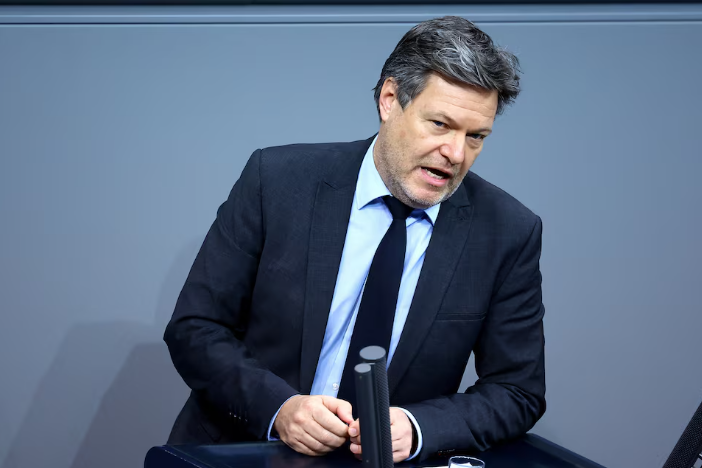
Bloc commits to mobilize $10.8bn for ASEAN sustainable projects BERLIN, March 12 (Reuters) – Germany on Tuesday launched a bidding process for subsidies to support energy-intensive firms switching to green production in a 4 billion euros ($4.37 billion) funding round, the economy ministry said on Tuesday. As part of Germany’s ambitions to become climate-neutral by 2045, Berlin plans to award companies in sectors such as steel, glass, paper and chemicals 15-year subsidies in return for reducing carbon emissions in production. The European Commission has approved the instrument where companies will be selected through a bidding process while competing over cutting emissions at the lowest cost. Through the so-called climate protection contracts, companies will be compensated for the extra costs of green production in industries where climate-friendly production processes cannot currently operate competitively. “Today is a good day for Germany as an industrial location, for climate protection and for sustainable jobs in our country,” said Economy Minister Robert Habeck. Berlin had originally planned to offer subsidies up to a mid double-digit billion euro sum, but the programme was put at risk by last year’s constitutional court ruling stopping the government from using some 60 billion euros of debt for climate protection projects. ($1 = 0.9148 euros)
Mark Carney sees ‘massive disconnect’ in green finance rhetoric
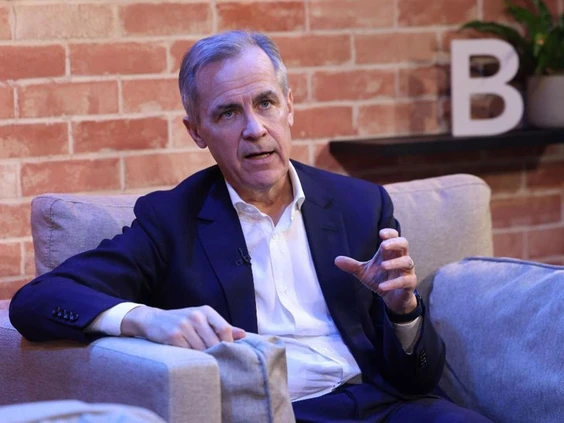
There’s plenty of money to be made by investing in the green energy transition, and financial professionals who say otherwise aren’t paying attention to the facts, according to Brookfield Asset Management Ltd. chair Mark Carney. There’s a “massive disconnect” between what some of the heavyweights of global finance are saying and the wave of money flowing into green projects, Carney, who’s a former governor of the Bank of Canada and Bank of England, said on Jan. 17 at the Bloomberg House in Davos, Switzerland. Article content Article content The comments follow a pivot in the messaging from bankers and asset managers, who have started using global summits to remind governments they’ll only back the green transition if there’s a profit to be made. It’s a mantra that’s being repeated at Davos. Speaking at a panel earlier on Wednesday, hedge fund billionaire and Bridgewater Associates founder Ray Dalio said “there’s this notion of ‘we should we should we should,’ but there’s the fact of who has the money, what is the size of it and what are their motivations.” Carney said that tracking green investment flows shows there’s enough motivation among the holders of capital to back the transition. In 2023, investors plowed 1.8 times as much into clean energy as they did into fossil fuels, according to the International Energy Agency. And the US$1.8 trillion that was spent globally on clean energy last year is expected to rise to US$4.5 trillion annually by the early 2030s, the IEA estimates. “That 1.8 trillion is going to make a very good returns,” Carney said. “Not every single investment, but the whole thing will make a very good investment elevator pitch.” Last year, many investors in traditional green assets lost money, as wind and solar producers were pummelled by higher interest rates. The S&P Global Clean Energy Index ended 2023 down more than 20 per cent, and has slipped a further 9.5 per cent in January. By comparison, the S&P 500 rose 24 per cent last year and is little changed so far in 2024. Carney said transition finance is an area in which investors stand to generate profits. “If you focus on going where the emissions are, you get paid for helping to solve climate change, and that’s now the reality,” he said. “You get paid more for doing that in the advanced world than you do in the developing, in emerging world, something we’ve got to fix with policy and finance, but because you get paid, you can do both: have a massive impact and, and make returns for your investors.” Carney, who served as governor of the Bank of England between 2013 and 2020, also commented on the U.K.’s green agenda, including a perceived retreat from climate policies by Prime Minister Rishi Sunak. “What I didn’t like — at least what it looked like to me — is that policies were being taken off the table without, certainly without replacements being put in and they were being done for purely political signalling purposes,” he said. “That’s what it appeared. And that isn’t the right environment to keep investment focused and flowing as much as it should. And it’s also, it’s just not good climate policy.” Article content Carney also touched on the outlook for the next few COP climate summits. What happens in Brazil, which will host the 30th Conference of the Parties to the United Nations Framework Convention on Climate Change in 2025, “is critical for the climate,” he said. Brazil’s ecological transformation plan “is significant in and of itself, but potentially very significant” in that “it can help create whole new financing flows around biodiversity, around nature at a scale that’s material,” he said. Carney also is United Nations Special Envoy for Climate Action and Finance and chair of Bloomberg Inc. Together with Michael R. Bloomberg, the founder of Bloomberg News parent Bloomberg LP, he co-chairs the Glasgow Financial Alliance for Net Zero.
The Netherlands announces subsidies for €998,330,000 for production of renewable hydrogen with a electrolysers
The Netherlands announces subsidies for €998,330,000 for production of renewable hydrogen with a electrolysers. Do you want to produce renewable hydrogen with an electrolyser? And do you have plans for this? Then you will soon be able to apply for a subsidy via the OWE scheme again. To help you prepare your application, we provide you with an overview of the changes compared to the OWE in 2023. What’s different in 2024? Requirements for the installation 🔥 What about we co-host a webinar? Let’s educate, captivate, and convert the hydrogen economy! Hydrogen Central is the global go-to online magazine for the hydrogen economy, we can help you host impactful webinars that become a global reference on your topic and are an evergreen source of leads. Click here to request more details Ranking of your application Your maximum subsidy amount Feasibility of your project New mandatory appendix: supply of renewable electricity purchase Realizing your installation