
Collaborate with Transport Ministry to encourage use of rivers to transport bulky goods, Lee to SRB
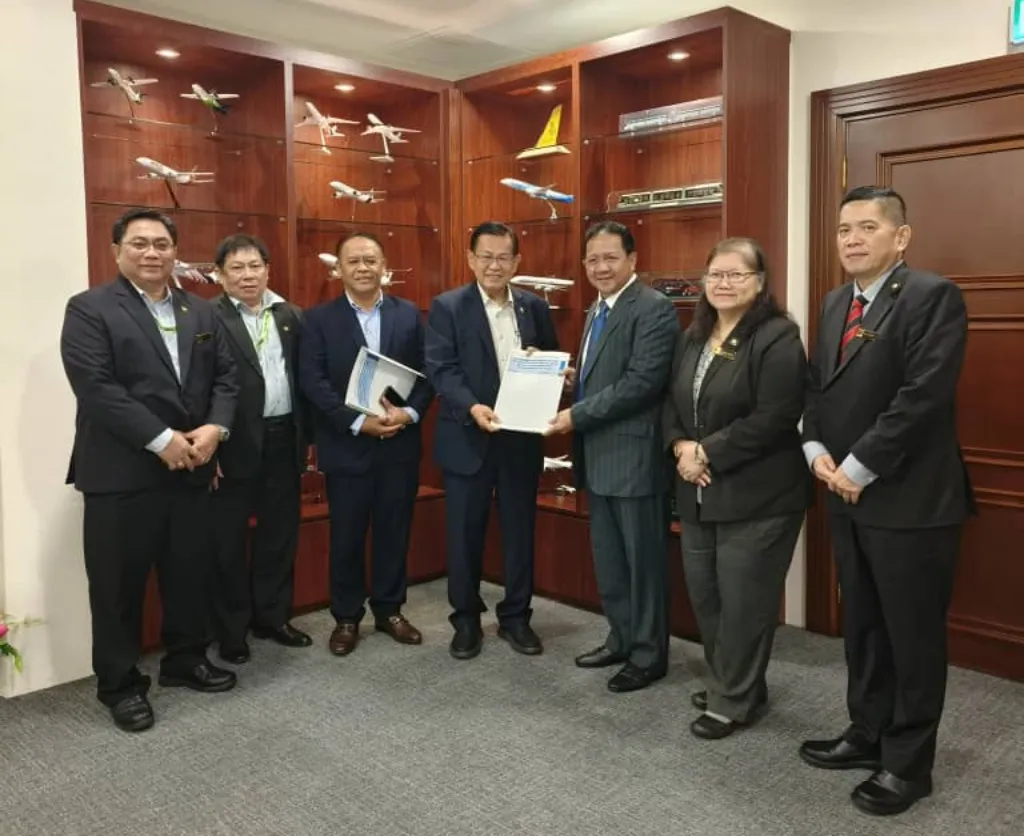
KUCHING (March 16): The Sarawak Rivers Board (SRB) is called to work alongside the state Transport Ministry to encourage the use of rivers for transportation of bulky goods instead of relying on roads, said its minister Dato Sri Lee Kim Shin. “If more heavy cargo can be transported via rivers, there will be less damage on our roads and this will also reduce traffic congestion and accidents,” he said. He said this during a courtesy call paid by newly-appointed SRB chairman Safiee Ahmad at Bangunan Baitulmakmur on Wednesday. Safiee was appointed to the post effective Jan 1 this year. Meanwhile, in a statement by the ministry, the courtesy call was to seek Lee’s advice on the ministry’s present and future plans, as well as the directions set for the board. During the meeting, Lee emphasised the ministry’s vision to develop and modernise Sarawak’s navigable commercial river system as part of the transportation and logistics network. He also requested Safiee work with SRB’s management to improve its organisational structure for more efficient and effective discharging of duties, responsibilities and service delivery. Also present were Deputy Minister of Transport (Riverine and Maritime) Datuk Henry Harry Jinep; the ministry’s permanent secretaries Dato Alice Jawan Empaling and Selamat Jati Yanjah; and ministry administrative officer Teo Swee Ann. Accompanying Safiee was SRB controller Lt Col (Rtd) Ding Tiew Wong.
China’s largest green hydrogen refuelling station is selling H2 at a seventh of the cost of the fuel in California
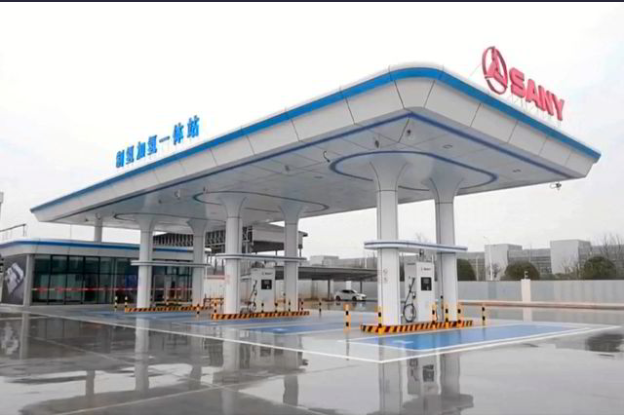
Sany claims its integrated production and fuelling complex supplies hydrogen at cost parity with diesel The largest integrated green hydrogen production and refuelling complex in China is able to supply hydrogen at 35 yuan per kilo ($4.86/kg), near cost parity with diesel, according to reporting by the Chinese newspaper Hunan Daily. Unlike the vast majority of China’s hydrogen refuelling stations, engineering firm Sany’s filling spot in the city of Changsha, Hunan province, which entered into a testing phase this week, produces its own H2 onsite via alkaline electrolysers, thus avoiding transportation costs. The electrolysers are capable of producing up to 180kg an hour, but the pumps can only dispense two tonnes per day — enough to fill up more than 100 vehicles. By way of comparison, hydrogen fuel is being sold at the pump elsewhere in China for 75 yuan per kilo — which is still cheaper than in other countries. The largest H2 fuel market in the US, California, is currently seeing pump prices of $36/kg — more than seven times higher than the Changsha facility — while in Germany, Europe’s largest market, current per-kg prices are between €12.85 and €15.75 ($14-16.60). If the price of H2 fuel in China drops below 30 yuan per kilogram, such as via future technology upgrades, “hydrogen fuel vehicles are more competitive than diesel vehicles” even without subsidies, said Wang Zhimin, director of Sany Hydrogen Energy Hydrogenation Equipment Institute. While hydrogen is often highlighted as a way to decarbonise heavy, long-haul transport, the switch from existing trucks will depend on logistics firms committing to high upfront costs or renting from emerging pay-to-use schemes such as a programme run by Shell in Germany. However, because diesel is already a relatively expensive fossil fuel, particularly in markets with higher taxes, some green hydrogen investors have suggested that the cost gap is easier to bridge than with cheap natural gas or even grey H2, potentially making it an easier sell for use in road transport than by industrial offtakers. But others have pointed out that most of the pump price at hydrogen refuelling sites is not based on the price of the H2 molecule, but the capex of the filling station as well as extra costs from compression and maintenance. While Sany appears to be leveraging economies of scale, the 37-million-yuan station will not be open to the public but rather supply fuel-cell trucks used in company operations — which could limit its utilisation rate. Similarly, although the engineering firm uses solar panels to power the electrolysers, it is unclear whether the complex has another source of renewable electricity or uses grid power for production during night.
Singapore leads Asian peers in attracting foreign investments: Report
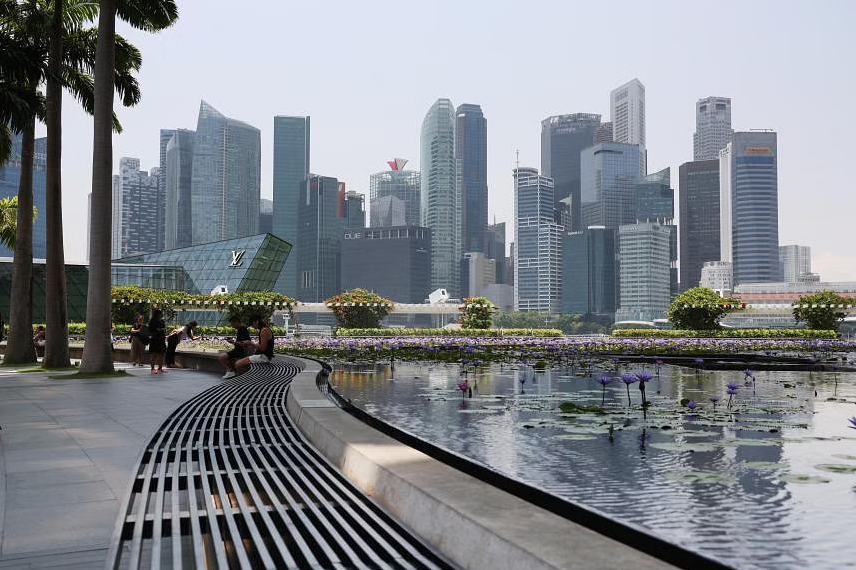
SINGAPORE – Singapore is the most attractive country in the region for foreign investments, but it falls behind some advanced economies in terms of environmentally friendly and socially inclusive growth, according to a new index. The Milken Institute’s Global Opportunity Index ranked Singapore first among its Asian neighbours in 2023, and 14th among the 130 countries studied globally – up four places from 2022. Hong Kong at 15th and Japan at one spot below were the other two Asian economies in the top 20 globally. Denmark came in first globally, with Sweden dropping to second, followed by Finland in third. The United States moved up one spot to fourth. Dr Maggie Switek, the Milken Institute’s senior director and the report’s lead author, told The Straits Times that Singapore’s climb up the league table was due to relatively strong economic growth. Its high position was also driven mainly by its strength in “business perception”, which measures the ease of doing business and the regulatory framework facilitating contract enforcement and dispute resolution. It also fared well in the “institutional framework” category, which assesses the extent to which a country’s institutions safeguard the rights of investors and the safety of their assets. The country led the way in the subcategories of investor rights and transparency. “It means that overall investment conditions remain strong, which is also reflected in Singapore’s capital inflows. The strength of investor rights coupled with its relatively low business constraints mean that investors should feel comfortable operating in Singapore,” Dr Switek said. Foreign direct investment (FDI) inflows to Singapore reached a record high of US$141.2 billion (S$189 billion) in 2022, up from US$131.1 billion in 2021, noted a United Nations report. This made the country the third-largest FDI recipient worldwide after the US and China. Singapore also accounted for almost two-thirds of flows to Asean countries. “However, the country could do better on its indicators related to environmentally friendly and socially inclusive growth, which are reflected in its relatively low ranking in ‘future environment for growth’,” said Dr Switek. Singapore scored below the average of advanced economies in the “economic fundamentals” category, which captured macroeconomic performance, workforce talent and efforts to create a resilient and sustainable economy and society. This was largely due to its relatively weak performance in the “future environment for growth” sub-category, which includes measures such as air pollution and the proportion of women in government. Dr Switek said Singapore also ranked below some of its regional competitors such as Japan and South Korea in this area. The Milken index is based on 100 indicators classified into five categories – business perception; economic fundamentals; financial services; institutional framework; and international standards and policy. The variables within the five categories measure all angles of a country’s investment potential, including economic openness and performance, business constraints and workforce talent and diversity. Data sources include the World Bank, the International Monetary Fund and the United Nations. Malaysia offered the best investment conditions among emerging and developing Asian economies. It ranked 27th globally, ahead of Thailand at 37th and 39th-placed China, which lost some appeal to investors due to rising geopolitical tensions with the US. The report noted a continued shift in investor sentiment in favour of Latin American countries as capital inflows to China turned negative in 2022 for the first time since 2015. Since then, Latin America has experienced a surge in investment inflows, with Mexico and Brazil jointly accounting for more than 60 per cent of foreign direct investment in the region. However, it noted a strong momentum behind China’s innovation economy that could rival the US and other advanced economies. The mainland surpassed the US in the annual number of scientific publications for the first time in 2019, and since then the gap has widened, it said.
Dr Sim: Govt studying proposal to build railway linking Bintulu Port to Nusantara
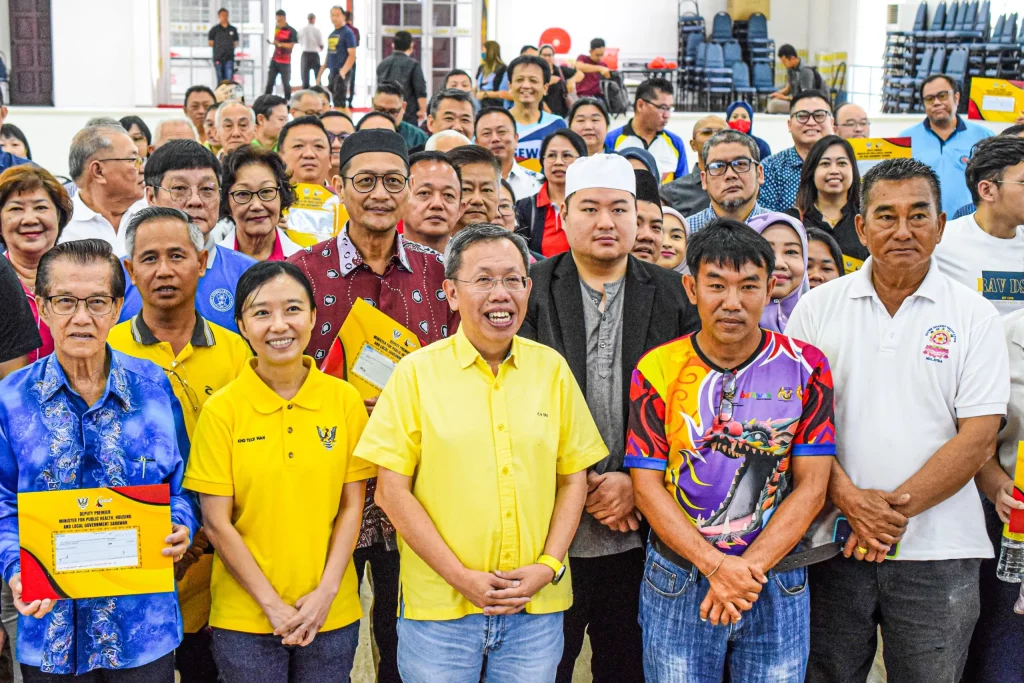
KUCHING (March 24): The government is studying a proposal to build a railway linking Bintulu Port to the new capital of Indonesia, Nusantara, said Deputy Premier Datuk Amar Dr Sim Kui Hian. He said Bintulu Port’s strategic location in Borneo could facilitate the movement of goods from Sarawak to Indonesia using a shorter travel distance compared to shipping routes. “Can you imagine if the port does not belong to us (the state government) and we want to potentially build a railway line all the way to the new capital of Indonesia?” he said during an event distributing grants to 45 non-governmental organisations (NGO) at Sarawak United Peoples’ Party (SUPP) headquarters here today. Noting that the distance between Bintulu Port and Nusantara is only a few hundred kilometres, Dr Sim said a high-speed rail from China could cover the distance within three hours compared to ships which would take around two days. On Friday, a Memorandum of Understanding (MoU) was signed between federal Transport Minister Anthony Loke and state Deputy Premier Datuk Amar Douglas Uggah Embas to the facilitate the change of status of Bintulu Port from being a federal port to a state port by this year. The MoU signing, which was witnessed by Prime Minister Datuk Seri Anwar Ibrahim and Sarawak Premier Datuk Patinggi Tan Sri Abang Johari Tun Openg, will also see the entire operation of Bintulu Port handed over to the Sarawak government by 2025. On another note, Dr Sim remarked that Sarawak has entered into a phase of nation building and the state government led by Abang Johari has taken the initiatives to take over Bintulu Port, MASwings and acquiring significant stakes in Affin Bank. He said the state government will also be providing free tertiary education at state-owned universities to about 20,000 Sarawakian students a year starting 2026 with a cost of about RM30,000 per year for each student. The deputy premier further highlighted that Sarawak aspires to achieve a gross domestic product (GDP) of RM282 billion in the next six years and the state has been counted as the fifth largest producer of gas in the world. Dr Sim also pointed out Sarawak is fast approaching towards an ageing society with the lowest birthrate in the country.
InvestSarawak, Toyo ink MoU to advance state govt’s energy transition agenda
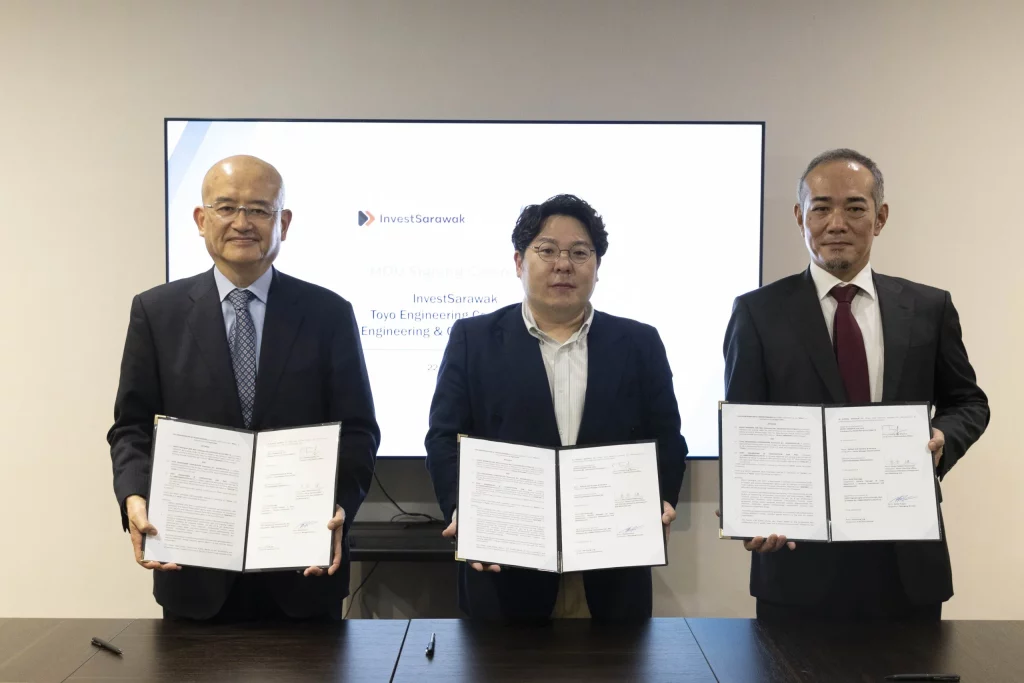
KUCHING (April 22): InvestSarawak and Toyo Engineering Corporation, along with its subsidiary Toyo Engineering & Construction Sdn Bhd, signed a Memorandum of Understanding (MoU) today in a move to advance the Sarawak government’s energy transition agenda. This strategic collaboration aims to help Toyo explore and facilitate potential investment projects in Sarawak in alignment with the company’s energy transition strategies, according to a press release. The MoU outlined the commitment of both parties in establishing a cooperative framework that will foster collaboration on potential energy projects critical to the state government’s energy transition initiatives. Toyo expressed its readiness to assist in the development of value chain planning services essential for realising these initiatives. Such initiatives include developing green hydrogen projects, carbon capture and storage (CCS), waste-to-energy projects that convert organic waste materials into energy, energy storage solutions such as battery storage or pumped hydro storage, and smart grid technology to enhance the efficiency and reliability of the electrical grid. InvestSarawak chief executive officer Timothy Ong said the partnership with Toyo is a testament to Sarawak’s commitment to embracing clean and sustainable energy sources that will propel the state’s economic and social development forward. “This collaboration will leverage Toyo’s global insights and technological advancements to enhance our local capabilities,” he said. Toyo Engineering Corporation senior executive officer and unit director of the Business Development and Marketing Unit Casey Takeshi Matsumuro said: “We are honoured to support Sarawak’s ambitious energy goals. “This collaboration allows us to bring our expertise and technology to the forefront of Sarawak’s energy landscape, aligning with our mission to contribute to sustainable growth globally.” Under the purview of the Ministry of International Trade, Industry and Investment, InvestSarawak serves as the one stop centre dedicated to attracting investments that align with Sarawak’s vision for 2030 for sustainability and growth. Toyo, with its track record and expertise in engineering, procurement, construction, and technical services across various sectors, including oil and gas, petrochemicals, and renewable energy, brings its global experience and innovative technologies to this partnership. With 87 ammonia plants and over 48 ammonia storage tanks globally, the corporation is positioned to contribute significantly towards sustainable energy solutions in Sarawak. The partnership is expected to not only support the transition to renewable energy in Sarawak but also stimulate local employment and technological development, marking a significant milestone in the region’s economic landscape.
SEDC Energy, MOBILUS partner up to fuel autonomous rapid transit system with hydrogen
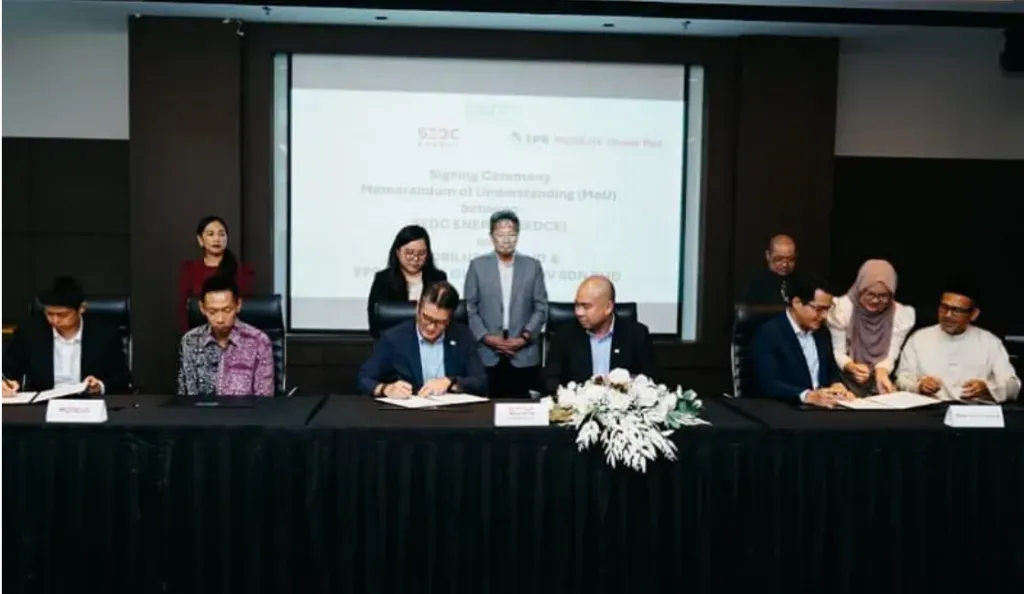
By Dayak Daily Team KUCHING, April 26: SEDC Energy, a wholly owned subsidiary of the Sarawak Economic Development Corporation (SEDC), has entered into a Memorandum of Understanding (MOU) with MOBILUS Sdn Bhd (MOBILUS) and EPR Mobilus Global Rail JV SDN BHD (EMGJV) to supply hydrogen for the Autonomous Rapid Transit (ART) system. This collaboration, according to a media release today, aligns with the Sarawak government’s vision to promote the use of new and clean energy for urban publictransportation, particularly within the framework of the Kuching Urban Transportation System (KUTS) project. The adoption of hydrogen fuel cell technology for ART contributes to KUTS’ goal of reducing urban traffic congestion and stimulating productivity and economic growth. Within the KUTS project, MOBILUS Sdn Bhd is responsible for the design, engineering, comprehensive testing, and commissioning of the ART system, while SEDCE will supply hydrogen to power the ART vehicles. SEDCE is actively participating in the energy transition towards a sustainable future, in line with the Post-Covid Development Strategy (PCDS) 2030 and National Energy Transition Roadmap (NETR). Through innovative energy solutions and strategic partnerships, SEDCE aims to foster economic growth and environmental sustainability. Robert emphasised the significance of KUTS’ success in delivering cleaner transportation for the community and Sarawak, marking a proud achievement for SEDCE in advancing clean energy initiatives. “This is another proud moment for SEDCE in the new and clean energy in Sarawak. Our efforts today, despite challenges, will define tomorrow and the generations to come,” he said in the statement.Lai expressed confident that the collaboration’s ability to enhance testing and commissioning efforts for KUTS while also driving future advancements in hydrogen technology within the region. “Together, we are proud to be at the forefront of innovation, driving positive change and shaping the future of urban transportation in Sarawak, Malaysia and beyond,” she remarked. Earlier this year, on Feb 26, SEDCE signed a MoU with Sarawak Metro, the implementing body of KUTS. Under this agreement, SEDCE assumes responsibility for the development, construction, commissioning, operation, and maintenance of the Rembus H2 plant and refueling facility, along with related products and materials for the ART system. – DayakDaily
Swedish businesses invited to venture into Sarawak’s forest plantation and wood-based industries
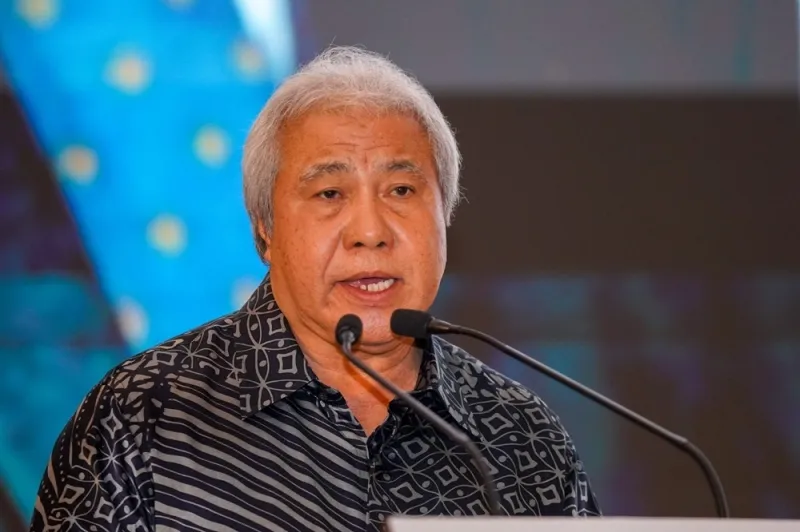
KUCHING, April 29 — Deputy Premier Datuk Amar Awang Tengah Ali Hasan recently held a networking session with Business Sweden, an agency promoting Swedish companies to grow in the global market and for foreign direct investors to expand business in Sweden. Awang Tengah extended an invitation to the Swedish business community to venture into Sarawak’s forestry, forest plantation and wood-based industries. He pointed out that Sarawak is moving towards a sustainable and renewable wood-based industry utilising material from forest plantations to produce engineered wood, biomass fuels, pulp and paper. “Sarawak has a geographical advantage as it is located near to large market with high growth rate such as China, Japan, India, Korea and Australia,” he said in a press release issued by his office. Awang Tengah, who is also Minister of International Trade, Industry and Investment, had led a Sarawak delegation on a two-day working visit to Sweden which began last Thursday. According to the press release, Business Sweden sees potential opportunities to consider in Sarawak in areas like research and innovation, digital application in forest management, forest industries for wood structure constructions, and human capital development. It said Business Sweden in collaboration with the industries and agencies will continue to engage in dialogues with Sarawak to identify areas of common interest to be considered and implemented in the future. Meanwhile, Awang Tengah at the meeting was briefed by the Swedish Forest Agency, Swedish Wood Building Council, Ecco Innovation Foundation, and Swedish pulp and paper manufacturer Billerud on matters pertaining to the development of forest industries in Sweden. The Deputy Premier and the Sarawak delegation were told about the use of engineered wood to construct timber structures, collaboration by Ecco Innovation Foundation in other countries in Southeast Asia, and pulp and paper industry. At the same session, Sarawak Planted Forest Sdn Bhd general manager Paul Valentine gave a briefing on the overview development status of planted forest in Sarawak and opportunities for future collaborations and investments for the Swedish business communities. These opportunities are in digital technology, mechanisation for planted forest harvesting, and production of high value-added products such as pulp, paper, engineered wood and biomass fuel, said the release. — The Borneo Post
Move to make hydrogen accessible throughout Sarawak
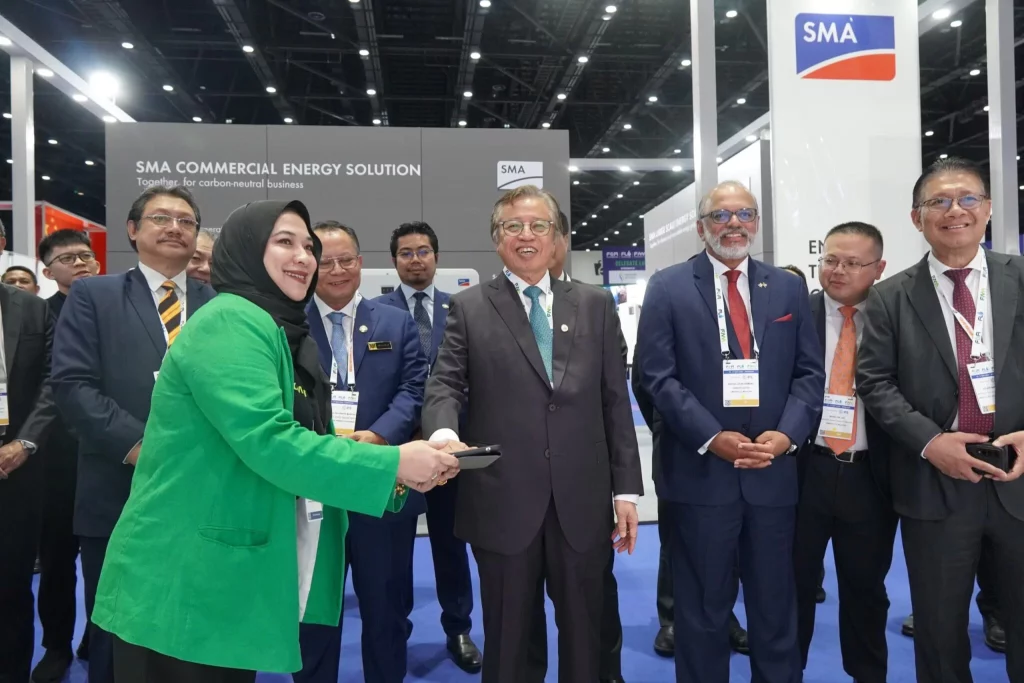
BANGKOK: Premier Datuk Patinggi Tan Sri Abang Johari Tun Openg has shared his vision of making hydrogen readily accessible across Sarawak. Noting how Sarawak Economic Development Corporation (SEDC) Energy is pioneering the hydrogen revolution in Sarawak, he said Sarawak is committed to pioneering innovative solutions that will not only power the state’s economy but also safeguard the environment for generations to come. “SEDC Energy is positioning Sarawak at the forefront of the hydrogen economy thus setting a new standard for sustainable energy in Malaysia and Southeast Asia through visionary initiatives. “A cornerstone of this endeavour is the development of a state-wide network of Flagship Multi-fuel Stations (MPS) with a particular emphasis on hydrogen refuelling. “Our vision is to make hydrogen readily accessible across Sarawak. These stations will not only serve as refuelling hubs for hydrogen vehicles but will also symbolise our unwavering commitment to clean, efficient, and sustainable transportation,” he said. He said this during his keynote address at the Future Energy Asia 2024 here today. Abang Johari said Sarawak’s ambition extend beyond transportation as the Sarawak government envisions hydrogen as a versatile and sustainable feedstock for a multitude of industries. “One particularly promising avenue is the production of Sustainable Aviation Fuel (SAF). By harnessing the power of hydrogen in conjunction with renewable resources like algae oil, we can create a cleaner, greener alternative to conventional jet fuel, significantly reducing the carbon footprint of air travel. “In essence, hydrogen is not merely a fuel; it is a catalyst for a greener, more resilient Sarawak. By embracing hydrogen, we are not only diversifying our energy mix but also unlocking a world of possibilities for economic growth, job creation, and environmental stewardship,” he said.
Premier outlines 10-20-30 as sustainable energy future for Sarawak
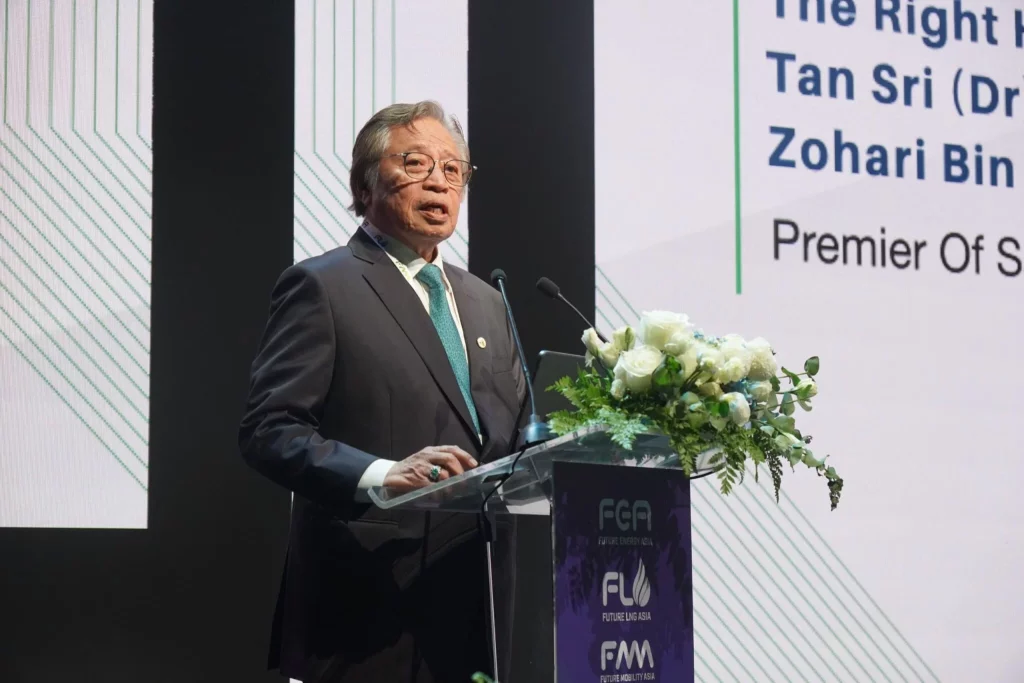
BANGKOK: 10, 20 and 30 are the main numbers for Sarawak’s energy vision moving forward. This grand vision was outlined by Premier Datuk Patinggi Tan Sri Abang Johari Tun Openg, signifying Sarawak’s target of generating 10 gigawatts of energy capacity by the year 2030. “This is a simple way to remember the vision for a sustainable energy future for Sarawak. Our commitment to sustainability and renewable energy remains unwavering. “The generation of the 10 gigawatts of energy will predominantly be sourced from renewable sources such as hydropower, solar, gas turbine, and biomass energy,” he said. He said this during his keynote address at the Future Energy Asia Strategic Summit 2024 here today. Abang Johari said Sarawak is giving priority to investments in renewable energy, particularly renewable hydropower to propel the state’s growth forward with three pivotal targets for the energy sector being outlined. He said the Sarawak’s commitment to renewable hydropower has created opportunities for the state to develop bilateral transmission interconnections with Southeast Asian neighbours. “We are sharing our renewable resources and accelerating regional energy transition. This is in line with our regional renewable energy powerhouse ambitions. “In 2016, we took the first step in driving a Trans Borneo Grid with the commissioning of Sarawak’s first international and transboundary interconnection to West Kalimantan, Indonesia. “Sarawak has continued to build on our strong relationship with our Indonesian neighbours, progressing the Mentarang Induk Hydroelectric Project or MIHEP in North Kalimantan via a joint venture company with our Indonesian partners,” he said. Abang Johari stressed that Sarawak’s commitment to sustainability reaches beyond Borneo as the state is actively contributing to the ASEAN Power Grid initiative. “In collaboration with partners such as Sembcorp Utilities and Singapore Power International, Sarawak Energy Berhad (SEB) has undertaken technical studies for Sarawak-Singapore interconnection. “This project brings us closer to achieving regional energy integration and sustainability goals,” he said.
Sarawak estimated to possess high value mineral resources worth RM1.252 trillion
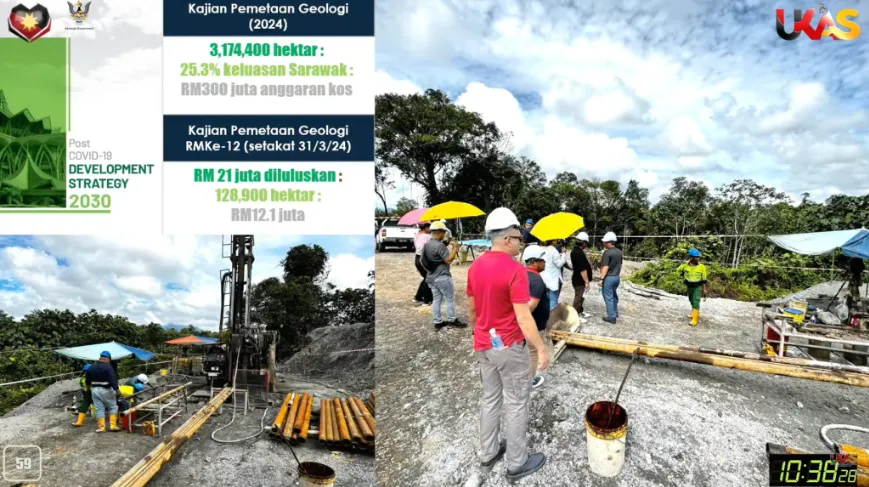
KUCHING, May 14: Sarawak is estimated to possess high value mineral resources for the energy industry and downstream manufacturing industry worth more than RM1.252 trillion. Natural Resources and Urban Development II Minister Datuk Amar Awang Tengah Ali Hasan said the estimated value is based on the records of Sarawak’s Department of Minerals and Geosciences Malaysia. These mineral resources are deposited across an area of approximately 39,824 square kilometers or 3,982,400 hectares, which involves 32 per cent of the area of Sarawak. The Sarawak government has thus requested for a larger allocation for Department of Minerals and Geosciences Malaysia, Sarawak from the Federal government so that the study on the existence of mineral resources in Sarawak can be carried out more extensively. “This geological study and mapping is very important to enable land use planning and the development of mineral-based industries to be made in detail and comprehensively by the government,” said Awang Tengah when delivery his ministerial winding-up speech in the Sarawak Legislative Assembly (DUS) here today. He said in the development of mineral-based industries, the Sarawak government is currently trying to develop downstream industries especially those based on silica sand for the manufacturing of photovoltaic glass (PV glass) which is essential for solar power generation (green energy) and limestone for the clinker and cement industry. “In addition, the government is also studying the potential of an industry based on high-value strategic minerals, namely Non-Radioactive Rare Earth Elements (NR-REE). “NR-REE is needed in various manufacturing industries such as magnetics, phosphorus, ceramics, metal alloys, defence and so on,” said the Bukit Sari assemblyman (GPS-PBB). — DayakDaily