
Sarawak Skills sending teaching staff for hydrogen-tech training in China
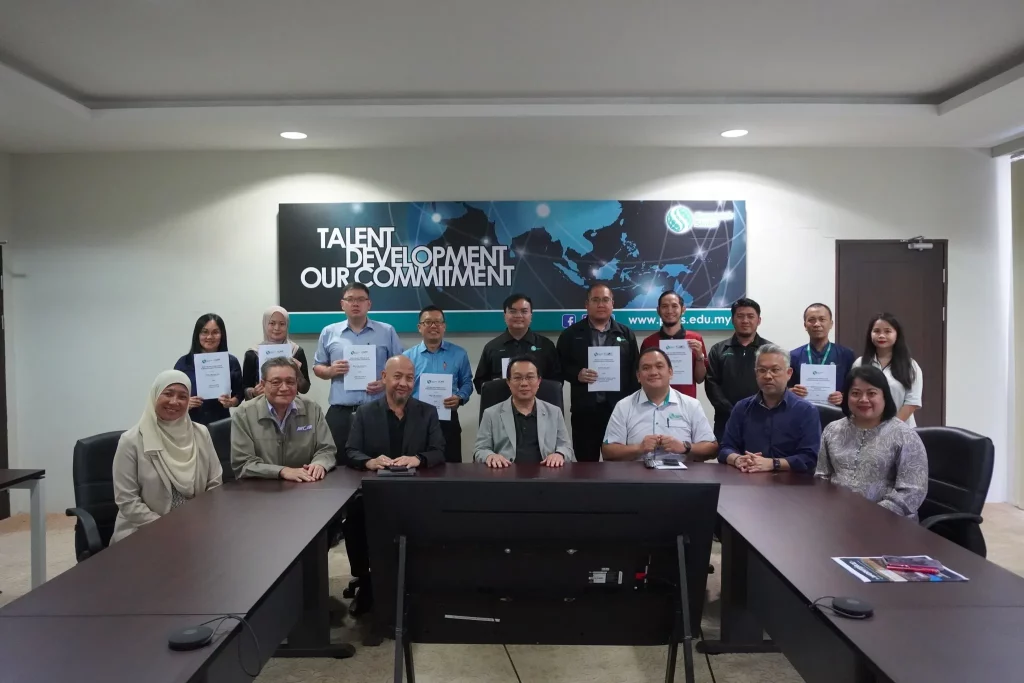
KUCHING (April 30): Sarawak Skills Group of Learning Institutions (Sarawak Skills) has announced a series of staff talent development initiatives to support the Sarawak Post Covid-19 Development Strategy (PCDS) 2030 and the Sarawak government’s ongoing initiatives in carbon reduction emission. According to Sarawak Skills executive director Hallman Sabri, 10 teaching personnel from its three institutions are undergoing hydrogen technology training in China. The staff members are from the Automotive and Welding Institute of Sarawak (Awisar), i-CATS University College and Sarawak Skills Kuching. “The training is being held over a period of two weeks (April 21-May 7) at Foshan Polytechnic and Foshan Feichi Motor Technology Co Ltd in Foshan, Guangdong Province, China,” he said in a statement. Hallman, also the Federation of Malaysian Skills Development Centres (FMSDC) chairman, added: “FMSDC has a long-established relationship with HWK Aachen, Germany to enhance the competencies of trainers from the various skills development centres under the umbrella of FMSDC.” In this respect, he said 15 trainers including three from Sarawak Skills would be in Germany for the Train-The-Trainer (TTT) Meister Mechatronic Programme, to be running from June 8 to 22. “Indeed, for Sarawak Skills, these staff talent development initiatives will go a long way towards supporting the noble course of human capital development for the betterment of current and future generations of the workforce in line with the PCDS 2030,” added Hallman. For more information about Sarawak Skills, go to sarawakskills.edu.my or its social media platforms (a@Sarawak Skills on Facebook, and @sarawakskillsofficial on Instagram).
Sarawak considering to build new international airport in Kuching, says Premier
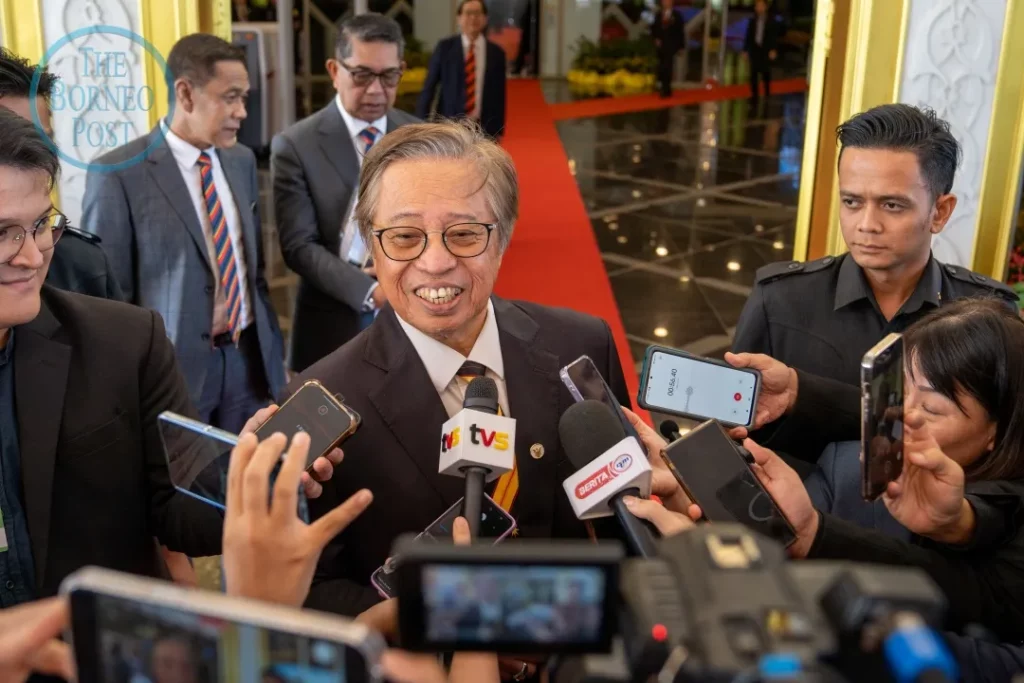
KUCHING (May 15): Sarawak plans to develop a new international airport in Kuching to support the growth of the aviation industry in the state, says Premier Datuk Patinggi Tan Sri Abang Johari Tun Openg. According to him, the construction of an international airport is necessary considering Sarawak’s air traffic is increasing and the insufficient facilities at the existing Kuching International Airport (KIA). “We are studying plans to build a new international airport due to the increase in our (air) traffic. “We are also looking at the international airport building now, I think there are not enough facilities with the increase in the number of flights and passenger traffic,” he told reporters at the lobby of the State Legislative Assembly (DUN) Complex here today. He was asked after he said during his winding-up speech that the Sarawak government planned to develop a new international airport following the acquisition of MASwings. The effort, he said, will make Sarawak another regional aviation hub for Asean. Commenting further on the matter, Abang Johari said it was time for Sarawak to have a new international airport because the existing KIA has exceeded its capacity to handle more traffic. “We will inform you about the location later. What is certain is that it will be developed in Kuching, because the international airport has to be in Kuching because we want it to be an aviation hub. “We already have a hub for ports, this time we need a hub for flights. It’s not only for passengers but for cargo, meaning it works as a commercial hub,” he explained. Regarding the funds to build the new Kuching international airport, Abang Johari said the matter would be discussed with Malaysia Airports Holdings Berhad (MAHB). “Whether MAHB will be our partner to develop this airport depends on the availability of funds. “Perhaps we will develop together with MAB to build this new international airport,” he said. When asked on what will happen to the existing KIA, Abang Johari said it could be turned into an airport for chartered jets or private planes. “Of course the question is that the current KIA is sufficient or not in terms of capacity… so we need a new international airport, only after that we will see what can be done on the existing KIA,” he said.
Sarawak approves SST on export of ferroalloys and polysilicon, says Deputy Premier
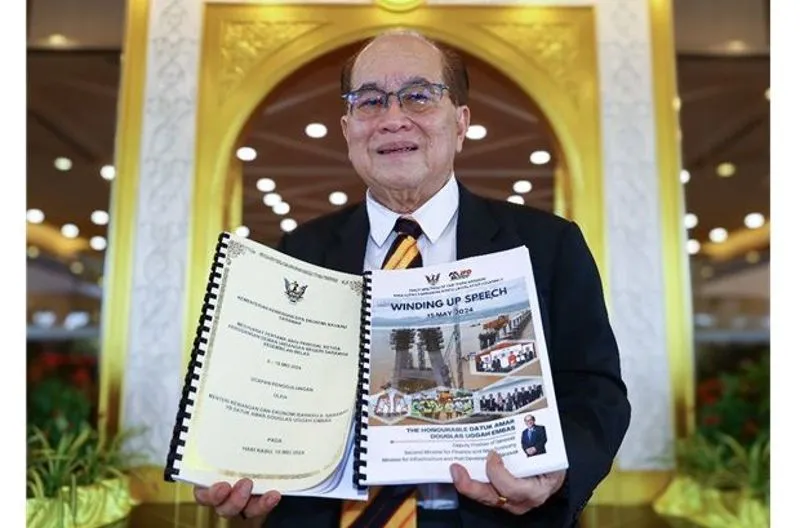
KUCHING: Sarawak has approved the introduction of state sales tax (SST) on the export of ferroalloys and polysilicon as part of efforts to diversify revenue sources, says Datuk Amar Douglas Uggah. The Deputy Premier said the tax would be imposed at the rate of 1.5% effective Sept 1 this year. “This is a fair and reasonable rate for the affected companies as they enjoy tax incentives from the Federal Government and favourable power rates from the state. “The revenue generated from this source will give us fiscal flexibility in enhancing our socioeconomic development efforts which include, among others, implementing clean and renewable energy initiatives,” he said in his winding-up speech at the Sarawak Legislative Assembly sitting here on Wednesday (May 15). Uggah also said Sarawak collected RM14mil from SST on the export of selected timber products last year. He said that for this year, the state was projected to collect RM33mil from the tax, which was imposed effective June 1 last year. “Moving forward, the Sarawak government will continue to explore new opportunities to enhance and diversify our revenue sources. “This is imperative as we continue to pursue our development agenda so that no one will eventually be left behind,” he said. In addition, Uggah said Sarawak’s revenue was projected to be RM12.749bil this year. He said RM4.798bil or 38% of the projected revenue had been collected as of March 31. “Based on the performance thus far, we are confident we can achieve the targeted revenue projection for this year, barring any unfavourable circumstances at the global geopolitical level which could adversely affect oil and gas markets,” he added.
Sarawak estimated to possess high value mineral resources worth RM1.252 trillion
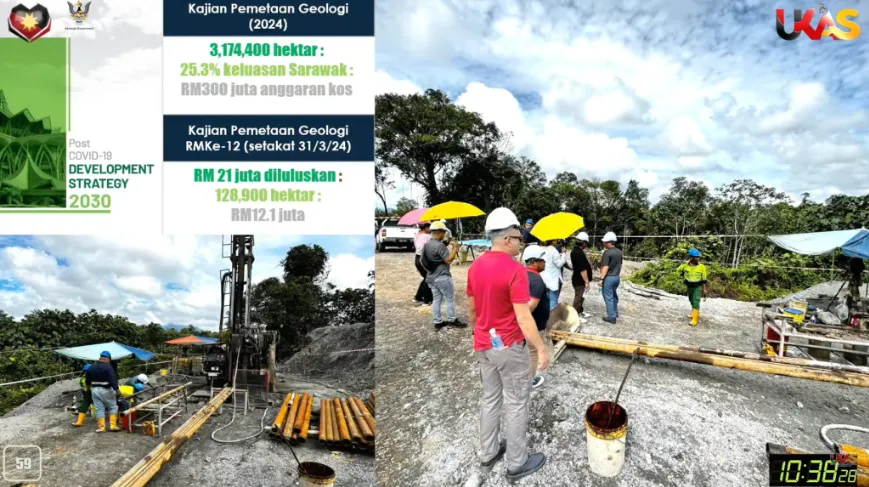
KUCHING, May 14: Sarawak is estimated to possess high value mineral resources for the energy industry and downstream manufacturing industry worth more than RM1.252 trillion. Natural Resources and Urban Development II Minister Datuk Amar Awang Tengah Ali Hasan said the estimated value is based on the records of Sarawak’s Department of Minerals and Geosciences Malaysia. These mineral resources are deposited across an area of approximately 39,824 square kilometers or 3,982,400 hectares, which involves 32 per cent of the area of Sarawak. The Sarawak government has thus requested for a larger allocation for Department of Minerals and Geosciences Malaysia, Sarawak from the Federal government so that the study on the existence of mineral resources in Sarawak can be carried out more extensively. “This geological study and mapping is very important to enable land use planning and the development of mineral-based industries to be made in detail and comprehensively by the government,” said Awang Tengah when delivery his ministerial winding-up speech in the Sarawak Legislative Assembly (DUS) here today. He said in the development of mineral-based industries, the Sarawak government is currently trying to develop downstream industries especially those based on silica sand for the manufacturing of photovoltaic glass (PV glass) which is essential for solar power generation (green energy) and limestone for the clinker and cement industry. “In addition, the government is also studying the potential of an industry based on high-value strategic minerals, namely Non-Radioactive Rare Earth Elements (NR-REE). “NR-REE is needed in various manufacturing industries such as magnetics, phosphorus, ceramics, metal alloys, defence and so on,” said the Bukit Sari assemblyman (GPS-PBB). — DayakDaily
Premier outlines 10-20-30 as sustainable energy future for Sarawak
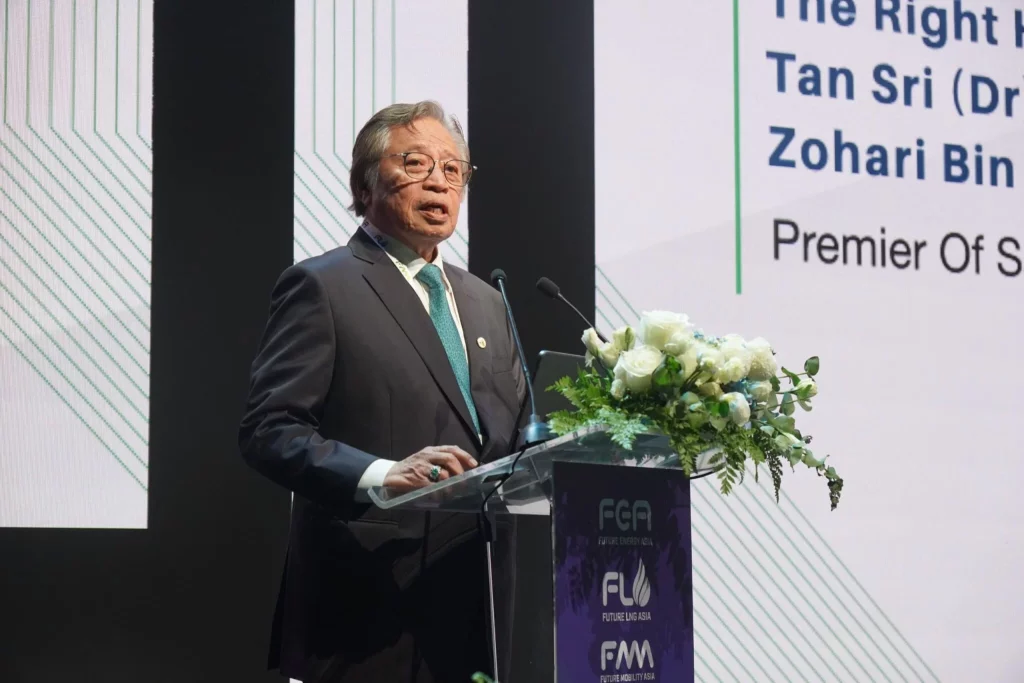
BANGKOK: 10, 20 and 30 are the main numbers for Sarawak’s energy vision moving forward. This grand vision was outlined by Premier Datuk Patinggi Tan Sri Abang Johari Tun Openg, signifying Sarawak’s target of generating 10 gigawatts of energy capacity by the year 2030. “This is a simple way to remember the vision for a sustainable energy future for Sarawak. Our commitment to sustainability and renewable energy remains unwavering. “The generation of the 10 gigawatts of energy will predominantly be sourced from renewable sources such as hydropower, solar, gas turbine, and biomass energy,” he said. He said this during his keynote address at the Future Energy Asia Strategic Summit 2024 here today. Abang Johari said Sarawak is giving priority to investments in renewable energy, particularly renewable hydropower to propel the state’s growth forward with three pivotal targets for the energy sector being outlined. He said the Sarawak’s commitment to renewable hydropower has created opportunities for the state to develop bilateral transmission interconnections with Southeast Asian neighbours. “We are sharing our renewable resources and accelerating regional energy transition. This is in line with our regional renewable energy powerhouse ambitions. “In 2016, we took the first step in driving a Trans Borneo Grid with the commissioning of Sarawak’s first international and transboundary interconnection to West Kalimantan, Indonesia. “Sarawak has continued to build on our strong relationship with our Indonesian neighbours, progressing the Mentarang Induk Hydroelectric Project or MIHEP in North Kalimantan via a joint venture company with our Indonesian partners,” he said. Abang Johari stressed that Sarawak’s commitment to sustainability reaches beyond Borneo as the state is actively contributing to the ASEAN Power Grid initiative. “In collaboration with partners such as Sembcorp Utilities and Singapore Power International, Sarawak Energy Berhad (SEB) has undertaken technical studies for Sarawak-Singapore interconnection. “This project brings us closer to achieving regional energy integration and sustainability goals,” he said.
Move to make hydrogen accessible throughout Sarawak
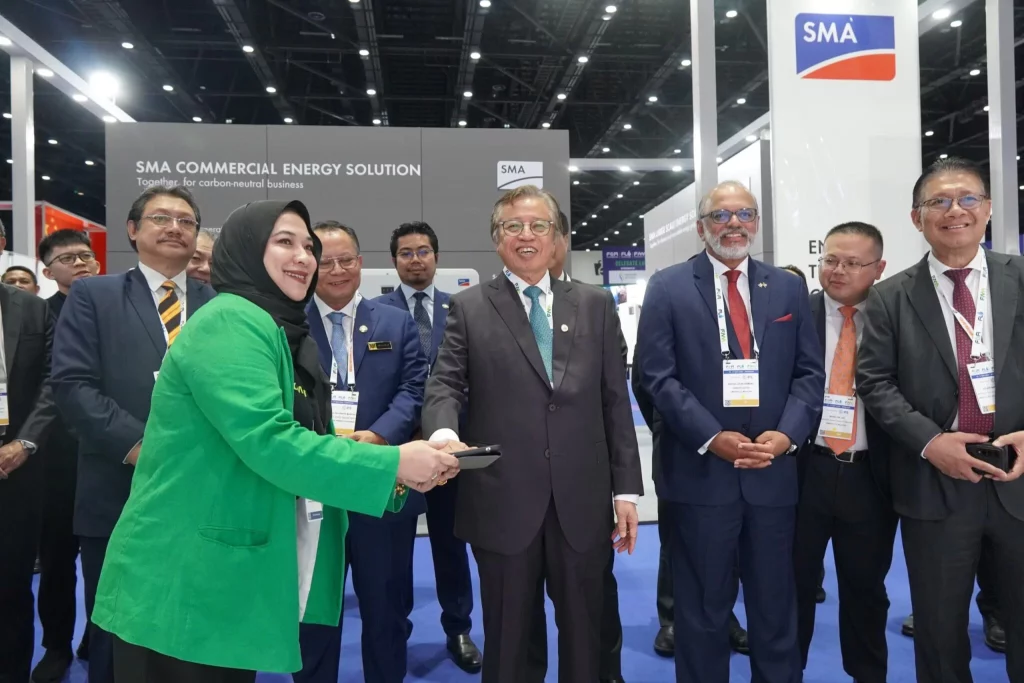
BANGKOK: Premier Datuk Patinggi Tan Sri Abang Johari Tun Openg has shared his vision of making hydrogen readily accessible across Sarawak. Noting how Sarawak Economic Development Corporation (SEDC) Energy is pioneering the hydrogen revolution in Sarawak, he said Sarawak is committed to pioneering innovative solutions that will not only power the state’s economy but also safeguard the environment for generations to come. “SEDC Energy is positioning Sarawak at the forefront of the hydrogen economy thus setting a new standard for sustainable energy in Malaysia and Southeast Asia through visionary initiatives. “A cornerstone of this endeavour is the development of a state-wide network of Flagship Multi-fuel Stations (MPS) with a particular emphasis on hydrogen refuelling. “Our vision is to make hydrogen readily accessible across Sarawak. These stations will not only serve as refuelling hubs for hydrogen vehicles but will also symbolise our unwavering commitment to clean, efficient, and sustainable transportation,” he said. He said this during his keynote address at the Future Energy Asia 2024 here today. Abang Johari said Sarawak’s ambition extend beyond transportation as the Sarawak government envisions hydrogen as a versatile and sustainable feedstock for a multitude of industries. “One particularly promising avenue is the production of Sustainable Aviation Fuel (SAF). By harnessing the power of hydrogen in conjunction with renewable resources like algae oil, we can create a cleaner, greener alternative to conventional jet fuel, significantly reducing the carbon footprint of air travel. “In essence, hydrogen is not merely a fuel; it is a catalyst for a greener, more resilient Sarawak. By embracing hydrogen, we are not only diversifying our energy mix but also unlocking a world of possibilities for economic growth, job creation, and environmental stewardship,” he said.
Sarawak commits to renewable energy leadership, seeks international collaboration
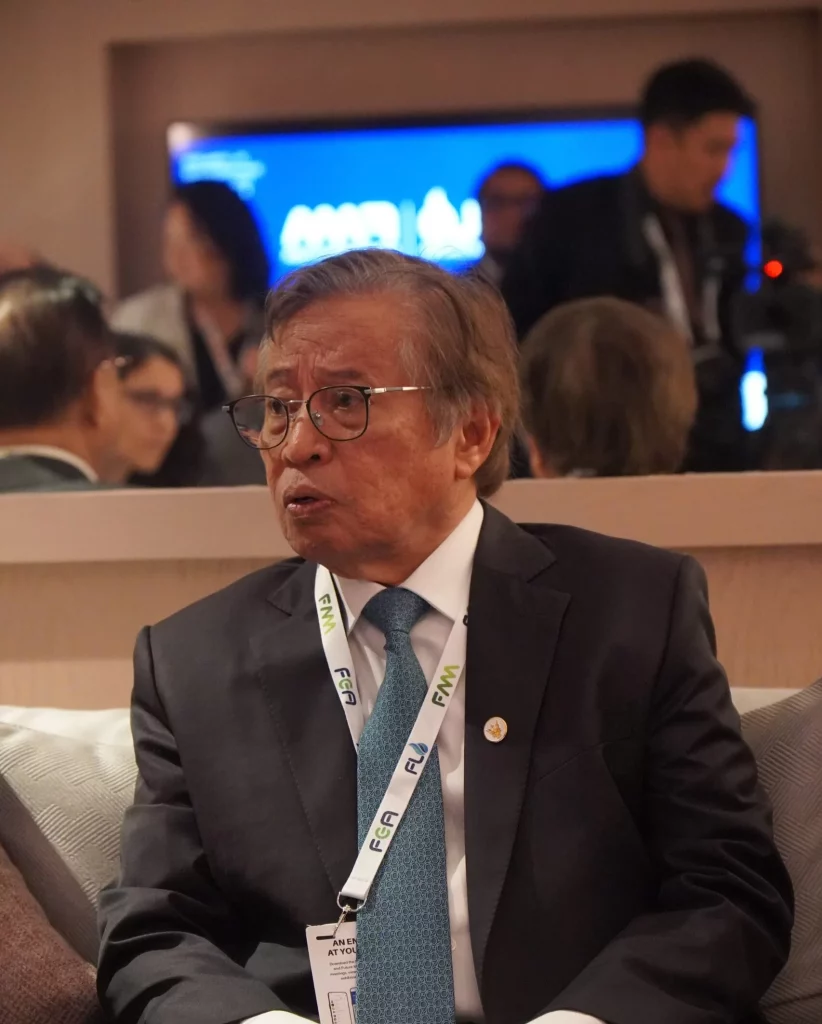
BANGKOK: Premier Datuk Patinggi Tan Sri Abang Johari Tun Openg has underscored Sarawak’s commitment to harnessing and maximising its renewable energy resources through international collaboration and technological learning. Stating how Sarawak is blessed with natural resources that can generate renewable energy, he said the Sarawak government is actively seeking solutions through the latest technology to add value to these resources. “The whole world is looking at us (Sarawak) because we have the vision, and we want to translate our vision into action. “What is important now is the execution action. If you have the vision, but you do not execute it, it remains just a vision.” Abang Johari made these remarks during a press conference after delivering his keynote address at the Future Energy Asia Strategic Summit 2024. He said Sarawak’s push for green economy is in line with global transition from coal and fossil fuel to clean and renewable energy. He added that Sarawak can manage its economy sustainably while incorporating the latest technologies by prioritising clean energy. “Sarawak’s energy generation mix comprises 70 per cent hydropower and supplemented by a small percentage of natural gas and coal which is slated for phase-out. “This actually places Sarawak ahead of the 2050 net zero or carbon neutrality target which means we are achieving carbon negativity well before the deadline.” Abang Johari said Sarawak has the advantage of sharing this success with the world thus inviting collaboration for technological partnership. At the same time, he pointed out that Sarawak has emerged as a key player for interconnection in assisting the fulfilment of the Asean Power Grid. He said through Sarawak Energy Berhad (SEB), Sarawak is supplying energy needed by Indonesia in East and West Kalimantan. “We are also supplying energy to Singapore and Brunei which means we are assisting three neighbouring countries. If we scale up our production, we can create more job opportunities and economic growth in the region.”
Sarawak keen to work with EU in tackling climate change
Sarawak Premier Tan Sri Abang Johari Tun Openg (third left) launching InvestSarawak at the EU-Malaysia Business Day networking dinner in Kuching on Wednesday (Feb 14) night. – ZULAZHAR SHEBLEE/The Star KUCHING: Sarawak is keen to work with the European Union (EU) on mitigating climate change, says Tan Sri Abang Johari Tun Openg. The Premier said the EU had experience and technology while Sarawak’s strength was in its natural resources and renewable energy. “Although we are a small state, we feel we have the responsibility to assist in addressing climate change and reducing carbon emissions. “You are welcome to explore which areas you can collaborate with us on this and together we can help the world,” he said at the EU-Malaysia Business Day networking dinner here on Wednesday (Feb 14) night. Abang Johari said other potential areas of collaboration were in digitalisation and education. “Perhaps we can send our students to study in Europe,” he said. Abang Johari also launched InvestSarawak, the state’s investment and trade agency, at the same event. InvestSarawak will serve as a one-stop centre and first point of contact for all investors in the state. It will be the key facilitator for investors in the development, applications and approvals for investment projects in Sarawak, besides improving the ease of doing business. Deputy Premier Datuk Amar Awang Tengah Ali Hasan said InvestSarawak was a pivotal initiative which aimed to transform the investment landscape, increase trade and improve talent attraction in the state. “It will play a key role serving as facilitator and adviser to provide invaluable local insights to all investors, both foreign and domestic,” he said.
Bintulu’s Samalaju Industrial Park nets RM111.73b approved investment since 2008 launch, says Sarawak premier
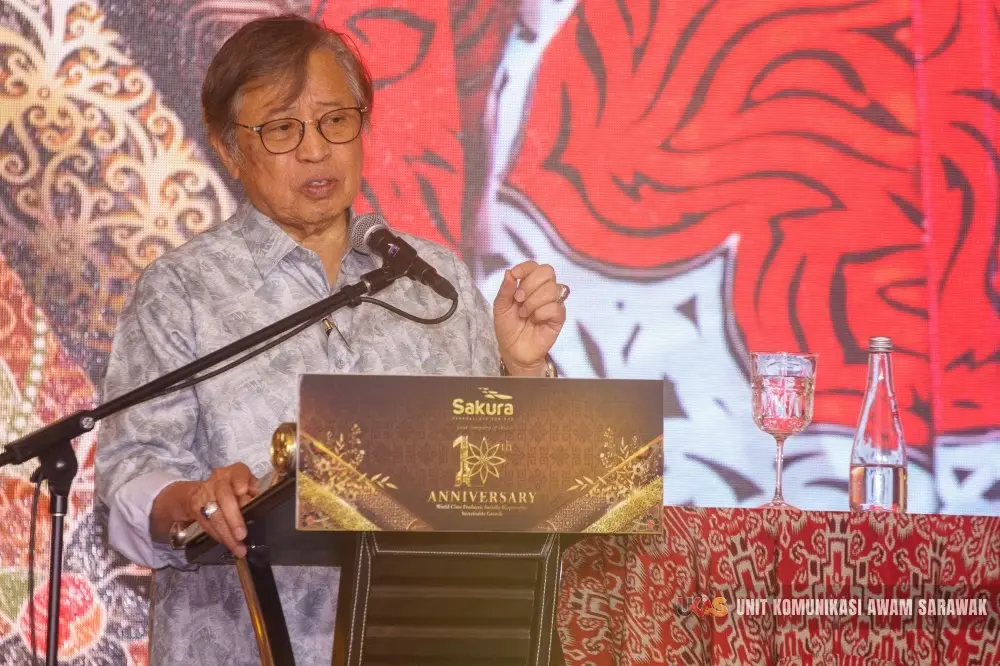
BINTULU, March 5 — Premier Tan Sri Abang Johari Openg said last night that Samalaju Industrial Park, which was launched by the then prime minister Tun Abdul Ahmad Badawi in 2008, has attracted an approved investment of RM111.73 billion to date. He said RM12.07 billion out of the total has gone towards commercial production, with direct employment for 9,293 workers. “The potential is there. We have a list of companies which are going to invest in the park, with an anticipated investment of RM15.66 billion,” he said during the 10th anniversary of Sakura Ferroalloys Sdn Bhd. He said there are also a few projects that are being enhanced, one of which is the 70km-long Bintulu-Samalaju gas pipeline that is scheduled for completion at the end of next year. “The operations of these projects will increase the distribution of gas supply to users in Samalaju Industrial Park including the combined cycle gas turbine which is currently under construction. “In other words, we are upgrading the gas supply as well as power to Samalaju Industrial Park,” he said. In his speech earlier, Sakura Ferroalloys Sdn Bhd chairman BH (Tiaan) van Aswegen said the company is in the process of constructing a new sinter plant at the site. “This US$30 million plant will be commissioned in the second half of 2024 and will contribute to further improve plant efficiencies and lower the cost base,” he said. He said a feasibility study to produce a value-added refined ferro-manganese product will be concluded by mid-year. “If the study results are positive, this might lead to a further investment of around US$100 million at Sakura,” he said, adding that studies to produce by-products from current waste streams, such as slag, fumes and gas, are being pursued.
Abang Rahmat Yusuf is CEO of Sarawak Sovereign Wealth Future Fund
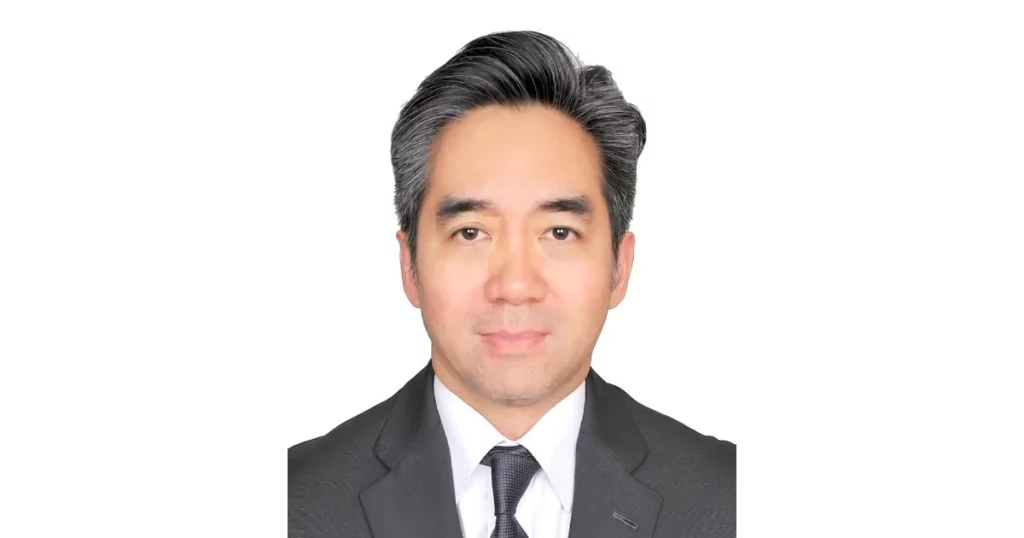
KUCHING: The Board of Guardians of the Sarawak Sovereign Wealth Future Fund has appointed Abang Rahmat Yusuf as the Chief Executive Officer (CEO), effective January 29 this year. The announcement was made after the Board meeting yesterday, according to a press statement. Abang Rahmat, 48, was formerly the head of Investment Banking (Malaysia) at CLSA Securities from 2019 to 2024. During his tenure there, he led the fund raising exercises including initial public offerings (IPOs) and placements for institutional and corporate clients. In the beginning of his corporate career, he was a director in the Investments arm at Khazanah Nasional in 2004 until 2019, during which he established and headed the Khazanah Turkey Regional Office in Istanbul covering Turkey, Middle East and North Africa (MENA) and Sub-Saharan Africa. He was also the Overseeing Director for Financial Institutions Group (FIG), which represented 20 per cent of Khazanah’s portfolio. He holds a Master in Public Administration from Harvard University.