
BDA, Press Metal sign MoU for RM600 mln solar aluminium frame facility in Samalaju

KUCHING (Feb 27): The Bintulu Development Authority (BDA) and Press Metal Aluminium Holdings Berhad have signed a memorandum of understanding (MoU) to establish an 80,000-tonne solar module fabricated aluminium frame facility in Samalaju. The RM600 million project aims to bolster Sarawak’s position in the renewable energy sector while creating job opportunities and driving industrial growth in the region. Press Metal Group CEO Tan Sri Dato’ Paul Koon Poh Keong described the partnership as a testament to their shared commitment to economic development and sustainable manufacturing. “This MoU marks a significant milestone in our journey towards supporting Sarawak’s vision of becoming a hub for renewable energy and sustainable industrial development,” he said during the MoU signing ceremony. Koon highlighted that the new facility would enhance the Samalaju Industrial Park’s role in the global supply chain and attract further investment. “As the world shifts its focus to clean energy solutions, the demand for solar power has grown considerably. “Aluminium plays a key role in making solar panels more efficient, cost-effective, and long-lasting, which is why Press Metal is committed to expanding our capacity to meet global demands,” he said. Under the investment structure, BDA will hold a 20 per cent stake in the project, while Press Metal will own the remaining 80 per cent. The project will be funded through a 20 per cent capital injection, with the rest secured via term loans. Koon also revealed that Japanese conglomerate Sumitomo is considering investing in the venture, with an official announcement expected if the deal materialises. Beyond job creation, Press Metal plans to collaborate with local educational institutions to develop technical skills and leadership among Sarawak’s workforce. “We believe in empowering our workforce through targeted training programs, technical upskilling, and leadership development. By building a strong pipeline of skilled professionals, we can contribute to Sarawak’s growing renewable energy sector,” Koon said. He further emphasised the project’s commitment to environmental sustainability, ensuring compliance with regulations and the adoption of eco-friendly practices. “We are fully committed to ensuring that our operations comply with all environmental regulations and that we adopt the best practices to minimise our carbon footprint,” he said. Expressing gratitude to the Sarawak government for its support, he stressed that the project was more than just an industrial development. “Together, we are not just building an aluminium frame facility – we are strengthening the value chain, creating better and greater opportunities, and contributing to a cleaner, greener tomorrow for Sarawak and Malaysia,” he said. The MoU signing ceremony was witnessed by Sarawak Premier Datuk Patinggi Tan Sri Abang Johari Tun Openg, who is also BDA chairman, along with other state dignitaries.
InvestSarawak, China Energy ink MoU to develop renewable energy projects
InvestSarawak, China Energy ink MoU to develop renewable energy projects (Seated, from left) Ong and He Lei exchange the signed MoU documents, witnessed by Awang Tengah (back, centre) and other distinguished guests KUCHING (April 17): China Energy Engineering Investment Corporation Limited (CEEIC) and InvestSarawak today signed a Memorandum of Understanding (MoU) to develop 2 gigawatts (GW) of renewable energy projects and related strategic infrastructure in Sarawak. Deputy Premier Datuk Amar Awang Tengah Ali Hasan witnessed the signing ceremony held at a leading hotel here. InvestSarawak CEO Timothy Ong signed the MoU on behalf of the company, while CEEIC was represented by its Chief Economist and General Manager of the Overseas Department, He Lei. According to Awang Tengah, who is Minister of International Trade, Industry and Investment, CEEIC plans to invest US$1.35 billion (RM6.0 billion) into Sarawak’s clean energy sector, focusing on solar, battery storage, and grid infrastructure development. “Sarawak welcomes the strategic investment as it aligns with the region’s vision to harness renewable energy for sustainable development. “We are committed to strengthening Sarawak’s role as a regional hub for green energy and advancing our transition to a low-carbon economy under PCDS (Post Covid-19 Development Strategy) 2030. “This collaboration reinforces Sarawak’s position as a preferred green investment destination and supports its vision to power low-carbon industries in line with the state’s sustainable development goals. “With Sarawak’s strategic move towards low-carbon manufacturing and hydrogen economy under PCDS 2030, the partnership is part of a broader initiative to ensure long-term energy security while advancing the green agenda. “It underscores Sarawak’s commitment to sustainable energy transition and its goal to become a regional renewable energy powerhouse,” he added. Separately, InvestSarawak in a press statement said it is committed to facilitating this strategic investment interest in the region to support renewable energy development in line with Sarawak’s development agenda. “CEEIC is looking to develop approximately 2GW, alongside battery storage facilities and supporting grid infrastructure, to meet Sarawak’s growing industrial and domestic energy demands. “The flagship investment platform of China Energy Engineering Corporation Limited (CEEC) brings global expertise in energy infrastructure development and integrated clean energy systems. “CEEIC is a recognised leader in solar, wind, hydroelectric and biomass energy, as well as energy storage and grid solutions. “It has developed and managed over 12GW of operational and under-construction energy capacity across coal, hydro, wind, solar, biomass, and energy storage projects. “With investments spanning all provinces in China and extending to Vietnam and the Philippines, CEEIC’s notable achievements include Vietnam’s largest Chinese-invested power plant (Hai Duong BOT); the world’s largest light-heat storage project in Xinjiang (1.5 GW); and China’s largest biomass cogeneration facility. “Its green energy initiatives reduce over three million tonnes of CO₂ annually, reinforcing its position as a key driver in low-carbon, sustainable energy infrastructure globally,” added InvestSarawak. CEEIC deputy general manager Wang Honggang was quoted as saying: “We are honoured to partner with InvestSarawak and the Sarawak government in this renewable energy initiative. CEEIC brings with it decades of experience in renewable energy projects globally. “We believe that Sarawak offers tremendous potential for the development of large-scale solar and hybrid energy systems, and we are committed to delivering long-term value through this collaboration. “The potential investment of CEEIC shall be in concert with Sarawak’s power development planning, and implemented into several phases and subject to China’s competent approvals,” he said. Meanwhile, Ong said Sarawak is open for renewable energy investments, and that the collaboration with CEEIC is another step in positioning Sarawak at the forefront of Asean’s green growth corridor. “This collaboration signifies the latest wave of strong renewable energy interest in Sarawak, reinforcing the region’s position as a preferred destination for green investment. “In line with Sarawak’s sustainable development policy and its aspiration to become a regional leader in green growth, the partnership is expected to drive local job creation, accelerate technology transfer, and bolster long-term energy security,” he added. Also present at the signing ceremony were Deputy Minister for Utility and Telecommunication Datuk Ibrahim Baki; Deputy Minister for International Trade, Industry and Investment Datuk Dr Malcolm Mussen Lamoh; Deputy Minister for Youth, Sports and Entrepreneur Development Datuk Dr Ripin Lamat; and Sarawak Energy group chief operating officer James Ung.
Bintulu Port takeover in final stages as Sarawak advances Port Master Plan
Uggah says Sarawak has a transformational vision in the development of its ports through the Sarawak Port Master Plan. — Bernama photo KUCHING (May 28): The takeover of Bintulu Port from federal jurisdiction to Sarawak is currently in the final stages of negotiations and the transfer is expected to take place this year, said Deputy Premier Datuk Amar Douglas Uggah Embas. He said, with the approval of the Sarawak Port Authority Ordinance in May 2024, the Sarawak government is now moving towards the operation of a single port authority, the Sarawak Port Authority, which will have regulatory jurisdiction over all port activities in Sarawak. “At the same time, the process of corporatising the existing port authorities to successor companies at each port to manage port assets and operations is being implemented jointly with the State Financial Secretary’s Office. “This process is expected to be completed by the fourth quarter of 2025,” said the State Minister of Infrastructure and Port Development in his winding up speech at the State Legislative Assembly sitting here, today. Apart from that, he also informed that for the Tanjung Embang Deep Sea Port, a technical and economic feasibility study is currently underway. “The study includes site investigation, bathymetric survey, tidal observation, ocean current measurement, soil study, and environmental impact assessment. “This assessment is important to determine the port design, engineering parameters, long-term sustainability and financial viability of the development,” he said. He said Sarawak has a transformational vision in the development of its ports through the Sarawak Port Master Plan. He said it is not just a transit point but a powerful engine of economic growth, enabling Sarawak to become a major gateway to Borneo, the region and the world, and driving the aspirations of our people. “In essence, the Sarawak Port Master Plan is the first historic transformation initiative that positions Sarawak as a major player in global trade and logistics. “It is not just a development plan, but a major change in the direction of Sarawak’s economy, laying the foundation for sustainable growth that goes beyond dependence on natural resources,” he said. He said by strengthening the state’s port infrastructure and connectivity, it is opening up new opportunities for businesses, empowering local industries and opening Sarawak to the world.
Sarawak gears up to be Asean aerospace hub, plans industrial park
Awang Tengah said the development of Aerospace Industrial Park will support high-value aerospace manufacturing, aircraft maintenance, repair and overhaul, and sustainable aviation fuel research. – Bernama file photo KUCHING (May 28): Sarawak is gearing up to become a competitive aerospace hub in the Asean region with plans to establish an Aerospace Industrial Park. Deputy Premier Datuk Amar Awang Tengah Ali Hasan said the development of this industrial park will support high-value aerospace manufacturing, aircraft maintenance, repair and overhaul, and sustainable aviation fuel research. “We are partnering with Airbus to expand the aerospace industry, create high-value job opportunities and attract foreign investment,” he said in is ministerial winding-up speech at the State Legislative Assembly (DUN) Sitting today. Awang Tengah, who is International Trade, Industry and Investment Minister, said the global aerospace industry is projected to broaden in 2025, accelerated by technological advancements, sustainability initiatives and increasing air demand. “As industry continues to evolve, Sarawak is actively developing our aerospace capabilities, focusing on aviation, space technology and satellite launch potential.” He said the newly established Sarawak Aerospace Advisory Council will spearhead aerospace industry development by enhancing education, workforce training and forging global partnerships to drive future investment and accelerate industry growth. “With a strong emphasis on talent development, Sarawak has launched the Aerospace Academy at the Centre of Technology Excellence Sarawak (Centexs) Lundu and i-CATS University College’s Faculty of Aerospace Engineering, equipping future professionals with hands-on expertise and globally recognised qualifications,” he added. On another matter, Awang Tengah said Sarawak is emerging as a regional leader in Southeast Asia’s hydrogen economy, leveraging strategic investment opportunities through the Sarawak Green hydrogen hub in Bintulu and the upcoming hub in Kuching. “These integrated facilities operate on a ‘plug-and-play’ model, enabling multiple investors to co-locate hydrogen projects without requiring standalone infrastructure. “This approach optimises efficiency, reduces costs and accelerates hydrogen deployment, attracting global investors to Sarawak’s hydrogen ecosystem.” He said SEDC Energy and clean energy solutions provider Gentari continue to advance the Sarawak Green Hydrogen Hub, with plans for a joint venture company to develop centralised investor facilities. “The hub is currently in its Scope Development and Engineering phase. Meanwhile, flagship projects H2ornbill and H2biscus are progressing toward Front-End-Engineering-Design completion by year-end. “Malaysia and Japan have also reaffirmed their commitment to hydrogen collaboration, solidifying Sarawak’s leadership,” he said. He said the Distribution of Gas Ordinance was amended in November 2024 to ensure safe, responsible and structured development of hydrogen activities. “This milestone legislation, which came into force in March 2025, reinforces investor confidence and ensures the sustainable growth of Sarawak’s hydrogen economy,” said Awang Tengah. Source
Sarawak to establish Lake Development Authority by 2030
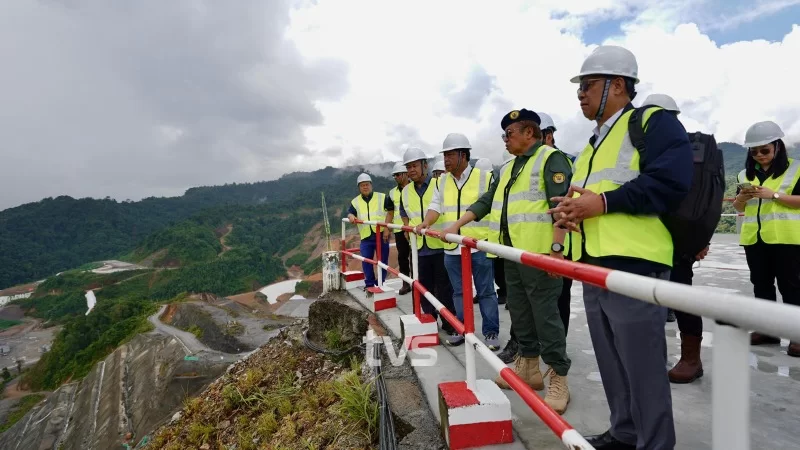
Abang Johari (second right) when visiting Baleh Hydroelectric Dam project. Photo: TVS KAPIT: A Lake Development Authority (LDA) is set to be established by 2030 to oversee sustainable development of lakes and dams across Sarawak. Premier Datuk Patinggi Tan Sri Abang Johari Tun Openg said the authority will manage all lakes in Sarawak, including major dams. These include Batang Ai, Baleh, Murum, Bakun, and other natural lakes identified for high-impact, environmentally responsible development. “There must be a balance between the project itself. The power generation project and sustainability in terms of environmental preservation. It has to be done together. “I must say that we have learned lessons from the development of Batang Ai and Bakun, and we are now adjusting ourselves in line with global needs to preserve the environment in response to climate change,” he said. He said this during a press conference after visiting the Baleh Hydroelectric Dam, here today (June 16). Abang Johari also expressed confidence in Sarawak Energy Berhad’s (SEB) ability to complete the Baleh project by the targeted 2030 timeline. He said the project, combined with the 1-gigawatt capacity from combined cycle gas plants in Bintulu and Miri, boosts the state’s energy supply. “If we add everything together, we now have around 7 gigawatts, while our actual need is only about 3 gigawatts,” he explained. By 2030, he said Sarawak expects to reach 10 gigawatts in generation capacity, not including the proposed solar or hydrogen energy projects. He added that planned solar projects in Bakun and Murum could each contribute another 1 gigawatt. “Excluding our efforts on hydrogen, it means we already have enough energy resources—with about 60 to 70 per cent coming from renewable sources. “And that is our green power,” he asserted. The Premier expressed optimism that no other region currently matches Sarawak’s green energy output, which will help attract more investors to the state. “We will also enter the Asian Green Room. I believe SEB will meet the targets through 2035, perhaps even beyond,” he added. Source
State Budget 2025: RM1,200 pocket money for S’wakian students studying in higher learning institutions

KUCHING (Nov 11): Sarawakian students studying in higher learning institutions across the country will receive pocket money of RM1,200 next year. Premier Datuk Patinggi Tan Sri Abang Johari Tun Openg said this special financial assistance will benefit 25,000 Sarawakian students from families of lower income groups with household per capita income of RM1,500 or below per month. “The money given is to be spent on food and essential goods to help them mitigate the cost of living. “Under this Budget, a sum of RM30 million will be allocated for this purpose,” he said when tabling the State Budget 2025 at the State Legislative Assembly (DUN) Sitting here today. Abang Johari said the RM500 book vouchers and free laptop for Sarawakian students initiatives, which were launched in August this year, will also be continued in 2025. “A sum of RM2 million will be allocated for the book vouchers where RM500 is allocated per person for public and private higher-learning institutions Sarawakian students for households with per capita income of RM1,500 per month and below. “The free laptop assistance to Sarawakian students who have successfully enrolled into public and private higher-learning institutions for households with per capita income of RM1,500 per month and below will empower our students with the essential technology they need to excel in their academic pursuits with an allocation of RM30.5 million next year, which will benefit 10,166 students,” he said. He also said that the Sarawak government will continue to provide annual operating grants to state-owned universities and colleges where for 2025, a sum of RM35 million will be allocated to University Technology Sarawak, RM30 million to Sarawak Skills Development Centre, RM30 million to i-CATS University College, and RM5.5 million to Kolej Laila Taib. Other allocations under the State Budget 2025 to enhance Sarawak’s education system and facilities included an allocation of RM20 million for the Sarawak Education Enhancement Programme (SEEP), a joint free tuition initiative for Form 4 and 5 students in core subjects Science, Mathematics, English and History as well as pure science subjects, with an expansion in the programme’s coverage; RM4.6 million for the teaching of Science and Mathematics in English (Dual Language Programme); and RM27 million to cover the operation cost of three state-owned international schools in Petra Jaya, Mile 12 Kuching-Serian Road, and Sibu, the latter of which is scheduled to be completed by the end of this year. Under the early childhood sector, Abang Johari said RM20 million will be allocated to state-owned early childhood provider SeDidik, and a sum of RM14 million for the annual special grant to all registered early childhood and care institutions in 2025. “To ease the burden of parents, an allocation of RM2.5 million will also be allocated next year for Tadika and Taska fee subsidies. “This will benefit 2,500 children whose parents’ monthly income is RM7,000 and below. By providing this assistance, we aim to increase Sarawak children’s access to early childhood education,” he said.
Fudan research hub a crucial step to ease doctor shortage in Sarawak, says Dr Sim
Teo (fifth left) presents a souvenir to Dr Sim after the official launching of KSC Summit 2025. MIRI (Nov 23): The establishment of the Fudan University Institute of Integrative Medicine Research Development Centre and its AI Medical Research Hub here marks an important step in Sarawak’s efforts to address its longstanding shortage of medical professionals, said Datuk Amar Dr Sim Kui Hian. The Deputy Premier said the collaboration with the top Chinese institution forms part of the state’s strategy to strengthen its medical training pipeline, including plans for a medical school that could help produce some of the 2,500 doctors needed in Sarawak and across Malaysia. “That is why this Fudan University research hub is a good beginning. Hopefully, with the medical school helping some of the 2,500 doctors, it will contribute to easing the shortage of doctors in Sarawak and Malaysia,” he said at the launching of the Kenyalang Smart City (KSC) Summit 2025 here. Dr Sim, also State Minister of Public Health, Housing and Local Government, said the initiative aligns with Sarawak’s transition from resource-based industries to high-value sectors driven by talent, technology and research. “We do not want to remain an energy basket. We want to become a centre of talent,” he said, adding that Sarawak’s rapid progress in digital and high-tech development had attracted strong international interest. He also highlighted the potential of artificial intelligence (AI) not only in modern medical practice, but also in advancing research into Borneo’s biodiversity for pharmaceutical and therapeutic development. Dr Sim commended Imasa Dinasti Sdn Bhd and its chairman Teo Ah Khing for driving the KSC initiative, and emphasised the importance of long-term investment in youth to sustain the state’s talent development agenda. Meanwhile, Teo said the summit marks a turning point for Miri as it moves from its historic role as the birthplace of Malaysia’s oil and gas industry into a future hub for AI, integrative medicine and biomedical innovation. He noted that Premier Datuk Patinggi Tan Sri Dr Abang Johari Tun Openg approved the KSC plans within six days, underscoring the state government’s commitment to developing new knowledge-based industries. “Kenyalang Smart City is not only a project. It is a blueprint for future cities in Sarawak,” he said. Teo, who is KSC Summit 2025 organising chairman, said the Sarawak government’s allocation of a landmark building in central Miri to house the Fudan Centre demonstrated strong and proactive leadership. He also praised the contributions of Fudan University’s Prof Dong Jingcheng, whose global standing in integrative medicine has helped shape the vision for the research hub. The summit also coincided with the 14th International Conference on Traditional and Modern Medicine, which saw participation from medical professionals from Malaysia, China, Brunei, Indonesia and Singapore — a development Teo said reflects growing confidence in Miri as a venue for medical thought leadership. “Miri has produced global leaders across many fields. We intend to build on that momentum,” he said. Source
AI-driven healthcare takes centre stage at Miri’s KSC Summit 2025
(From left) Tuong, Lee, Dong and Teo with the signed MoUs. MIRI (Nov 23): Artificial intelligence (AI) is set to drive the next wave of healthcare innovation in Sarawak, with Miri positioned to lead regional development under the Kenyalang Smart City (KSC) initiative. State Transport Minister Dato Sri Lee Kim Shin said the theme of this year’s KSC Summit, ‘AI + Healthcare: From Research to Real World Impact’, reflects a global shift toward data-driven healthcare and presents major opportunities for Sarawak. “AI is reshaping diagnostics, therapeutics and public health systems worldwide. For Miri and Sarawak, this is the moment to translate research into solutions that improve health outcomes,” he said at the opening of the KSC Summit 2025 here. A key highlight was the growing collaboration in integrative and AI-supported medicine, particularly Fudan University Joint Research Centre for Innovative Drug Development in Integrated Chinese and Western Medicine + AI Medical Experience Centre known as ‘THE HALL’, which is supported by Curtin University Malaysia and led by Imasa Dinasti. Lee said the centre demonstrates how AI and integrative medicine can work together to develop new therapeutics and improve clinical outcomes. Meanwhile, two Memorandum of Understanding (MoUs) were signed during the summit to strengthen Miri’s position in AI healthcare. The first, involving Imasa Dinasti, Fudan University and Curtin Malaysia, formalises cooperation in AI-driven integrative medicine and innovative drug development within the KSC ecosystem. The second MoU, between Curtin Malaysia’s Faculty of Engineering & Science and Fudan University’s Institute of Integrated Traditional Chinese Medicine and Western Medicine, covers joint research, academic exchanges, co-supervision and scholarships. Lee said both agreements will nurture local talent and expand Sarawak’s access to world-leading expertise and facilities. He stressed that AI healthcare is a core pillar of the wider KSC initiative, aiming to build a healthier, more resilient and inclusive society through advanced technologies, data analytics and cross-disciplinary collaboration. The summit, he added, supports Sarawak’s Post Covid-19 Development Strategy 2030, especially in digital transformation, education and research excellence. “With commitment and collaboration, we can translate cutting-edge research into real-world impact,” he said, while commending Curtin Malaysia, Fudan University, Imasa Dinasti and the TAK Group for advancing high-impact innovation. Also present at the summit’s opening ceremony were Deputy Minister for Tourism, Creative Industry and Performing Arts Datuk Sebatian Ting; Imasa Dinasti chairman Teo Ah Khing; Fudan University’s Institute of Integrative Medicine director Prof Dong Jing Cheng; and Curtin Malaysia deputy pro vice-chancellor Prof Tuong-Thuy Vu. Source
OTSM, Invest Sarawak ink MoA to drive semiconductor ecosystem, tech hub vision
Choi (right) and Ong exchange the signed document, witnessed by Awang Tengah (standing behind, centre). KUCHING (Aug 8): OCI Tokuyama Semiconductor Materials Sdn Bhd (OTSM) and Invest Sarawak have signed a memorandum of agreement (MoA) today to boost Sarawak’s ambition of becoming a leading regional technology hub. The partnership seeks to develop supply chains, forge strategic collaborations, and build industrial ecosystems to support OTSM’s upcoming high-purity semiconductor-grade polysilicon plant. OTSM chief executive officer Steve Choi said the collaboration would create opportunities for Sarawak businesses and talent while enabling local suppliers to participate in the global semiconductor value chain. “This will strengthen Sarawak’s position as a competitive hub in the global semiconductor industry and drive long-term economic prosperity,” he said in a statement. He added that the initiative was expected to attract significant high-value investments and spur the growth of advanced manufacturing. The MoA was signed by Choi and Invest Sarawak chief executive officer Timothy Ong, witnessed by Deputy Premier Datuk Amar Awang Tengah Ali Hasan at the World Expo in Osaka. Last month, OTSM – a 50:50 joint venture between OCI TerraSus and Japan’s Tokuyama Corporation – broke ground on its RM2 billion semiconductor-grade polysilicon plant at Samalaju Industrial Park, Bintulu. Occupying 13.7 hectares, the facility is scheduled to begin operations in 2029, with an annual production capacity of 8,000 metric tonnes, supplying major technology markets in Korea, Japan, and Taiwan. This marks OCI’s third major investment in Sarawak, following its 2017 acquisition of Tokuyama Malaysia’s solar-grade polysilicon plant, now operating as OCI TerraSus, which produces 35,000 metric tonnes annually. The second investment is a joint venture with Kumho P&B Chemicals to produce epichlorohydrin – a chemical used in epoxy and rubber production – slated to be commenced by year-end. Source
Bintulu’s Power Capacity to hit 1GW By 2035 to Drive Industrial Growth
KUCHING, July 23 – Sarawak is set to develop two gas-fired power plants, with a capacity of 500 megawatts each, which will increase Bintulu’s total power generation capacity to one gigawatt by 2035. Sarawak Premier, Tan Sri Abang Johari Tun Openg, said that the initiative is aimed not only at meeting the needs of the local population, but also at fulfilling the demands of investors, particularly in the rapidly growing industrial and green technology sectors in Bintulu. “The comprehensive development plan also includes the construction of an international school in Bintulu, to attract professional workers and foreign investors to reside and settle here,” he said, during the opening of a hotel in Bintulu, here, today. Abang Johari, recalling Bintulu’s development history, said that it began with the discovery of natural gas and subsequent investments in the liquefied natural gas (LNG) industry, which spurred the construction of ports and other essential facilities, such as hotels and accommodation for industry players. He noted that this investment-driven development model has transformed Bintulu into a new growth hub, encompassing not only the Kidurong area, but also extending to Samalaju. “This rapid development necessitates the provision of comfortable facilities, including international-class hotels, to meet the needs of tourists, delegations and investors. “To further support Bintulu’s economic growth, a high-tech autonomous rail transit (ART) system, powered by hydrogen, will be implemented under the 13th Malaysia Plan, connecting three strategic locations – Bintulu, Kidurong and Samalaju,” he said. He added that Bintulu will be the second city after Kuching to have the ART system, which will enhance accessibility, facilitate movement, and promote sustainable development. “As I mentioned in Miri recently, Bintulu is now globally recognised as one of the 36 low-carbon industrial clusters in the world. This demonstrates that Bintulu has become a key global focus,” he said. Source