
Sarawak approves SST on export of ferroalloys and polysilicon, says Deputy Premier
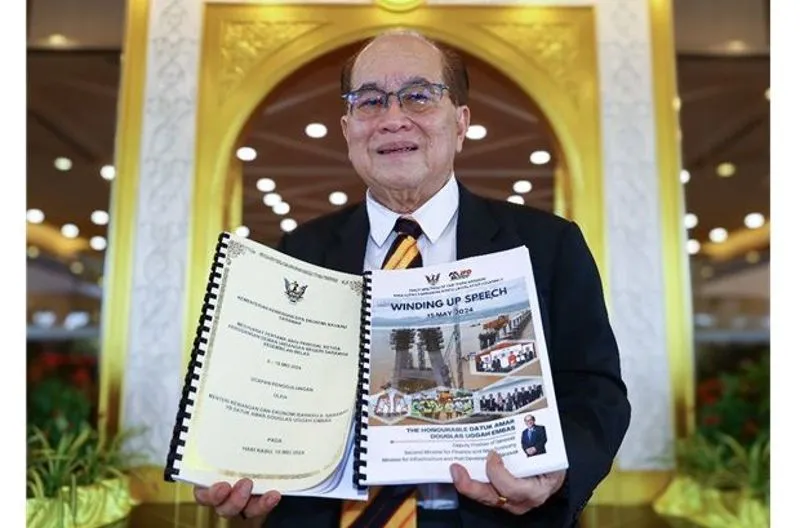
KUCHING: Sarawak has approved the introduction of state sales tax (SST) on the export of ferroalloys and polysilicon as part of efforts to diversify revenue sources, says Datuk Amar Douglas Uggah. The Deputy Premier said the tax would be imposed at the rate of 1.5% effective Sept 1 this year. “This is a fair and reasonable rate for the affected companies as they enjoy tax incentives from the Federal Government and favourable power rates from the state. “The revenue generated from this source will give us fiscal flexibility in enhancing our socioeconomic development efforts which include, among others, implementing clean and renewable energy initiatives,” he said in his winding-up speech at the Sarawak Legislative Assembly sitting here on Wednesday (May 15). Uggah also said Sarawak collected RM14mil from SST on the export of selected timber products last year. He said that for this year, the state was projected to collect RM33mil from the tax, which was imposed effective June 1 last year. “Moving forward, the Sarawak government will continue to explore new opportunities to enhance and diversify our revenue sources. “This is imperative as we continue to pursue our development agenda so that no one will eventually be left behind,” he said. In addition, Uggah said Sarawak’s revenue was projected to be RM12.749bil this year. He said RM4.798bil or 38% of the projected revenue had been collected as of March 31. “Based on the performance thus far, we are confident we can achieve the targeted revenue projection for this year, barring any unfavourable circumstances at the global geopolitical level which could adversely affect oil and gas markets,” he added.
Sarawak estimated to possess high value mineral resources worth RM1.252 trillion
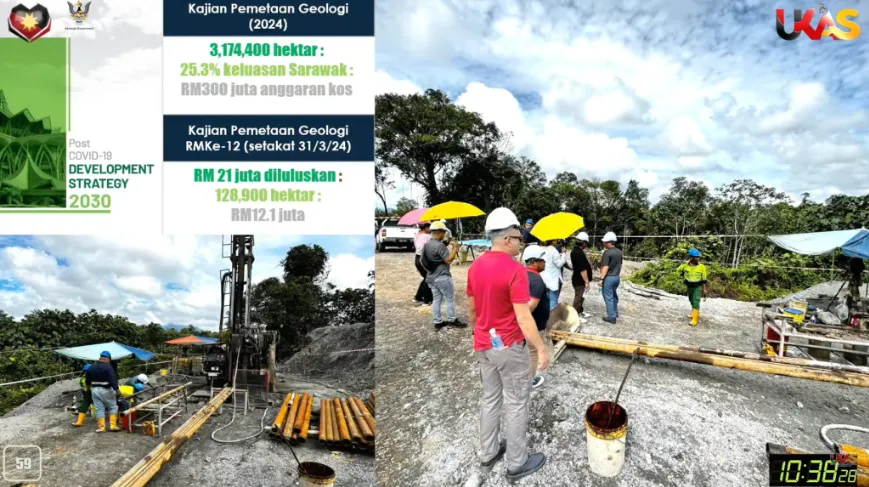
KUCHING, May 14: Sarawak is estimated to possess high value mineral resources for the energy industry and downstream manufacturing industry worth more than RM1.252 trillion. Natural Resources and Urban Development II Minister Datuk Amar Awang Tengah Ali Hasan said the estimated value is based on the records of Sarawak’s Department of Minerals and Geosciences Malaysia. These mineral resources are deposited across an area of approximately 39,824 square kilometers or 3,982,400 hectares, which involves 32 per cent of the area of Sarawak. The Sarawak government has thus requested for a larger allocation for Department of Minerals and Geosciences Malaysia, Sarawak from the Federal government so that the study on the existence of mineral resources in Sarawak can be carried out more extensively. “This geological study and mapping is very important to enable land use planning and the development of mineral-based industries to be made in detail and comprehensively by the government,” said Awang Tengah when delivery his ministerial winding-up speech in the Sarawak Legislative Assembly (DUS) here today. He said in the development of mineral-based industries, the Sarawak government is currently trying to develop downstream industries especially those based on silica sand for the manufacturing of photovoltaic glass (PV glass) which is essential for solar power generation (green energy) and limestone for the clinker and cement industry. “In addition, the government is also studying the potential of an industry based on high-value strategic minerals, namely Non-Radioactive Rare Earth Elements (NR-REE). “NR-REE is needed in various manufacturing industries such as magnetics, phosphorus, ceramics, metal alloys, defence and so on,” said the Bukit Sari assemblyman (GPS-PBB). — DayakDaily
Deputy Premier in Sweden to explore sustainable forestry collaboration
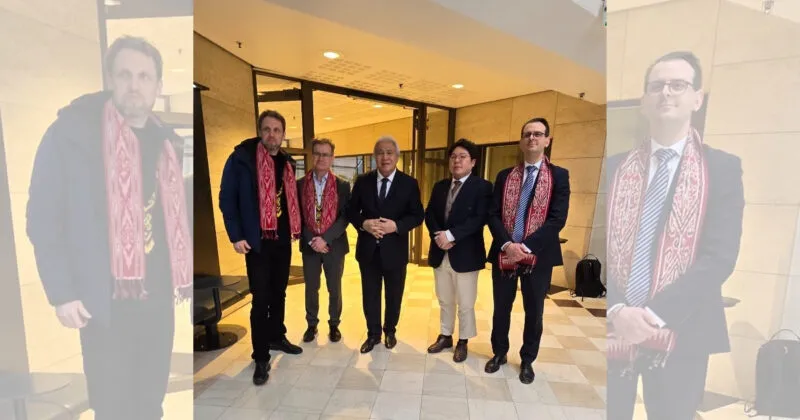
By DayakDaily Team KUCHING, April 28: Deputy Premier of Sarawak Datuk Amar Awang Tengah Ali Hasan had a networking session with Business Sweden, an agency that promotes Swedish companies’ global growth and foreign direct investors’ expansion in Sweden.Awang Tengah was in Stockholm for a two-day working visit to promote Sarawak as an investment destination for Swedish investors, as well as to explore opportunities for collaboration in forest management, plantation, and technology to process planted timber species. According to a press release, the Deputy Premier was briefed by Swedish Forest Agencies, Swedish Wood Building Council, Ecco Innovation Foundation, and Billerud on topics such as the development of forest industries in Sweden, the use of engineered wood to construct timber structures, Ecco Innovation Foundation collaboration with other countries in Southeast Asia, and the pulp and paper industry.The industry has a structured mission to achieve a circular bio-based society for Sweden. During the same session, Paul Valentine, General Manager of Sarawak Planted Forest Sdn Bhd, provided an overview of the development status of planted forests in Sarawak, as well as opportunities for future collaborations and investments in digital technology, mechanisation for planted forest harvesting, and the production of high value-added products such as pulp, paper, engineered wood, and biomass fuel for the Swedish business communities. The Deputy Premier invited the Swedish business community to consider investing in Sarawak’s forestry, forest plantation, and wood-related industries. He pointed out that Sarawak is transitioning to a sustainable and renewable wood-based industry that uses material from forest plantations to produce engineered wood, biomass fuels, pulp, and paper.Sarawak also a geographic advantage because it is close to large markets with high growth rates, such as China, Japan, India, South Korea and Australia. Meanwhile, Business Sweden sees potential opportunities in Sarawak for research and innovation, digital forest management applications, forest industries for wood structure construction, and human capital development, according to the press release. Business Sweden, in collaboration with industries and agencies, will continue to engage in dialogues with Sarawak to identify areas of mutual interest that can be considered and implemented in the future. Also present during the working visit were Swedish Ambassador to Malaysia Dr Joachim Bengstrom; Deputy Minister for Urban Planning, Land Administration, and Natural Resources, Datuk Len Talif Salleh; Advisor to the Ministry of International Trade, Industry, and Investment (MINTRED), Dato Sri Mohd Naroden; Director of Forests, Datu Hamden Mohammad; Permanent Secretary of MINTRED, Dzulkornain Masron; General Manager of Sarawak Timber Industry Development Corporation (STIDC), Zainal Abidin Abdullah; Advisor to STIDC, Datu Hashim Bojet; CEO of Invest Sarawak Timothy Ong; and CEO of PUSAKA Capital Sdn Bhd, Mohd Nor Topek Julaihi. – DayakDaily
Sumitomo eyes enhanced participation in S’wak’s green projects
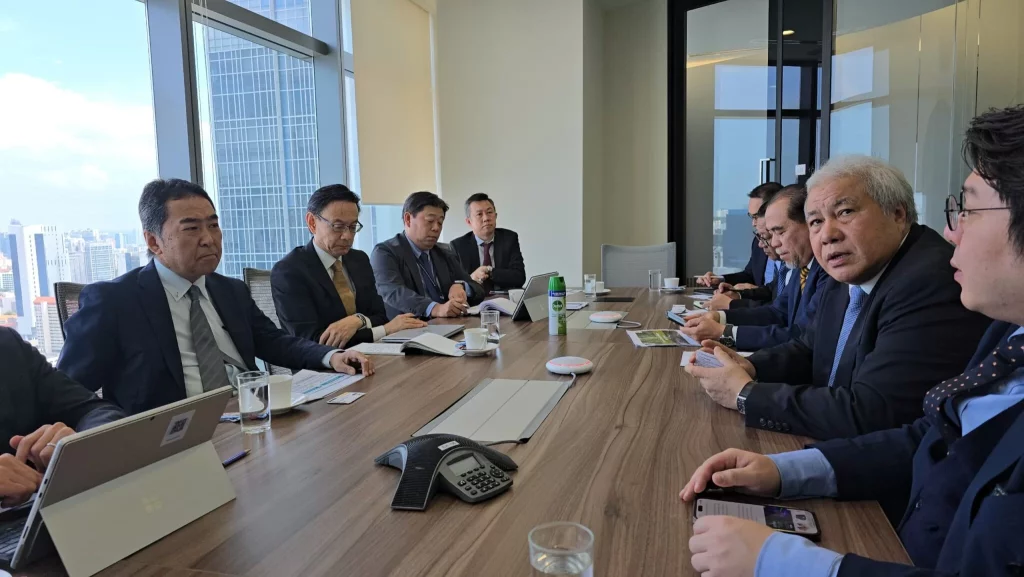
SINGAPORE: Sumitomo Corporation (Sumitomo) has expressed its interest to have greater involvement in Sarawak’s green projects. Among the projects are biomass bamboo, renewal energy, carbon capture, utilisation and storage (CCUS), green metals, chemical and derivates. Deputy Premier Datuk Amar Awang Tengah Ali Hasan welcomes Sumitomo to explore and invest in the bamboo plantation project. He also invited Sumitomo to look into the new economic sectors including the green and digital economy. Earlier today, Awang Tengah, who is also Minister of International Trade, Industry and Investment, met with Sumitomo Corporation Asia and Oceania Group chief executive officer (CEO) Keigo Shiomi to discuss more collaboration opportunities. Sumitomo has several collaborations in Sarawak and is currently developing a hydrogen related production project in Bintulu. Meanwhile, also in attendance during the meeting were Sarawak Timber Industry Development Corporation (STIDC) general manager Zainal Abidin Abdullah, STIDC advisor Datuk Hashim Bojet, InvestSarawak CEO Timothy Ong, and PUSAKA Capital Sdn Bhd CEO Mohamad Nor Topek Julaihi.
Sarawak’s energy transition: Navigating the technological frontier for sustainable progress
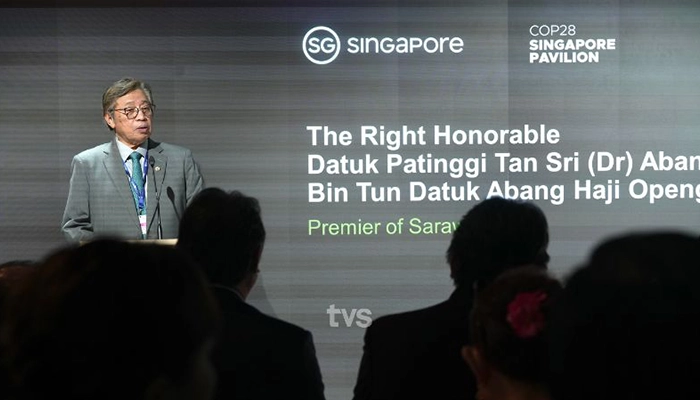
DUBAI, Dec 5: The synergy between technology and resources is crucial for Sarawak’s energy goals, emphasising the strategic utilisation of technological advancements and efficient resource management. Premier of Sarawak, Datuk Patinggi Tan Sri Abang Johari Tun Openg, emphasizes the significance of this transition as he highlights Sarawak’s technological aspirations focus on hydrogen production, a crucial component in the renewable energy landscape. “It’s a question of technology – harnessing the full spectrum of available resources. For instants three years ago, 1kg of hydrogen, requires 60kw of power. “But now we are working with Petronas, in doing our research, it can come down to 38kw,” he told this to reporter when visiting the Malaysian Pavilion after witnessing a Memorandum of Understanding between InvestSarawak and Surbana Jurong Pte Ltd in conjunction with the United Nation Climate Change Conference (COP28) in Dubai. This achievement is attributed to cutting-edge technology, particularly the incorporation of a new membrane in the electrolysis process. Abang Johari expresses optimism for significant cost reductions in hydrogen production over the next five years, anticipating a decrease in power costs. This move positions hydrogen as a more economical and environmentally friendly energy source. Sarawak’s commitment to incorporating hydrogen into its energy portfolio is evident in ongoing public transport initiatives within the region. “The conversion of H2O into hydrogen and oxygen is fueling public transport, with ongoing tests of Autonomous Rail Rapid Transit (ART) and buses powered by hydrogen,” he said. This transition to hydrogen-powered transportation not only signifies a significant step towards reducing carbon emissions but also underscores Sarawak’s commitment to embracing innovative solutions for a sustainable future. In tandem with technological advancements in hydrogen production, Sarawak is diversifying its energy sources. A pioneering approach involves the utilization of wood pallets as a biomass power source, adding a new dimension to Sarawak’s energy matrix and ensuring a diversified and resilient power supply. Abang Johari added that the state is actively involved in reforestation efforts, creating carbon sinks through the replanting of forests. This dual approach, combining technological innovation and environmental conservation, positions Sarawak at the forefront of sustainable energy transitions. – TVS
Sarawak keen to work with EU in tackling climate change
Sarawak Premier Tan Sri Abang Johari Tun Openg (third left) launching InvestSarawak at the EU-Malaysia Business Day networking dinner in Kuching on Wednesday (Feb 14) night. – ZULAZHAR SHEBLEE/The Star KUCHING: Sarawak is keen to work with the European Union (EU) on mitigating climate change, says Tan Sri Abang Johari Tun Openg. The Premier said the EU had experience and technology while Sarawak’s strength was in its natural resources and renewable energy. “Although we are a small state, we feel we have the responsibility to assist in addressing climate change and reducing carbon emissions. “You are welcome to explore which areas you can collaborate with us on this and together we can help the world,” he said at the EU-Malaysia Business Day networking dinner here on Wednesday (Feb 14) night. Abang Johari said other potential areas of collaboration were in digitalisation and education. “Perhaps we can send our students to study in Europe,” he said. Abang Johari also launched InvestSarawak, the state’s investment and trade agency, at the same event. InvestSarawak will serve as a one-stop centre and first point of contact for all investors in the state. It will be the key facilitator for investors in the development, applications and approvals for investment projects in Sarawak, besides improving the ease of doing business. Deputy Premier Datuk Amar Awang Tengah Ali Hasan said InvestSarawak was a pivotal initiative which aimed to transform the investment landscape, increase trade and improve talent attraction in the state. “It will play a key role serving as facilitator and adviser to provide invaluable local insights to all investors, both foreign and domestic,” he said.
EU official praises green energy push by Malaysia’s Sarawak
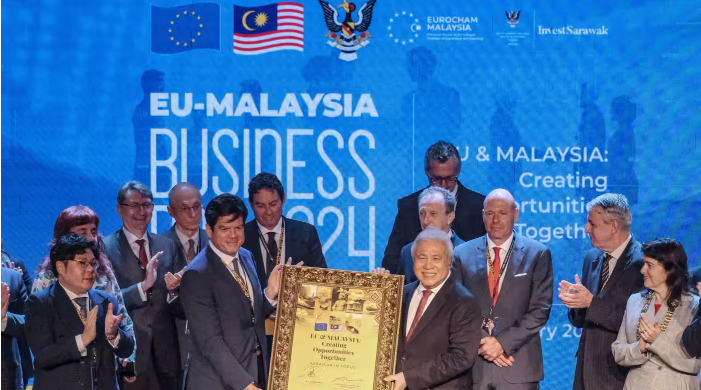
Bloc commits to mobilize $10.8bn for ASEAN sustainable projects Six major ports function as crucial transhipment hubs that play integral roles in the state’s supply chain by NURUL SUHAIDI KUCHING, Malaysia — Sarawak, a resource-rich state in Malaysia with an ambitioussustainable energy agenda, is drawing interest from the European Union, but the 27-nation group’s top official in the country says the bloc needs new cooperativemechanisms for its companies to take advantage of the opportunity. “We have seen the opportunities and the vision of the state, bringing in hydrogen,sustainable transition to green energy and energy transition,” Michalis Rokas, the EUambassador to Malaysia, said in a speech at the EU-Malaysia Business Day 2024 eventheld on Feb. 14 in Kuching, the capital of Sarawak, which is located on the island ofBorneo.Malaysia is the EU’s third largest trading partner in ASEAN, while the EU is the fourthlargest destination for Malaysian exports. The EU is also the second largest source offoreign direct investment for Malaysia at 25.2 billion euros in 2022. Still, Rokas acknowledged the limited presence of European businesses in Sarawak. Tobridge this gap, he proposed a “blending” model whereby European companies wouldtake the lead in strategic investments, while the EU would provide financial supportthrough grants, guarantees and concessional loans through the European InvestmentBank (EIB). This approach aims to de-risk projects and attract private capital,accelerating Sarawak’s green ambitions.Rokas also said the potential partnership aligns with the EU’s Indo-Pacific Strategy,which emphasizes fostering partnerships with regional countries on issues like climatechange and clean energy. Sarawak’s focus on developing hydrogen production,sustainable aviation fuel, and transitioning away from fossil fuels resonates with theEU’s own sustainability goals. The EIB has been active in Southeast Asia for over three decades, financing projects invarious sectors such as energy, transport, climate action and infrastructure. In 2022, itopened a regional representative office in Jakarta to further strengthen its engagementin Indonesia, Vietnam, Cambodia, Laos and the Philippines. Nikkei Asia understandsthat the bank has been attempting to operate in Malaysia since 2020. Its application ispending government approval for a framework agreement.Rokas also said during his speech that the EU and its 15 member states with a presencein Malaysia will be working on a plan to propose a Global Gateway flagship project inSarawak.Meanwhile, the state’s deputy premier Awang Tengah Ali Hassan welcomed thepotential partnership, highlighting the existing trade relationship between Sarawak andthe EU, which stood at 2.1 billion euros in 2022. He emphasized the state’s commitmentto renewable energy, with a target of generating at least 60% of its power from cleansources by 2030. Sarawak, abundant in oil, gas and timber, is the only Malaysian state with more than70% renewables in its energy mix, mainly from hydroelectric dams. It has threeoperational large-scale hydroelectric dams, with a fourth, Baleh, under construction.The total installed capacity of the operational large-scale hydroelectric dams in Sarawakis 3,452 megawatts. Once Baleh is completed, the total capacity will increase to 4,737MW.Last year, Sarawak announced plans to sell one gigawatt of renewable energy toSingapore via a 700km undersea cable by 2032.“We seek to establish a stronger connection between Sarawak and Europe,” Awang saidat the business event. “I hope this will serve as a venue to forming new networks andposing new paths which yield fruitful outcomes towards an inclusive economy.” Headded that Sarawak’s green push has led to collaborations with global players fromSouth Korea and Japan to develop the hydrogen industry in the state.Sarawak is already embarking on two major hydrogen production projects — withJapan’s Eneos and Sumitomo Corp. on one called H2ornbill, and South Korea’sSamsung Engineering, Posco and Lotte Chemical on another dubbed H2biscus — in theport town of Bintulu, where one of the world’s largest LNG complexes is located.The Sarawak state legislative assembly building and Sarawak River in Kuching, Malaysia. (Photo by Norman Goh)4/2/24, 2:01 PM EU official praises green energy push by Malaysia’s Sarawak – Nikkei Asiahttps://asia.nikkei.com/Business/Energy/EU-official-praises-green-energy-push-by-Malaysia-s-Sarawak 5/5Get our Asia daily briefing newslettersnewsletter@nikkeiasia.com RegisterThe two projects will have the potential to produce up to 238,000 tonnes of greenhydrogen annually, generating an estimated 2.4 billion ringgit to Sarawak’s grossdomestic product by 2030, according to Abang Johari, the state’s premier during hisannual new year address in January.Sarawak also boasts, according to the premier, ASEAN’s first integrated hydrogenproduction plant and refueling station, powering hydrogen buses in Kuching since 2018and a tram on a test basis beginning last year.Also, a third hyrdogen project is based in Rembus, near Kuching, for domestic use andis expected to be fully operational in 2025, according to state-linked company SEDCEnergy and the Sarawak Economic Planning Unit. On Monday, SEDC Energy signed anagreement with Gentari, a subsidiary Malaysia’s state energy conglomerate Petronas todevelop the Sarawak H2 Hub in Bintulu, according to a statement by Gentari.Total hydrogen industry investment in Sarawak is estimated to be worth at $4.2 billion,an SEDC Energy spokesperson told Nikkei Asia.Hydrogen produced in Sarawak is known as green hydrogen — produced via electrolysisand powered by renewable electricity from hydroelectric dams. Additionally, the state ispioneering the production of crude algae oil for sustainable aviation fuel usingmicroalgae.Timothy Ong, the chief executive of the newly established state investment promotionagency InvestSarawak said at a panel session that Sarawak is not only in competitionwith other regions of Malaysia, but with countries like Vietnam, Indonesia, Thailandand Singapore as well.“Although a lot of people come to Sarawak for renewable energy, I can comfortably tellyou today that we have more demand than available supply when it comes to renewableenergy,” Ong said. He added it is important for the state to understand that investmentbenefits must trickle down to the people of Sarawak and companies and not just remainin the hands of foreign or domestic investors.
The Netherlands announces subsidies for €998,330,000 for production of renewable hydrogen with a electrolysers
The Netherlands announces subsidies for €998,330,000 for production of renewable hydrogen with a electrolysers. Do you want to produce renewable hydrogen with an electrolyser? And do you have plans for this? Then you will soon be able to apply for a subsidy via the OWE scheme again. To help you prepare your application, we provide you with an overview of the changes compared to the OWE in 2023. What’s different in 2024? Requirements for the installation 🔥 What about we co-host a webinar? Let’s educate, captivate, and convert the hydrogen economy! Hydrogen Central is the global go-to online magazine for the hydrogen economy, we can help you host impactful webinars that become a global reference on your topic and are an evergreen source of leads. Click here to request more details Ranking of your application Your maximum subsidy amount Feasibility of your project New mandatory appendix: supply of renewable electricity purchase Realizing your installation
Abang Rahmat Yusuf is CEO of Sarawak Sovereign Wealth Future Fund
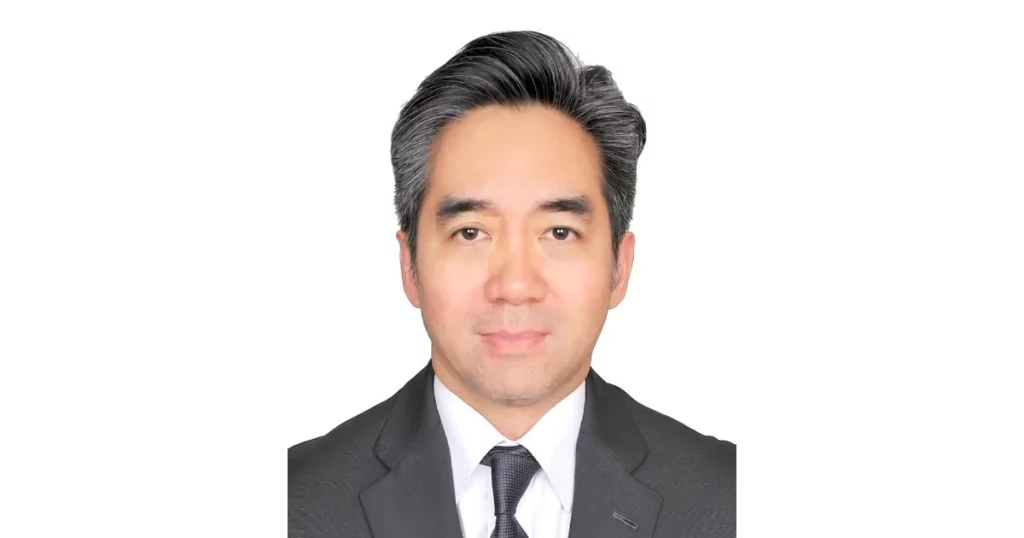
KUCHING: The Board of Guardians of the Sarawak Sovereign Wealth Future Fund has appointed Abang Rahmat Yusuf as the Chief Executive Officer (CEO), effective January 29 this year. The announcement was made after the Board meeting yesterday, according to a press statement. Abang Rahmat, 48, was formerly the head of Investment Banking (Malaysia) at CLSA Securities from 2019 to 2024. During his tenure there, he led the fund raising exercises including initial public offerings (IPOs) and placements for institutional and corporate clients. In the beginning of his corporate career, he was a director in the Investments arm at Khazanah Nasional in 2004 until 2019, during which he established and headed the Khazanah Turkey Regional Office in Istanbul covering Turkey, Middle East and North Africa (MENA) and Sub-Saharan Africa. He was also the Overseeing Director for Financial Institutions Group (FIG), which represented 20 per cent of Khazanah’s portfolio. He holds a Master in Public Administration from Harvard University.
Sarawak welcomes Singaporean investors
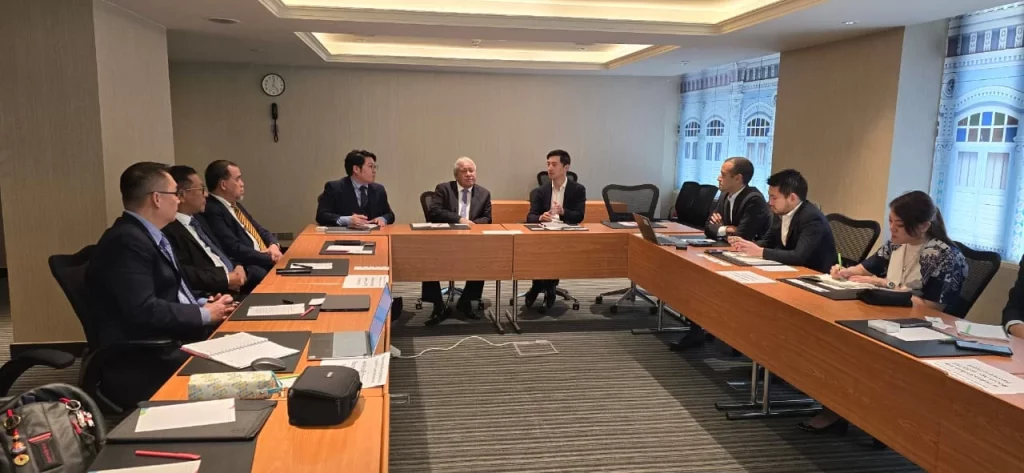
KUCHING: The Sarawak government has consulted with several Singaporean investors to explore investment opportunities especially in renewable energy, green energy and digital economy projects in the state. Deputy Premier, Datuk Amar Awang Tengah Ali Hasan who was in Singapore yesterday engaged with representatives from UOB Group, Eastspring Investments, TWO Family Office and Chemsains Konsultant Sdn Bhd. Awang Tengah welcomes the interest from these companies and expressed his appreciation towards their interests in Sarawak, in line with the Post Covid-19 Development Strategy 2030 (PCDS 2030) for the state to be a thriving society driven by data and innovation. During his visit there, he also met with Kuok Meng Wei who is representing Kuok Group, one of Singapore’s largest conglomerates to discuss potentials in green and renewable energy investment projects in Sarawak. For the record, Kuok is also the chief executive officer (CEO) and managing director of K2 Strategic, an international developer, owner and operator of hyper-scale digital infrastructure assets in the technology sector. Also in attendance were Sarawak Timber Industry Development Corporation (STIDC) general manager, Zainal Abidin Abdullah, STIDC’s advisor, Datuk Hashim Bojet, Invest Sarawak chief executive officer, Timothy Ong and PUSAKA Capital Sdn Bhd chief operating officer, Mohamad Nor Topek Julaihi.