
China’s emissions, efficiency targets under threat after falling short in 2023
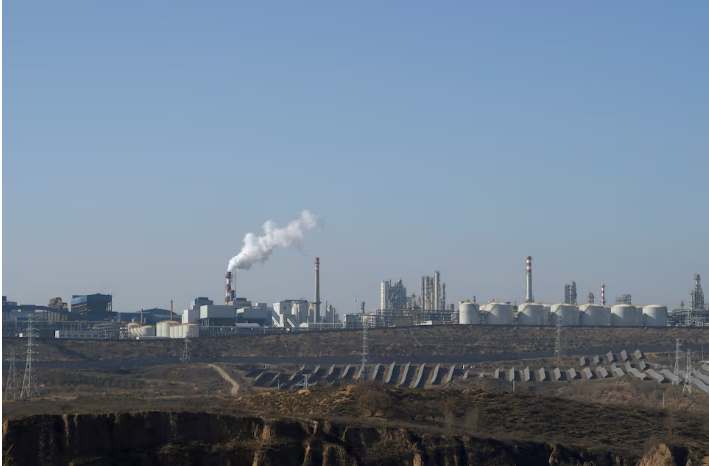
Bloc commits to mobilize $10.8bn for ASEAN sustainable projects SINGAPORE, March 12 (Reuters) – China is falling short on key targets for tackling climate-warming emissions, and analysts said Beijing’s credibility in global climate talks could be at risk unless it redoubles its efforts to get back on track. The Chinese government has rarely missed targets in the past. But now, driven primarily by energy security concerns, it has shown little political will to address the emissions gap, analysts said. China’s National Development and Reform Commission (NDRC), a planning agency, promised last week to “redouble efforts in energy conservation and carbon reduction” this year after it “fell short of expectations” in 2023. Analysts say it is well behind on its goal to slash energy intensity by 13.5% and carbon intensity by 18% between 2021 and 2025. The intensity rates – measuring how much energy is consumed and how much carbon dioxide emitted per unit of economic growth – are a key part of the country’s pledge to bring emissions to a peak before 2030 and to net zero by 2060. Keeping its targets within reach would require “concerted efforts across all sectors to bridge the gap”, said Jom Madan, senior research analyst with the consultancy Wood Mackenzie. But the planning commission set targets for 2024 that fall far short of what is needed. For energy intensity, the commission mandated only a 2.5% reduction. It set no new target for carbon intensity, and made no new moves to curb the use of coal – the most polluting fossil fuel. Madan predicted that China might “come close … but not quite achieve its targets” on energy efficiency. If the country misses its 2025 targets, it could raise doubts worldwide about its ability to rein in emissions. The country also risks a “serious loss of diplomatic credibility,” said lead analyst Lauri Myllyvirta of the Centre for Research on Energy and Clean Air. “China has long emphasised its ability to implement the country’s commitments, while criticising others for setting lofty targets,” he said. The NDRC did not respond to a request for comment. As the world’s biggest carbon polluter and second-largest economy, China has faced growing international pressure to show more climate ambition. It has resisted, arguing that it is already doing more than most fast-developing countries. China’s rising emissions account for 35% of the world’s annual total. On a per capita basis, the emissions level is 15% higher per capita than the OECD average, the International Energy Agency said last week. To meet its goals, Beijing should focus on efficiency improvements in industry and construction, and offer more financial support for companies to replace or retrofit outdated facilities, Madan said. Expanding the carbon market would also help, he added. NEW REALITY Officially, China’s energy intensity fell 0.5% in 2023, the country’s statistics bureau said last month, missing a 2% target. The gap would have been worse, but China last month removed non-fossil fuels such as nuclear and renewable energy from the equation to focus on tackling fossil fuels. China is applying this definition retroactively, Myllyvirta said. Without the change, the energy intensity calculation would have shown an increase of 0.5%. Myllyvirta estimated that China would need to cut energy intensity by 6% in 2024 and 2025 to meet the 2021-2025 target – far higher than the 2.5% goal set this week. Energy intensity might matter less in the future, however, said Ma Jun, director of the Beijing-based Institute of Public and Environmental Affairs. The change in how it is calculated “reflects a new reality” for China, in which economic growth is increasingly driven by the renewables sector, and fossil-fuel dependent industries will come under more pressure to boost efficiency, Ma said. “That means carbon intensity is going to matter more,” he said. Although China set no new targets for carbon intensity, the country’s economic growth implies the measure will fall about 3% this year, analysts said. However, after dropping 4.6% from 2020 to 2023, carbon intensity would need to drop about 7% this year and next to reach the 2025 goal, Myllyvirta said. Missing climate targets is unusual for China, which has made job promotions contingent on environmental progress to encourage workers and agencies to meet goals. In 2022, China’s corruption watchdog warned that some regions were providing fraudulent energy and carbon intensity figures that were overly positive. Pressure to comply with intensity targets also caused economic disruptions in 2010, with provinces cutting power supplies to energy-intensive industries and forcing homes to ration electricity. Without a major boost to its climate efforts now, “meeting the five-year intensity targets by 2025 will be very challenging,” said Li Shuo, director of the China Climate Hub at the Asia Society Policy Institute in Washington. “This year’s government work report certainly did not signal that level of decisiveness,” Shou said.
Germany launches green subsidies for industry
Bloc commits to mobilize $10.8bn for ASEAN sustainable projects BERLIN, March 12 (Reuters) – Germany on Tuesday launched a bidding process for subsidies to support energy-intensive firms switching to green production in a 4 billion euros ($4.37 billion) funding round, the economy ministry said on Tuesday. As part of Germany’s ambitions to become climate-neutral by 2045, Berlin plans to award companies in sectors such as steel, glass, paper and chemicals 15-year subsidies in return for reducing carbon emissions in production. The European Commission has approved the instrument where companies will be selected through a bidding process while competing over cutting emissions at the lowest cost. Through the so-called climate protection contracts, companies will be compensated for the extra costs of green production in industries where climate-friendly production processes cannot currently operate competitively. “Today is a good day for Germany as an industrial location, for climate protection and for sustainable jobs in our country,” said Economy Minister Robert Habeck. Berlin had originally planned to offer subsidies up to a mid double-digit billion euro sum, but the programme was put at risk by last year’s constitutional court ruling stopping the government from using some 60 billion euros of debt for climate protection projects. ($1 = 0.9148 euros)
Japan’s Sumitomo and Eneos toproduce green hydrogen in Malaysia
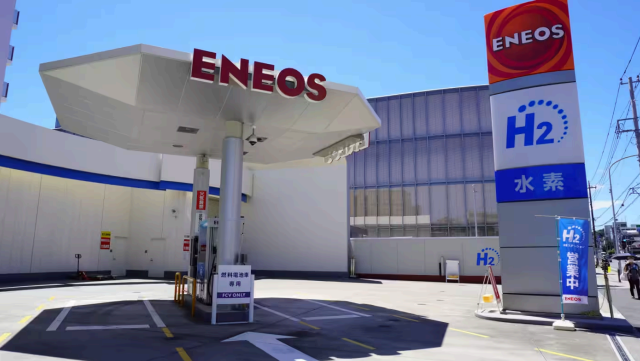
Hydroelectric-derived power will boost decarbonization drive TOKYO — Oil company Eneos and trading house Sumitomo Corp. will produce “green”hydrogen in Malaysia and export much of it to Japan under plans announced Monday,hoping to further diversify the supply of the fuel essential for decarbonization. The two Japanese companies have signed an agreement with SEDC Energy, a subsidiaryof the Sarawak Economic Development Corp. set up by the Malaysian state of Sarawak.They will also consider establishing a special-purpose company with the Malaysianpartner. Power from hydroelectric plants will be used to electrolyze water to produce the greenhydrogen without emitting carbon dioxide. The aim is to produce 90,000 tonnes a yearby 2030. The scale of investment will be finalized moving forward. SEDC Energy will take the lead on power procurement and hydrogen production, withEneos to provide technical support for the production. Eneos will also contributeproprietary technology for transporting the hydrogen by sea at room temperature.Sumitomo will evaluate project feasibility and financing. Hydrogen, which does not produce CO2 when burned, is essential for decarbonizationin such fields as power generation, transportation and manufacturing. But it isexpensive to produce in Japan, where renewable-energy costs are high. The Japanese government has set a goal of increasing the supply of hydrogen in Japanto 3 million tonnes per year by 2030, and Eneos and Sumitomo are working to produceand transport green hydrogen from around the world.