
OTSM, Invest Sarawak ink MoA to drive semiconductor ecosystem, tech hub vision
Choi (right) and Ong exchange the signed document, witnessed by Awang Tengah (standing behind, centre). KUCHING (Aug 8): OCI Tokuyama Semiconductor Materials Sdn Bhd (OTSM) and Invest Sarawak have signed a memorandum of agreement (MoA) today to boost Sarawak’s ambition of becoming a leading regional technology hub. The partnership seeks to develop supply chains, forge strategic collaborations, and build industrial ecosystems to support OTSM’s upcoming high-purity semiconductor-grade polysilicon plant. OTSM chief executive officer Steve Choi said the collaboration would create opportunities for Sarawak businesses and talent while enabling local suppliers to participate in the global semiconductor value chain. “This will strengthen Sarawak’s position as a competitive hub in the global semiconductor industry and drive long-term economic prosperity,” he said in a statement. He added that the initiative was expected to attract significant high-value investments and spur the growth of advanced manufacturing. The MoA was signed by Choi and Invest Sarawak chief executive officer Timothy Ong, witnessed by Deputy Premier Datuk Amar Awang Tengah Ali Hasan at the World Expo in Osaka. Last month, OTSM – a 50:50 joint venture between OCI TerraSus and Japan’s Tokuyama Corporation – broke ground on its RM2 billion semiconductor-grade polysilicon plant at Samalaju Industrial Park, Bintulu. Occupying 13.7 hectares, the facility is scheduled to begin operations in 2029, with an annual production capacity of 8,000 metric tonnes, supplying major technology markets in Korea, Japan, and Taiwan. This marks OCI’s third major investment in Sarawak, following its 2017 acquisition of Tokuyama Malaysia’s solar-grade polysilicon plant, now operating as OCI TerraSus, which produces 35,000 metric tonnes annually. The second investment is a joint venture with Kumho P&B Chemicals to produce epichlorohydrin – a chemical used in epoxy and rubber production – slated to be commenced by year-end. Source
AI-driven healthcare takes centre stage at Miri’s KSC Summit 2025
(From left) Tuong, Lee, Dong and Teo with the signed MoUs. MIRI (Nov 23): Artificial intelligence (AI) is set to drive the next wave of healthcare innovation in Sarawak, with Miri positioned to lead regional development under the Kenyalang Smart City (KSC) initiative. State Transport Minister Dato Sri Lee Kim Shin said the theme of this year’s KSC Summit, ‘AI + Healthcare: From Research to Real World Impact’, reflects a global shift toward data-driven healthcare and presents major opportunities for Sarawak. “AI is reshaping diagnostics, therapeutics and public health systems worldwide. For Miri and Sarawak, this is the moment to translate research into solutions that improve health outcomes,” he said at the opening of the KSC Summit 2025 here. A key highlight was the growing collaboration in integrative and AI-supported medicine, particularly Fudan University Joint Research Centre for Innovative Drug Development in Integrated Chinese and Western Medicine + AI Medical Experience Centre known as ‘THE HALL’, which is supported by Curtin University Malaysia and led by Imasa Dinasti. Lee said the centre demonstrates how AI and integrative medicine can work together to develop new therapeutics and improve clinical outcomes. Meanwhile, two Memorandum of Understanding (MoUs) were signed during the summit to strengthen Miri’s position in AI healthcare. The first, involving Imasa Dinasti, Fudan University and Curtin Malaysia, formalises cooperation in AI-driven integrative medicine and innovative drug development within the KSC ecosystem. The second MoU, between Curtin Malaysia’s Faculty of Engineering & Science and Fudan University’s Institute of Integrated Traditional Chinese Medicine and Western Medicine, covers joint research, academic exchanges, co-supervision and scholarships. Lee said both agreements will nurture local talent and expand Sarawak’s access to world-leading expertise and facilities. He stressed that AI healthcare is a core pillar of the wider KSC initiative, aiming to build a healthier, more resilient and inclusive society through advanced technologies, data analytics and cross-disciplinary collaboration. The summit, he added, supports Sarawak’s Post Covid-19 Development Strategy 2030, especially in digital transformation, education and research excellence. “With commitment and collaboration, we can translate cutting-edge research into real-world impact,” he said, while commending Curtin Malaysia, Fudan University, Imasa Dinasti and the TAK Group for advancing high-impact innovation. Also present at the summit’s opening ceremony were Deputy Minister for Tourism, Creative Industry and Performing Arts Datuk Sebatian Ting; Imasa Dinasti chairman Teo Ah Khing; Fudan University’s Institute of Integrative Medicine director Prof Dong Jing Cheng; and Curtin Malaysia deputy pro vice-chancellor Prof Tuong-Thuy Vu. Source
Fudan research hub a crucial step to ease doctor shortage in Sarawak, says Dr Sim
Teo (fifth left) presents a souvenir to Dr Sim after the official launching of KSC Summit 2025. MIRI (Nov 23): The establishment of the Fudan University Institute of Integrative Medicine Research Development Centre and its AI Medical Research Hub here marks an important step in Sarawak’s efforts to address its longstanding shortage of medical professionals, said Datuk Amar Dr Sim Kui Hian. The Deputy Premier said the collaboration with the top Chinese institution forms part of the state’s strategy to strengthen its medical training pipeline, including plans for a medical school that could help produce some of the 2,500 doctors needed in Sarawak and across Malaysia. “That is why this Fudan University research hub is a good beginning. Hopefully, with the medical school helping some of the 2,500 doctors, it will contribute to easing the shortage of doctors in Sarawak and Malaysia,” he said at the launching of the Kenyalang Smart City (KSC) Summit 2025 here. Dr Sim, also State Minister of Public Health, Housing and Local Government, said the initiative aligns with Sarawak’s transition from resource-based industries to high-value sectors driven by talent, technology and research. “We do not want to remain an energy basket. We want to become a centre of talent,” he said, adding that Sarawak’s rapid progress in digital and high-tech development had attracted strong international interest. He also highlighted the potential of artificial intelligence (AI) not only in modern medical practice, but also in advancing research into Borneo’s biodiversity for pharmaceutical and therapeutic development. Dr Sim commended Imasa Dinasti Sdn Bhd and its chairman Teo Ah Khing for driving the KSC initiative, and emphasised the importance of long-term investment in youth to sustain the state’s talent development agenda. Meanwhile, Teo said the summit marks a turning point for Miri as it moves from its historic role as the birthplace of Malaysia’s oil and gas industry into a future hub for AI, integrative medicine and biomedical innovation. He noted that Premier Datuk Patinggi Tan Sri Dr Abang Johari Tun Openg approved the KSC plans within six days, underscoring the state government’s commitment to developing new knowledge-based industries. “Kenyalang Smart City is not only a project. It is a blueprint for future cities in Sarawak,” he said. Teo, who is KSC Summit 2025 organising chairman, said the Sarawak government’s allocation of a landmark building in central Miri to house the Fudan Centre demonstrated strong and proactive leadership. He also praised the contributions of Fudan University’s Prof Dong Jingcheng, whose global standing in integrative medicine has helped shape the vision for the research hub. The summit also coincided with the 14th International Conference on Traditional and Modern Medicine, which saw participation from medical professionals from Malaysia, China, Brunei, Indonesia and Singapore — a development Teo said reflects growing confidence in Miri as a venue for medical thought leadership. “Miri has produced global leaders across many fields. We intend to build on that momentum,” he said. Source
Miri sets up command centre as partof smart city initiative
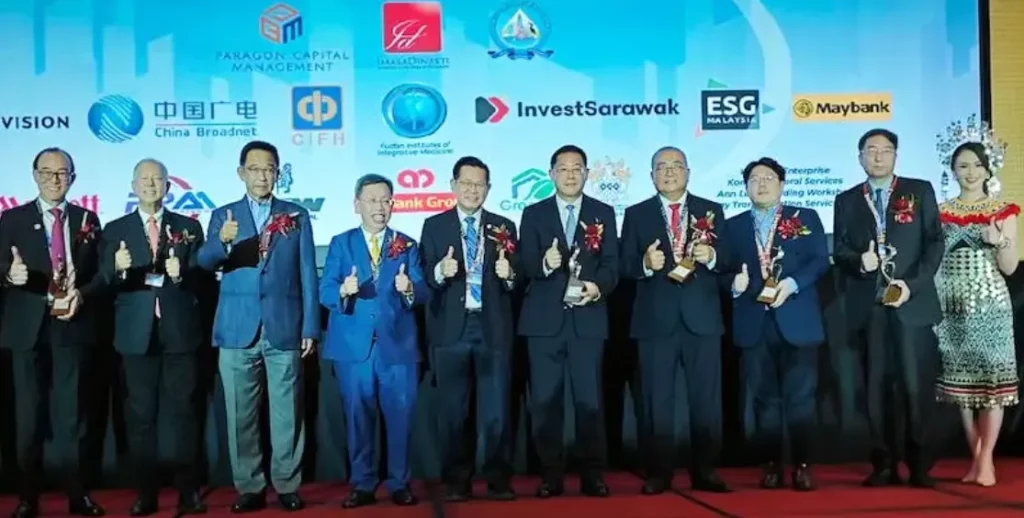
Miri, May 29: Miri City is now embarking on the second phase of the Smart City Initiatives which will include the Miri City Command Centre, expansion of Safe Park and Safe City Initiatives and further digitisation of Miri City Council processes and documentation.Unveiling this, Miri City Council (MCC) mayor Adam Yii said Miri City is fortunate that it was selected as the pioneer city for the Smart City Initiatives by Sarawak government on Jan 30, 2020 and a total of 10 smart applications have been successfully implemented under Phase 1 of the Miri Smart City Initiatives so far. He said Miri City presently has a population of about 350,000, and a land size of about 5,200 sq km.“To put the land size in perspective, Miri City is about 7 times the size of Singapore since the land size of Singapore is about 734.3 sq km,” said Yii at the Kenyalang Smart City Summit organised by Imasa Dinasti Sdn Bhd, the developer of Kenyalang Smart City (KSC) Development. The event attracted over 50 local and international investors from the Middle East and Asia, including the Republic of China, Australia, Singapore, Indonesia and Malaysia with the purpose to learn more about Kenyalang Smart City Development and associated investment opportunities. “Miri City is in dire need of a proper convention centre in order to host bigger events. Therefore, the convention centre included in the Kenyalang Smart City Development Project is much welcomed,” said Yii.For the foreign guests, Yii who is also Pujut assemblyman, gave a short historical account of Miri City.Miri City came to existence basically when oil was found, developed and produced in 1910 by Shell with the first well drilled on top of the Canada Hill. The hill was named Canada Hill by the local people, because the first drillers working there were Canadians. Due to its historical significance, the Grand Old Lady and a petroleum museum were erected on the site. Miri from then on developed from a small fishing village to what it is now, and has been commonly known as the “oil town”. “Interestingly, Shell as an oil company also has its origin in Miri. Shell was a trading company before it became an oil company,” said Yii. During WWII, the first point of landing by the Imperial Japanese Army on the island of Borneo was also in Miri where the objective was to take over the oilfields of Miri. “And due to the presence of a sizable community of expatriates and their families working and living in Miri since the discovery of oil, Miri has a much more cosmopolitan character as compared to other places in Sarawak,” said Yii. Also present were Deputy Premier Dato Sri Dr Sim Kui Hian, Tourism, Creative Industry and Performing Arts (MTCP) Minister Dato Sri Abdul Karim Rahman Hamzah, Transport Minister Dato Sri Lee Kim Shin, Deputy MTCP Minister Datuk Sebastian Ting and other dignitaries. – DayakDaily
China’s largest green hydrogen refuelling station is selling H2 at a seventh of the cost of the fuel in California
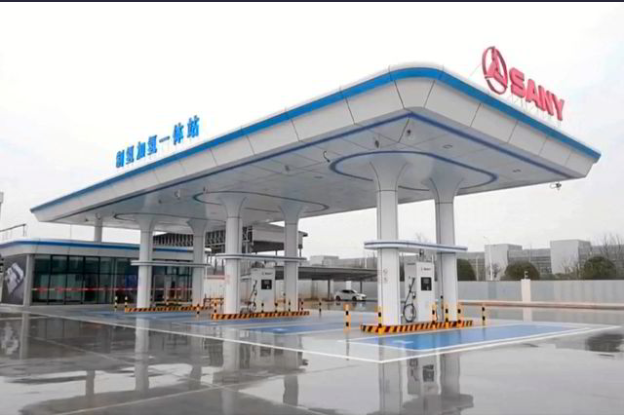
Sany claims its integrated production and fuelling complex supplies hydrogen at cost parity with diesel The largest integrated green hydrogen production and refuelling complex in China is able to supply hydrogen at 35 yuan per kilo ($4.86/kg), near cost parity with diesel, according to reporting by the Chinese newspaper Hunan Daily. Unlike the vast majority of China’s hydrogen refuelling stations, engineering firm Sany’s filling spot in the city of Changsha, Hunan province, which entered into a testing phase this week, produces its own H2 onsite via alkaline electrolysers, thus avoiding transportation costs. The electrolysers are capable of producing up to 180kg an hour, but the pumps can only dispense two tonnes per day — enough to fill up more than 100 vehicles. By way of comparison, hydrogen fuel is being sold at the pump elsewhere in China for 75 yuan per kilo — which is still cheaper than in other countries. The largest H2 fuel market in the US, California, is currently seeing pump prices of $36/kg — more than seven times higher than the Changsha facility — while in Germany, Europe’s largest market, current per-kg prices are between €12.85 and €15.75 ($14-16.60). If the price of H2 fuel in China drops below 30 yuan per kilogram, such as via future technology upgrades, “hydrogen fuel vehicles are more competitive than diesel vehicles” even without subsidies, said Wang Zhimin, director of Sany Hydrogen Energy Hydrogenation Equipment Institute. While hydrogen is often highlighted as a way to decarbonise heavy, long-haul transport, the switch from existing trucks will depend on logistics firms committing to high upfront costs or renting from emerging pay-to-use schemes such as a programme run by Shell in Germany. However, because diesel is already a relatively expensive fossil fuel, particularly in markets with higher taxes, some green hydrogen investors have suggested that the cost gap is easier to bridge than with cheap natural gas or even grey H2, potentially making it an easier sell for use in road transport than by industrial offtakers. But others have pointed out that most of the pump price at hydrogen refuelling sites is not based on the price of the H2 molecule, but the capex of the filling station as well as extra costs from compression and maintenance. While Sany appears to be leveraging economies of scale, the 37-million-yuan station will not be open to the public but rather supply fuel-cell trucks used in company operations — which could limit its utilisation rate. Similarly, although the engineering firm uses solar panels to power the electrolysers, it is unclear whether the complex has another source of renewable electricity or uses grid power for production during night.
Sarawak Skills sending teaching staff for hydrogen-tech training in China
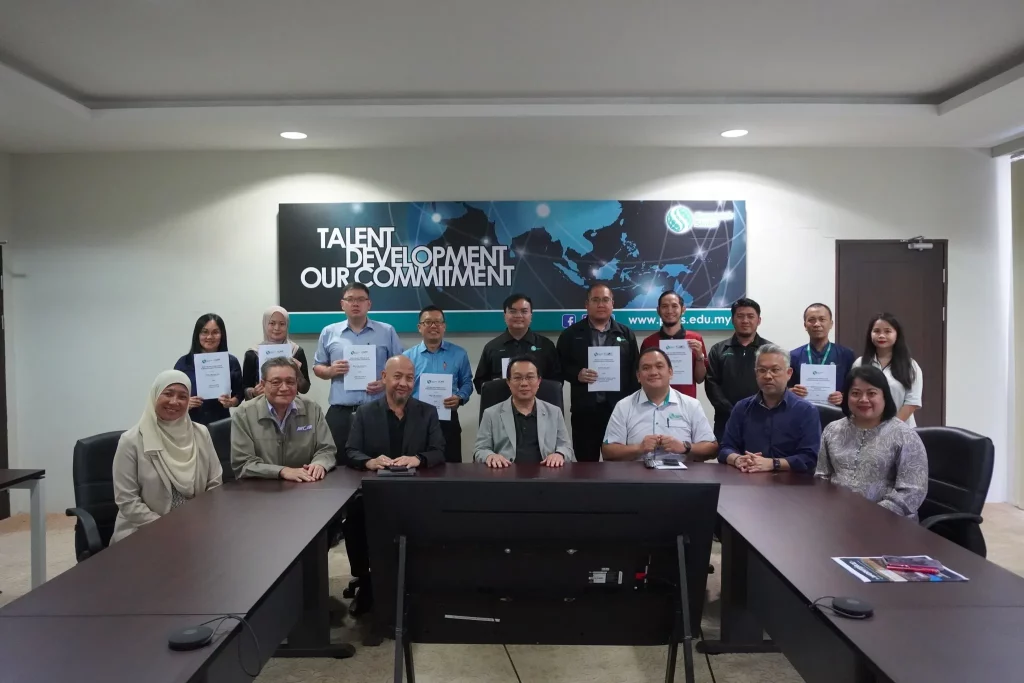
KUCHING (April 30): Sarawak Skills Group of Learning Institutions (Sarawak Skills) has announced a series of staff talent development initiatives to support the Sarawak Post Covid-19 Development Strategy (PCDS) 2030 and the Sarawak government’s ongoing initiatives in carbon reduction emission. According to Sarawak Skills executive director Hallman Sabri, 10 teaching personnel from its three institutions are undergoing hydrogen technology training in China. The staff members are from the Automotive and Welding Institute of Sarawak (Awisar), i-CATS University College and Sarawak Skills Kuching. “The training is being held over a period of two weeks (April 21-May 7) at Foshan Polytechnic and Foshan Feichi Motor Technology Co Ltd in Foshan, Guangdong Province, China,” he said in a statement. Hallman, also the Federation of Malaysian Skills Development Centres (FMSDC) chairman, added: “FMSDC has a long-established relationship with HWK Aachen, Germany to enhance the competencies of trainers from the various skills development centres under the umbrella of FMSDC.” In this respect, he said 15 trainers including three from Sarawak Skills would be in Germany for the Train-The-Trainer (TTT) Meister Mechatronic Programme, to be running from June 8 to 22. “Indeed, for Sarawak Skills, these staff talent development initiatives will go a long way towards supporting the noble course of human capital development for the betterment of current and future generations of the workforce in line with the PCDS 2030,” added Hallman. For more information about Sarawak Skills, go to sarawakskills.edu.my or its social media platforms (a@Sarawak Skills on Facebook, and @sarawakskillsofficial on Instagram).