
InvestSarawak Joins 6th German-Malaysian Business Forum to Advance Bilateral Investment Ties
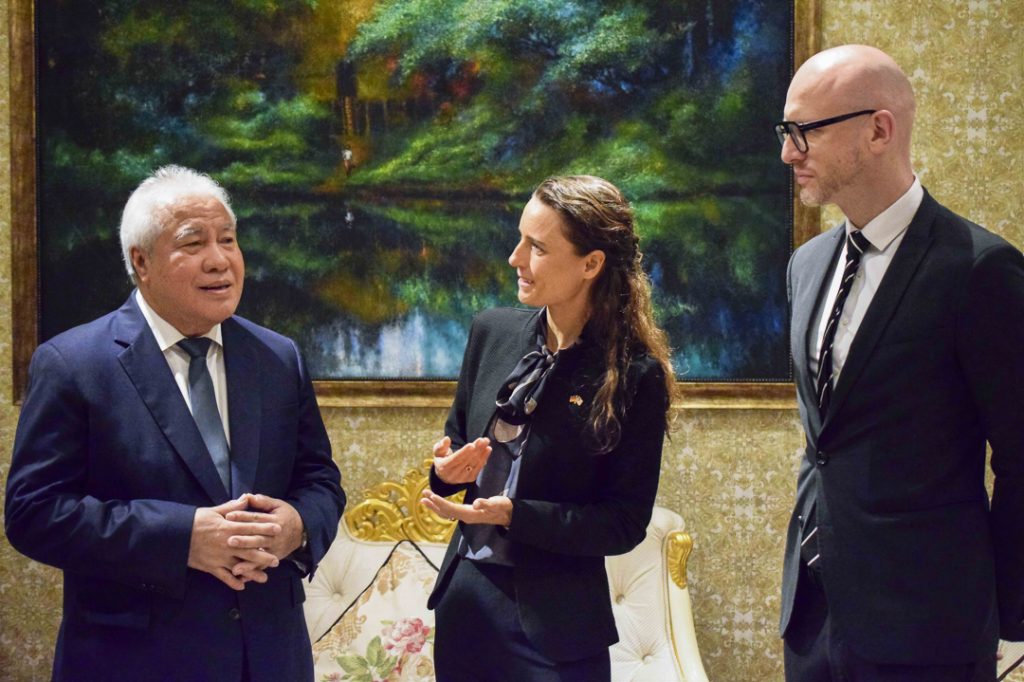
High-level engagement between German business leaders and Sarawak policymakers reflects growing momentum for investment in renewable energy, semiconductors, and digital economy. (From left) Sarawak Deputy Premier YB Datuk Amar Awang Tengah with German Ambassador to Malaysia Riecken-Daerr and MGCC Executive Director Hannes Farlock at the 6th German-Malaysian Business Forum (GMBF) held at The Waterfront Hotel on 6 May 2026 – photo by Roystein Emmor Key Highlights KUCHING, 6 May 2026 – InvestSarawak participated in the 6th German-Malaysian Business Forum (GMBF) today, held at The Waterfront Hotel, Kuching, as part of the flagship forum of the Malaysian-German Chamber of Commerce and Industry (MGCC). The forum brought together senior representatives from German and Malaysian industry with senior officials from the Sarawak state government for substantive dialogue on trade, investment, and Sarawak’s economic development agenda. The forum was graced by YB Datuk Amar Haji Awang Tengah Ali Hasan, Deputy Premier of Sarawak and Minister for International Trade, Industry and Investment (MINTRED), who addressed Sarawak’s commitment to high-quality, long-term investment partnerships. The Deputy Premier’s presence at the forum underscored the strategic importance of the Sarawak-Germany economic relationship and the state’s openness to industrial collaboration in clean energy, advanced manufacturing, and the digital economy. “Sarawak is open for business, and we are committed to building partnerships that are long-term, sustainable, and mutually beneficial. Germany represents exactly the kind of high-quality investment partner we seek, one that brings technology, expertise, and a shared commitment to a greener future. Today’s forum has reaffirmed our confidence that the foundation for a deeper Sarawak-Germany economic relationship is firmly in place,” said YB Datuk Amar Awang Tengah. InvestSarawak CEO Timothy Ong (second from right) at the opening Fireside Chat of the 6th German-Malaysian Business Forum, alongside German Ambassador to Malaysia Riecken-Daerr, on his right, and MGCC Executive Director Hannes Farlock, on his left. InvestSarawak Chief Executive Officer Timothy Ong joined H.E. Silke Riecken-Daerr, Ambassador of the Federal Republic of Germany to Malaysia, and Hannes Farlock, Executive Director of MGCC, for the opening Fireside Chat, setting the tone for a forum focused on translating strategic intent into concrete economic partnership. On 5 May 2026, InvestSarawak hosted a pre-forum economic overview briefing for the German business delegation where Mr. Ong provided a comprehensive overview of Sarawak’s investment landscape, strategic sectors, and infrastructure readiness. The briefing formed the foundation for informed and focused dialogue throughout the forum. A roundtable with the Deputy Premier followed the Fireside Chat, enabling direct engagement between German industry leaders and Sarawak’s senior leadership on investment priorities, regulatory enablers, and sectoral opportunities – including renewable energy, talent development, high-tech manufacturing, and semiconductors. The afternoon programme featured a dedicated dialogue with the Malaysia Digital Economy Corporation (MDEC), the Sarawak Digital Economy Corporation (SDEC), Sarawak Multimedia Authority (SMA), and Sarawak Information Systems Sdn Bhd (SAINS), highlighting the centrality of digital infrastructure and technology in Sarawak’s development roadmap. The 6th GMBF was held in conjunction with a four-day business delegation to Sarawak, organised by MGCC, comprising 17 companies from both German and Malaysian businesses across key industrial and technology sectors. The delegation also undertook technical site visits to X-FAB Sarawak and SMD Semiconductor (Sarawak Microelectronics Design) at the Sama Jaya Free Industrial Zone in Kuching, offering first-hand exposure to Sarawak’s expanding semiconductor ecosystem. German-linked companies have invested more than RM14 billion in Sarawak since 2013, primarily in electrical, electronic, and chemical industries. Bilateral trade between Sarawak and Germany reached approximately RM1 billion in 2025, with key commodities including semiconductors, electrical machinery, petroleum products, chemicals, and fertiliser. “When you fly into Kuching and look out over that vast, ancient rainforest stretching to the horizon, you begin to understand the scale of what Sarawak is and what it is becoming. This is a land that powered economies for generations through its natural resources, and is now channelling that same energy into semiconductors, green hydrogen, and the industries of the future. For German companies still mapping their next move in Southeast Asia, Sarawak deserves to be on that map,” said Mr. Farlock. InvestSarawak remains committed to facilitating high-quality investment partnerships that align with Sarawak’s Post COVID-19 Development Strategy 2030 (PCDS 2030), which targets a high-income, sustainable, and inclusive economy by 2030. The forum reinforces the agency’s ongoing efforts to position Sarawak as a competitive and investment-ready destination within ASEAN. For media enquiries, please contact: enquiry@investsarawak.gov.my About InvestSarawak InvestSarawak, an agency under the purview of the Ministry of International Trade, Industry and Investment (MINTRED) Sarawak, is the One-Stop-Centre dedicated to attracting investments to Sarawak while fostering trade and talent development, in alignment with Sarawak’s vision for 2030 and beyond — to be a dynamic society fuelled by data and innovation, bolstered by social inclusivity and sustainable growth. Reporting to The Right Honourable Premier of Sarawak, Datuk Patinggi Tan Sri (Dr) Abang Haji Abdul Rahman Zohari bin Tun Datuk Abang Haji Openg, who chairs the Board with 13 other key members, InvestSarawak works in close collaboration with various key agencies and stakeholders throughout Sarawak, including the private sector. InvestSarawak offers a comprehensive range of services to investors and project developers, from the initial conceptualisation of projects to the eventual successful commercialisation and implementation. For further information, please contact enquiry@investsarawak.gov.my
Sarawak, TotalEnergies explore stronger energy, investment cooperation
Awang Tengah (third left) in a discussion with representatives of Total Energies. KUCHING (April 23): TotalEnergies and the Sarawak government have expressed optimism over deeper cooperation focused on energy transition, strategic investments and long-term sustainability goals for the state. The understanding was reached during a meeting held on the sidelines of the Food and Hospitality Asia (FHA) 2026 Expo in Singapore yesterday, which saw participation from 19 Sarawak-based companies. Sarawak was represented by Deputy Premier Datuk Amar Awang Tengah Ali Hasan, who is also Minister for International Trade, Industry and Investment as well as Second Minister for Natural Resources and Urban Development. He said the engagement aimed to explore stronger partnership in advancing energy transition and sustainable economic development in Sarawak. “Discussions underscored a mutual commitment to leveraging Sarawak’s rich natural resources and TotalEnergies’ global expertise across key energy sectors,” said Awang Tengah. Key areas covered included renewable energy, oil and gas development, and emerging low-carbon technologies. On renewables, both sides emphasised the expansion of green energy sources, including hydro, solar and biomass, with TotalEnergies expressing interest in supporting ground-mounted and floating solar projects across the region. Discussions on oil and gas focused on Sarawak’s substantial reserves and its strategic roadmap for domestic utilisation and export, with TotalEnergies reaffirming its commitment to upstream activities. The talks also explored sustainable aviation fuels (SAF) and carbon capture, utilisation and storage (CCUS), with Sarawak outlining its long-term decarbonisation plans. Awang Tengah also highlighted TotalEnergies’ joint venture with Masdar to accelerate renewable energy development in the Asia Pacific, identifying Malaysia as a priority market. “This partnership is expected to enhance investment flows and technical expertise in Sarawak’s renewable energy landscape,” he said. Also present were Deputy Minister for International Trade, Industry and Investment Datuk Malcolm Mussen Lamoh, advisor Dato Sri Mohd Naroden Majais, permanent secretary Datu Lester Matthew, InvestSarawak chief executive officer Timothy Ong, and senior ministry officials. – The Borneo Post
Sarawak’s Coastal Road Network 77.9 pct complete, Second Trunk Roadprogressing with 15 projects underway
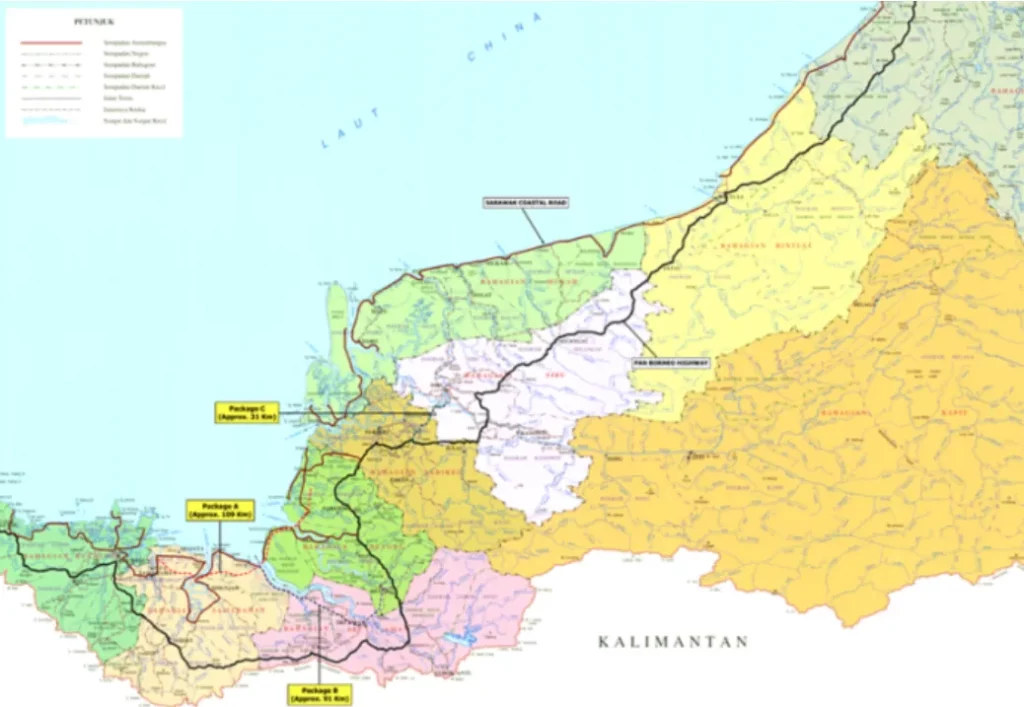
By Christopher Lidom & Shikin Louis KUCHING, Dec 9: Sarawak’s Coastal Road Network project is currently 77.9 per cent complete, according to Deputy Premier Datuk Amar Douglas Uggah Embas. He explained that the project includes 13 new road and bridge packages and 29 rehabilitation works packages, with a total value of RM5.42 billion. “To date, all the new road and bridge packages are under construction, with one package expected to be completed this year. “Following that, ten packages are set for completion in 2025, one package in 2026, and the final package in 2027,” he said when speaking during Sarawak Public Works Department (JKR) Gala Night held at the Imperial Hotel here earlier tonight. The Coastal Road Network spans 896km and will connect towns such as Kota Samarahan, Asajaya, Sadong Jaya, Sebuyau, Kabong, Tanjung Manis, Daro, Matu, Igan, Oya, Mukah, Balingian, Bintulu, and Miri to the Pan Borneo Highway. Uggah, who is also Sarawak’s Minister of Infrastructure and Port Development (MIPD), provided an update on the Second Trunk Road, which consists of 20 work packages valued at RM5.58 billion. “A total of 15 projects are in various stages of construction, with the remaining five in the pre-contract stage. “The construction schedule for the 15 projects includes three projects set for completion in 2025, followed by seven packages in 2026, two packages in 2027, and three packages in 2028,” he added. Additionally, Uggah highlighted that under the 12th Malaysia Plan (12MP), JKR is entrusted with 496 projects, valued at RM30 billion. Of these, 203 projects have been completed, 109 are under construction, and 184 are in the pre-contract stage. JKR is also managing 276 projects worth RM3.48 billion under various regional development agencies.Uggah further said the department is authorised to implement federal projects under Treasury Directive 182 (AP182) for projects valued at RM50 million or less, as agreed by the federal government through the MA63 Committee. As of October 2024, JKR has implemented 146 projects totalling RM2.26 billion.“It is critical for JKR to demonstrate its capacity to implement these projects efficiently. Our current capacity for such projects is below RM50 million. “This will enable Sarawak to request an increase in the ceiling for this program to RM100 million or more. The Sarawak government’s objective is for JKR Sarawak to handle all federal infrastructure projects within this ceiling,” he added. – DayakDaily
Borneo Highland Glamping Festival elevates Sarawak’s tourism with record attendance, thrilling experiences
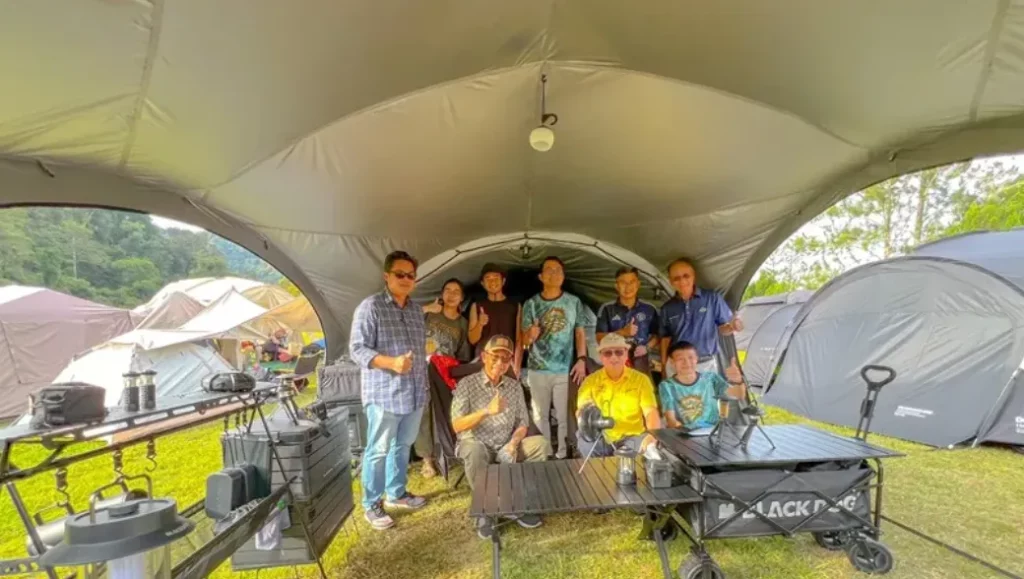
By DayakDaily Team KUCHING, Dec 17: The Borneo Highland Glamping Festival is another exciting addition to Sarawak’s tourism offerings, seamlessly blending culture, nature, and innovation. Minister of Tourism, Creative Industry, and Performing Arts Dato Sri Abdul Karim Rahman Hamzah expressed his delight at the event’s success, highlighting how the second edition reached new heights with over 250 tents set up by participants from 10 different nationalities. “This outstanding event celebrates the beauty of nature and the spirit of adventure. We are thrilled to welcome visitors from Sarawak, Sabah, Peninsular Malaysia, and Singapore, who have flown in to be part of this exciting gathering. “This diverse attendance reflects the growing appeal of glamping and outdoor tourism in Borneo and demonstrates Sarawak’s potential as a world-class destination,” he said during the festival’s official opening on Saturday (Dec 14). Abdul Karim emphasised that the festival’s mission to promote glamping as a new tourism product for Sarawak is both timely and visionary. He noted that the unique experience allows visitors to immerse themselves in the natural beauty of Borneo Highlands while enjoying the comforts of modern camping. “Such initiatives align with Sarawak’s tourism target of attracting five million visitors by 2025 and demonstrate our readiness to offer exceptional experiences as we prepare for Visit Malaysia Year 2026,” he added. Looking forward to even bigger and better initiatives from Borneo Glamping, Abdul Karim commended the organisers’ vision and commitment to enhancing Sarawak’s tourism offerings. “With continued collaboration and support, I am confident that we will see more events showcasing the best of what Sarawak has to offer,” he concluded. The Borneo Highland Glamping Festival 2.0, held from Dec 13 to 15, was a joint effort by Borneo Glamping, LCDA, Padawan Municipal Council (MPP), Borneo Highland Residents Club, Proactive Youth Club, Sarawak Tourism Board (STB), Sarawak Sports Corporation, Tourism Malaysia, and Business Events Sarawak. The event drew around 3,000 festival-goers, featuring a wide range of activities from traditional workshops and outdoor sports to wellness programs and live entertainment. Borneo Glamping founder Awang Saifeluddin and Batu Kitang assemblyman Dato Lo Khere Chiang were among those present. — DayakDaily
Bintulu Development Authority acquires 10% stake in Pertama Ferroalloys
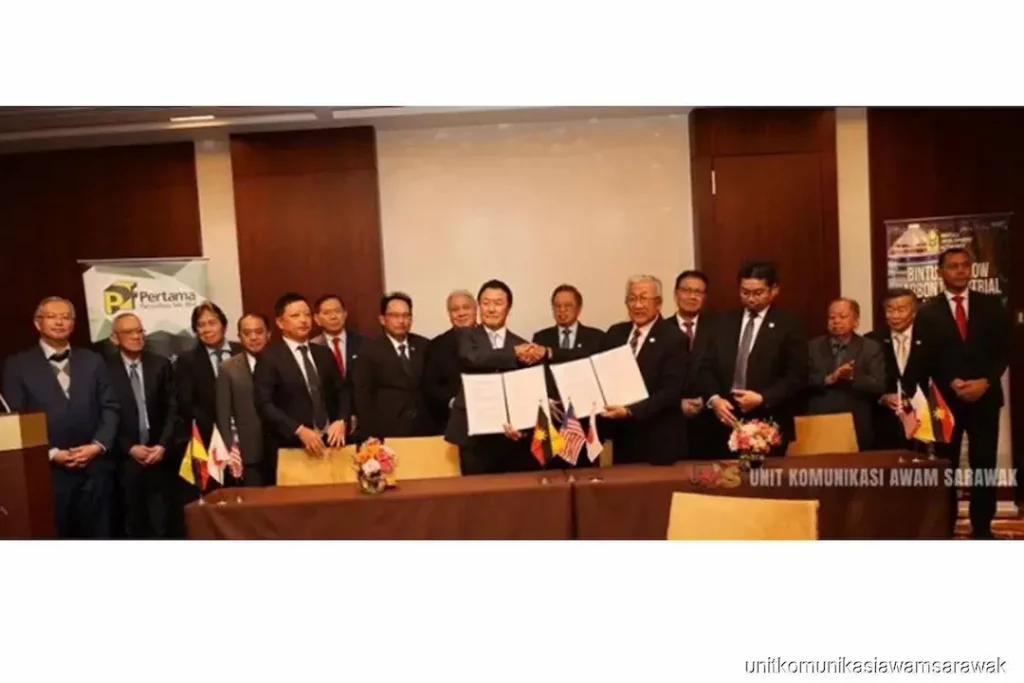
KUCHING (Dec 17): The Bintulu Development Authority (BDA) has acquired a 10% stake in Pertama Ferroalloys Sdn Bhd through a share transfer memorandum of understanding (MOU), which is a milestone move for economic growth, community development, and sustainable initiatives in Sarawak. The share transfer agreement was formalised by BDA and Pertama Ferroalloys in a ceremony held in Tokyo on Tuesday (Dec 17), the Sarawak Public Communication Unit (Ukas) said in a statement on Tuesday. The MOU was signed by Pertama Ferroalloys chairman and managing director Hirotaka Suzuki and BDA general manager Datuk Muhamad Yakup Kari, and witnessed by Sarawak Premier Tan Sri Abang Johari Tun Openg. Also present were Sarawak Deputy Premier Datuk Amar Awang Tengah Ali Hasan, Malaysian Ambassador to Japan Datuk Shahril Effendi Abd Ghany, and the State Minister for Utility and Telecommunication Datuk Seri Julaihi Narawi. According to the statement, the partnership builds on previous milestones achieved by Pertama Ferroalloys and BDA, including the successful Bamboo Cultivation Project launched in November 2023, which showcased their dedication to sustainable practices and environmental conservation. Suzuki said the partnership extends beyond financial investment, as it will also make positive contributions to the societal and environmental well-being of Sarawak. He anticipates that support from both parties will foster economic growth not only in Bintulu, but also across Sarawak and Malaysia. “This will enhance the well-being of the local communities, and also serve as an example for organisations and leaders in driving sustainable initiatives in Sarawak, thus aligning with the visionary post-Covid-19 Development Strategy (PCDS) 2030,” he said in his speech at the ceremony. Pertama Ferroalloys’ smelting plant in Bintulu, Sarawak, is the first large-scale manganese alloys and ferrosilicon plant in Malaysia. The company produces and distributes manganese alloy products to the global steel industry, while also prioritising sustainability alongside profitability. Uploaded by Liza Shireen Koshy
Sarawak to provide free finance, accounting education from 2026
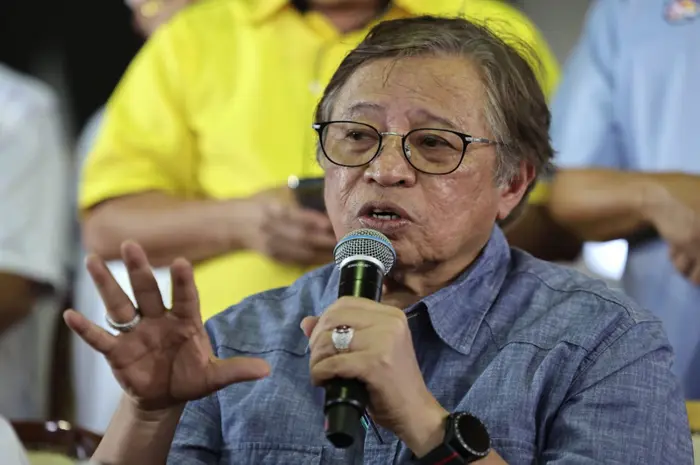
KUCHING: From 2026, finance and accounting studies will be among the key disciplines included in the free tertiary education policy at all Sarawak-owned universities, says Tan Sri Abang Johari Tun Openg. The Sarawak Premier highlighted the importance of these fields for managing and auditing the financial aspects of Sarawak’s burgeoning green economy, especially in areas such as carbon trading and environmental sustainability. “Provided you meet the eligibility criteria, you will receive free education in finance and accounting. We need experts to audit our carbon, calculate carbon, and assess other intangible elements. These disciplines will meet international standards,” he stated. Speaking at the Association of Chartered Certified Accountants (ACCA) Malaysia stakeholders reception on Friday night, he underscored the crucial responsibility of accountants in ensuring transparency and proper valuation within these emerging sectors. “The role of accountants has evolved significantly. It’s not just about the bottom line anymore; it’s about embracing a new portfolio,” he said, adding that accountants’ responsibilities have broadened considerably with the emphasis on environmental, social, and governance (ESG) frameworks. – Bernama
Japan’s trading firm Marubeni commits to sustainable aviation fuelinvestment in Sarawak
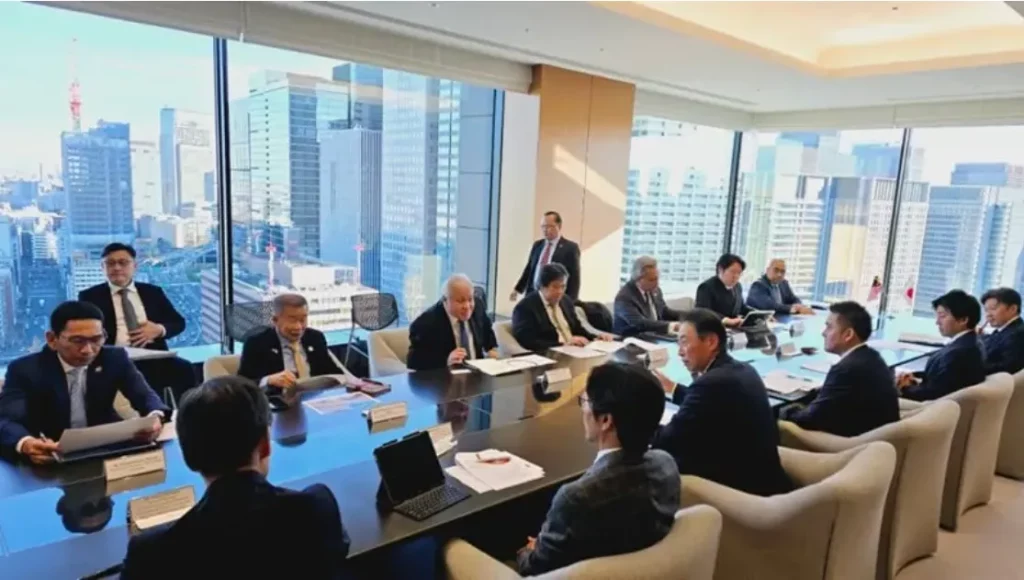
By DayakDaily Team KUCHING, Dec 19: Japanese trading company, Marubeni Corporation, has reaffirmed its commitment to investing in sustainable aviation fuel (SAF) and other green initiatives in Sarawak. According to a news report by TVS, this commitment was shared with Sarawak Deputy Premier Datuk Amar Awang Tengah Ali Hasan during a meeting held in Tokyo, Japan on Wednesday (Dec 18). The announcement follows a Memorandum of Understanding (MoU) signed with Invest Sarawak in May this year. “The MoU outlines a feasibility study for the production and sale of SAF derived from biomass sources.“This initiative aligns with the Post-Covid Development Strategy (PCDS) 2030, which emphasises economic prosperity, social inclusion, and environmental sustainability,” said a statement issued by the Ministry of International Trade, Industry, and Investment (Mintred) Sarawak. Awang Tengah, who is also the Minister overseeing the project, welcomed the investment and expressed hope for further strengthening collaboration between Marubeni and Sarawak in the development of sustainable sectors. Also present at the meeting were Deputy Minister of International Trade and Investment Datuk Dr Malcolm Mussen Lamoh, Mintred advisor Dato Sri Mohd Naroden Majais, and Invest Sarawak chief executive officer (CEO) Timothy Ong. – DayakDaily
Anwar: Australia’s Fortescue to invest in green hydrogen alternative energy in Bintulu

DAVOS (Jan 23): Australia’s global metal mining company Fortescue has agreed to invest in green hydrogen alternative energy in Bintulu, Sarawak, said Prime Minister Datuk Seri Anwar Ibrahim. Anwar, who is also the finance minister, said the agreement was reached through a meeting with the company’s leadership team led by Fortescue executive chairman and founder Andrew Forrest AO on the sidelines of the World Economic Forum (WEF) Annual Summit 2025 here. “The Sarawak government has agreed in principle, and I have guaranteed several incentives and support so that Bintulu will become a hub,” he said at the closing press conference in conjunction with his working visit to WEF 2025. On Tuesday, Anwar led a Malaysian delegation to attend face-to-face business meetings organised by the Ministry of Investment, Trade and Industry with corporate leaders representing Fortescue, AstraZeneca, DP World, Medtronics, Nestle, and Google. Commenting further, the prime minister explained that through meetings with companies investing in Malaysia, the large port company from Dubai, DP World, which comes into Sepanggar, Sabah, has received the support of the federal government. “As for Sabah, which will have a relatively large port in the region when Dubai Ports comes in, the federal government has informed Chief Minister Datuk Seri Hajiji Noor and the Sabah government to provide full support and cooperation,” he added. In addition, the prime minister said Google would continue implementing major programmes such as the one established in Selangor, namely data centres that would benefit Peninsular Malaysia, particularly Johor, Penang, and Perak. Furthermore, he said that issues related to artificial intelligence, including in the fields of medicine and education, were also discussed in the meetings with global companies. Anwar attended the WEF 2025 for the first time as prime minister since taking office in 2022 at the invitation of WEF founder and chairman of the board of trustees Klaus Schwab from Jan 20-22. Throughout the three-day visit, Anwar was accompanied by Investment, Trade and Industry Minister Tengku Datuk Seri Zafrul Abdul Aziz, Higher Education Minister Datuk Seri Zambry Abdul Kadir and Digital Minister Gobind Singh Deo. — Bernama
BDA, Press Metal sign MoU for RM600 mln solar aluminium frame facility in Samalaju

KUCHING (Feb 27): The Bintulu Development Authority (BDA) and Press Metal Aluminium Holdings Berhad have signed a memorandum of understanding (MoU) to establish an 80,000-tonne solar module fabricated aluminium frame facility in Samalaju. The RM600 million project aims to bolster Sarawak’s position in the renewable energy sector while creating job opportunities and driving industrial growth in the region. Press Metal Group CEO Tan Sri Dato’ Paul Koon Poh Keong described the partnership as a testament to their shared commitment to economic development and sustainable manufacturing. “This MoU marks a significant milestone in our journey towards supporting Sarawak’s vision of becoming a hub for renewable energy and sustainable industrial development,” he said during the MoU signing ceremony. Koon highlighted that the new facility would enhance the Samalaju Industrial Park’s role in the global supply chain and attract further investment. “As the world shifts its focus to clean energy solutions, the demand for solar power has grown considerably. “Aluminium plays a key role in making solar panels more efficient, cost-effective, and long-lasting, which is why Press Metal is committed to expanding our capacity to meet global demands,” he said. Under the investment structure, BDA will hold a 20 per cent stake in the project, while Press Metal will own the remaining 80 per cent. The project will be funded through a 20 per cent capital injection, with the rest secured via term loans. Koon also revealed that Japanese conglomerate Sumitomo is considering investing in the venture, with an official announcement expected if the deal materialises. Beyond job creation, Press Metal plans to collaborate with local educational institutions to develop technical skills and leadership among Sarawak’s workforce. “We believe in empowering our workforce through targeted training programs, technical upskilling, and leadership development. By building a strong pipeline of skilled professionals, we can contribute to Sarawak’s growing renewable energy sector,” Koon said. He further emphasised the project’s commitment to environmental sustainability, ensuring compliance with regulations and the adoption of eco-friendly practices. “We are fully committed to ensuring that our operations comply with all environmental regulations and that we adopt the best practices to minimise our carbon footprint,” he said. Expressing gratitude to the Sarawak government for its support, he stressed that the project was more than just an industrial development. “Together, we are not just building an aluminium frame facility – we are strengthening the value chain, creating better and greater opportunities, and contributing to a cleaner, greener tomorrow for Sarawak and Malaysia,” he said. The MoU signing ceremony was witnessed by Sarawak Premier Datuk Patinggi Tan Sri Abang Johari Tun Openg, who is also BDA chairman, along with other state dignitaries.
InvestSarawak, China Energy ink MoU to develop renewable energy projects
InvestSarawak, China Energy ink MoU to develop renewable energy projects (Seated, from left) Ong and He Lei exchange the signed MoU documents, witnessed by Awang Tengah (back, centre) and other distinguished guests KUCHING (April 17): China Energy Engineering Investment Corporation Limited (CEEIC) and InvestSarawak today signed a Memorandum of Understanding (MoU) to develop 2 gigawatts (GW) of renewable energy projects and related strategic infrastructure in Sarawak. Deputy Premier Datuk Amar Awang Tengah Ali Hasan witnessed the signing ceremony held at a leading hotel here. InvestSarawak CEO Timothy Ong signed the MoU on behalf of the company, while CEEIC was represented by its Chief Economist and General Manager of the Overseas Department, He Lei. According to Awang Tengah, who is Minister of International Trade, Industry and Investment, CEEIC plans to invest US$1.35 billion (RM6.0 billion) into Sarawak’s clean energy sector, focusing on solar, battery storage, and grid infrastructure development. “Sarawak welcomes the strategic investment as it aligns with the region’s vision to harness renewable energy for sustainable development. “We are committed to strengthening Sarawak’s role as a regional hub for green energy and advancing our transition to a low-carbon economy under PCDS (Post Covid-19 Development Strategy) 2030. “This collaboration reinforces Sarawak’s position as a preferred green investment destination and supports its vision to power low-carbon industries in line with the state’s sustainable development goals. “With Sarawak’s strategic move towards low-carbon manufacturing and hydrogen economy under PCDS 2030, the partnership is part of a broader initiative to ensure long-term energy security while advancing the green agenda. “It underscores Sarawak’s commitment to sustainable energy transition and its goal to become a regional renewable energy powerhouse,” he added. Separately, InvestSarawak in a press statement said it is committed to facilitating this strategic investment interest in the region to support renewable energy development in line with Sarawak’s development agenda. “CEEIC is looking to develop approximately 2GW, alongside battery storage facilities and supporting grid infrastructure, to meet Sarawak’s growing industrial and domestic energy demands. “The flagship investment platform of China Energy Engineering Corporation Limited (CEEC) brings global expertise in energy infrastructure development and integrated clean energy systems. “CEEIC is a recognised leader in solar, wind, hydroelectric and biomass energy, as well as energy storage and grid solutions. “It has developed and managed over 12GW of operational and under-construction energy capacity across coal, hydro, wind, solar, biomass, and energy storage projects. “With investments spanning all provinces in China and extending to Vietnam and the Philippines, CEEIC’s notable achievements include Vietnam’s largest Chinese-invested power plant (Hai Duong BOT); the world’s largest light-heat storage project in Xinjiang (1.5 GW); and China’s largest biomass cogeneration facility. “Its green energy initiatives reduce over three million tonnes of CO₂ annually, reinforcing its position as a key driver in low-carbon, sustainable energy infrastructure globally,” added InvestSarawak. CEEIC deputy general manager Wang Honggang was quoted as saying: “We are honoured to partner with InvestSarawak and the Sarawak government in this renewable energy initiative. CEEIC brings with it decades of experience in renewable energy projects globally. “We believe that Sarawak offers tremendous potential for the development of large-scale solar and hybrid energy systems, and we are committed to delivering long-term value through this collaboration. “The potential investment of CEEIC shall be in concert with Sarawak’s power development planning, and implemented into several phases and subject to China’s competent approvals,” he said. Meanwhile, Ong said Sarawak is open for renewable energy investments, and that the collaboration with CEEIC is another step in positioning Sarawak at the forefront of Asean’s green growth corridor. “This collaboration signifies the latest wave of strong renewable energy interest in Sarawak, reinforcing the region’s position as a preferred destination for green investment. “In line with Sarawak’s sustainable development policy and its aspiration to become a regional leader in green growth, the partnership is expected to drive local job creation, accelerate technology transfer, and bolster long-term energy security,” he added. Also present at the signing ceremony were Deputy Minister for Utility and Telecommunication Datuk Ibrahim Baki; Deputy Minister for International Trade, Industry and Investment Datuk Dr Malcolm Mussen Lamoh; Deputy Minister for Youth, Sports and Entrepreneur Development Datuk Dr Ripin Lamat; and Sarawak Energy group chief operating officer James Ung.