
Japan’s Sumitomo and Eneos toproduce green hydrogen in Malaysia
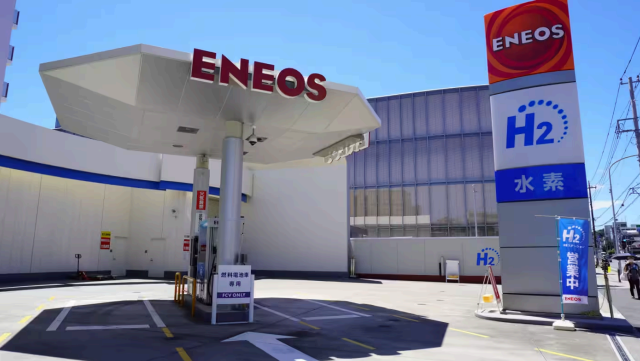
Hydroelectric-derived power will boost decarbonization drive TOKYO — Oil company Eneos and trading house Sumitomo Corp. will produce “green”hydrogen in Malaysia and export much of it to Japan under plans announced Monday,hoping to further diversify the supply of the fuel essential for decarbonization. The two Japanese companies have signed an agreement with SEDC Energy, a subsidiaryof the Sarawak Economic Development Corp. set up by the Malaysian state of Sarawak.They will also consider establishing a special-purpose company with the Malaysianpartner. Power from hydroelectric plants will be used to electrolyze water to produce the greenhydrogen without emitting carbon dioxide. The aim is to produce 90,000 tonnes a yearby 2030. The scale of investment will be finalized moving forward. SEDC Energy will take the lead on power procurement and hydrogen production, withEneos to provide technical support for the production. Eneos will also contributeproprietary technology for transporting the hydrogen by sea at room temperature.Sumitomo will evaluate project feasibility and financing. Hydrogen, which does not produce CO2 when burned, is essential for decarbonizationin such fields as power generation, transportation and manufacturing. But it isexpensive to produce in Japan, where renewable-energy costs are high. The Japanese government has set a goal of increasing the supply of hydrogen in Japanto 3 million tonnes per year by 2030, and Eneos and Sumitomo are working to produceand transport green hydrogen from around the world.
Sarawak’s energy transition: Navigating the technological frontier for sustainable progress
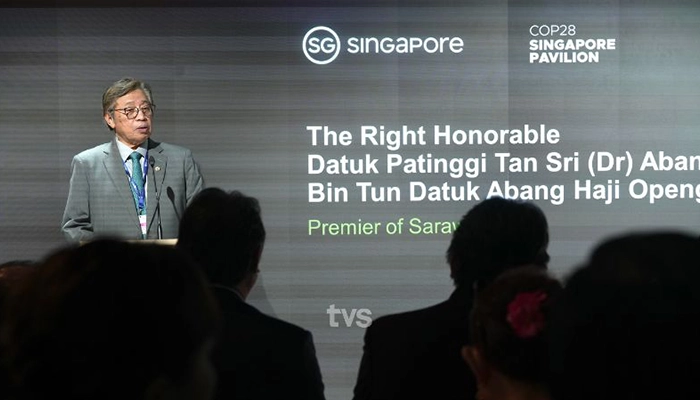
DUBAI, Dec 5: The synergy between technology and resources is crucial for Sarawak’s energy goals, emphasising the strategic utilisation of technological advancements and efficient resource management. Premier of Sarawak, Datuk Patinggi Tan Sri Abang Johari Tun Openg, emphasizes the significance of this transition as he highlights Sarawak’s technological aspirations focus on hydrogen production, a crucial component in the renewable energy landscape. “It’s a question of technology – harnessing the full spectrum of available resources. For instants three years ago, 1kg of hydrogen, requires 60kw of power. “But now we are working with Petronas, in doing our research, it can come down to 38kw,” he told this to reporter when visiting the Malaysian Pavilion after witnessing a Memorandum of Understanding between InvestSarawak and Surbana Jurong Pte Ltd in conjunction with the United Nation Climate Change Conference (COP28) in Dubai. This achievement is attributed to cutting-edge technology, particularly the incorporation of a new membrane in the electrolysis process. Abang Johari expresses optimism for significant cost reductions in hydrogen production over the next five years, anticipating a decrease in power costs. This move positions hydrogen as a more economical and environmentally friendly energy source. Sarawak’s commitment to incorporating hydrogen into its energy portfolio is evident in ongoing public transport initiatives within the region. “The conversion of H2O into hydrogen and oxygen is fueling public transport, with ongoing tests of Autonomous Rail Rapid Transit (ART) and buses powered by hydrogen,” he said. This transition to hydrogen-powered transportation not only signifies a significant step towards reducing carbon emissions but also underscores Sarawak’s commitment to embracing innovative solutions for a sustainable future. In tandem with technological advancements in hydrogen production, Sarawak is diversifying its energy sources. A pioneering approach involves the utilization of wood pallets as a biomass power source, adding a new dimension to Sarawak’s energy matrix and ensuring a diversified and resilient power supply. Abang Johari added that the state is actively involved in reforestation efforts, creating carbon sinks through the replanting of forests. This dual approach, combining technological innovation and environmental conservation, positions Sarawak at the forefront of sustainable energy transitions. – TVS