
Sarawak gears up to be Asean aerospace hub, plans industrial park
Awang Tengah said the development of Aerospace Industrial Park will support high-value aerospace manufacturing, aircraft maintenance, repair and overhaul, and sustainable aviation fuel research. – Bernama file photo KUCHING (May 28): Sarawak is gearing up to become a competitive aerospace hub in the Asean region with plans to establish an Aerospace Industrial Park. Deputy Premier Datuk Amar Awang Tengah Ali Hasan said the development of this industrial park will support high-value aerospace manufacturing, aircraft maintenance, repair and overhaul, and sustainable aviation fuel research. “We are partnering with Airbus to expand the aerospace industry, create high-value job opportunities and attract foreign investment,” he said in is ministerial winding-up speech at the State Legislative Assembly (DUN) Sitting today. Awang Tengah, who is International Trade, Industry and Investment Minister, said the global aerospace industry is projected to broaden in 2025, accelerated by technological advancements, sustainability initiatives and increasing air demand. “As industry continues to evolve, Sarawak is actively developing our aerospace capabilities, focusing on aviation, space technology and satellite launch potential.” He said the newly established Sarawak Aerospace Advisory Council will spearhead aerospace industry development by enhancing education, workforce training and forging global partnerships to drive future investment and accelerate industry growth. “With a strong emphasis on talent development, Sarawak has launched the Aerospace Academy at the Centre of Technology Excellence Sarawak (Centexs) Lundu and i-CATS University College’s Faculty of Aerospace Engineering, equipping future professionals with hands-on expertise and globally recognised qualifications,” he added. On another matter, Awang Tengah said Sarawak is emerging as a regional leader in Southeast Asia’s hydrogen economy, leveraging strategic investment opportunities through the Sarawak Green hydrogen hub in Bintulu and the upcoming hub in Kuching. “These integrated facilities operate on a ‘plug-and-play’ model, enabling multiple investors to co-locate hydrogen projects without requiring standalone infrastructure. “This approach optimises efficiency, reduces costs and accelerates hydrogen deployment, attracting global investors to Sarawak’s hydrogen ecosystem.” He said SEDC Energy and clean energy solutions provider Gentari continue to advance the Sarawak Green Hydrogen Hub, with plans for a joint venture company to develop centralised investor facilities. “The hub is currently in its Scope Development and Engineering phase. Meanwhile, flagship projects H2ornbill and H2biscus are progressing toward Front-End-Engineering-Design completion by year-end. “Malaysia and Japan have also reaffirmed their commitment to hydrogen collaboration, solidifying Sarawak’s leadership,” he said. He said the Distribution of Gas Ordinance was amended in November 2024 to ensure safe, responsible and structured development of hydrogen activities. “This milestone legislation, which came into force in March 2025, reinforces investor confidence and ensures the sustainable growth of Sarawak’s hydrogen economy,” said Awang Tengah. Source
Sarawak to establish Lake Development Authority by 2030
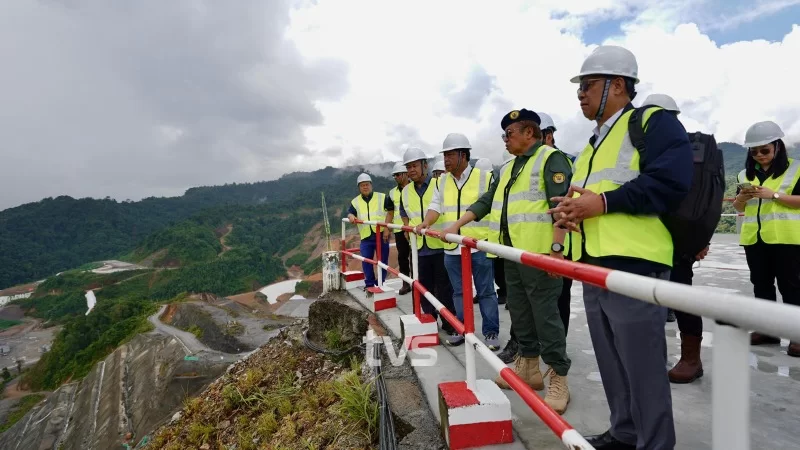
Abang Johari (second right) when visiting Baleh Hydroelectric Dam project. Photo: TVS KAPIT: A Lake Development Authority (LDA) is set to be established by 2030 to oversee sustainable development of lakes and dams across Sarawak. Premier Datuk Patinggi Tan Sri Abang Johari Tun Openg said the authority will manage all lakes in Sarawak, including major dams. These include Batang Ai, Baleh, Murum, Bakun, and other natural lakes identified for high-impact, environmentally responsible development. “There must be a balance between the project itself. The power generation project and sustainability in terms of environmental preservation. It has to be done together. “I must say that we have learned lessons from the development of Batang Ai and Bakun, and we are now adjusting ourselves in line with global needs to preserve the environment in response to climate change,” he said. He said this during a press conference after visiting the Baleh Hydroelectric Dam, here today (June 16). Abang Johari also expressed confidence in Sarawak Energy Berhad’s (SEB) ability to complete the Baleh project by the targeted 2030 timeline. He said the project, combined with the 1-gigawatt capacity from combined cycle gas plants in Bintulu and Miri, boosts the state’s energy supply. “If we add everything together, we now have around 7 gigawatts, while our actual need is only about 3 gigawatts,” he explained. By 2030, he said Sarawak expects to reach 10 gigawatts in generation capacity, not including the proposed solar or hydrogen energy projects. He added that planned solar projects in Bakun and Murum could each contribute another 1 gigawatt. “Excluding our efforts on hydrogen, it means we already have enough energy resources—with about 60 to 70 per cent coming from renewable sources. “And that is our green power,” he asserted. The Premier expressed optimism that no other region currently matches Sarawak’s green energy output, which will help attract more investors to the state. “We will also enter the Asian Green Room. I believe SEB will meet the targets through 2035, perhaps even beyond,” he added. Source
State Budget 2025: RM1,200 pocket money for S’wakian students studying in higher learning institutions

KUCHING (Nov 11): Sarawakian students studying in higher learning institutions across the country will receive pocket money of RM1,200 next year. Premier Datuk Patinggi Tan Sri Abang Johari Tun Openg said this special financial assistance will benefit 25,000 Sarawakian students from families of lower income groups with household per capita income of RM1,500 or below per month. “The money given is to be spent on food and essential goods to help them mitigate the cost of living. “Under this Budget, a sum of RM30 million will be allocated for this purpose,” he said when tabling the State Budget 2025 at the State Legislative Assembly (DUN) Sitting here today. Abang Johari said the RM500 book vouchers and free laptop for Sarawakian students initiatives, which were launched in August this year, will also be continued in 2025. “A sum of RM2 million will be allocated for the book vouchers where RM500 is allocated per person for public and private higher-learning institutions Sarawakian students for households with per capita income of RM1,500 per month and below. “The free laptop assistance to Sarawakian students who have successfully enrolled into public and private higher-learning institutions for households with per capita income of RM1,500 per month and below will empower our students with the essential technology they need to excel in their academic pursuits with an allocation of RM30.5 million next year, which will benefit 10,166 students,” he said. He also said that the Sarawak government will continue to provide annual operating grants to state-owned universities and colleges where for 2025, a sum of RM35 million will be allocated to University Technology Sarawak, RM30 million to Sarawak Skills Development Centre, RM30 million to i-CATS University College, and RM5.5 million to Kolej Laila Taib. Other allocations under the State Budget 2025 to enhance Sarawak’s education system and facilities included an allocation of RM20 million for the Sarawak Education Enhancement Programme (SEEP), a joint free tuition initiative for Form 4 and 5 students in core subjects Science, Mathematics, English and History as well as pure science subjects, with an expansion in the programme’s coverage; RM4.6 million for the teaching of Science and Mathematics in English (Dual Language Programme); and RM27 million to cover the operation cost of three state-owned international schools in Petra Jaya, Mile 12 Kuching-Serian Road, and Sibu, the latter of which is scheduled to be completed by the end of this year. Under the early childhood sector, Abang Johari said RM20 million will be allocated to state-owned early childhood provider SeDidik, and a sum of RM14 million for the annual special grant to all registered early childhood and care institutions in 2025. “To ease the burden of parents, an allocation of RM2.5 million will also be allocated next year for Tadika and Taska fee subsidies. “This will benefit 2,500 children whose parents’ monthly income is RM7,000 and below. By providing this assistance, we aim to increase Sarawak children’s access to early childhood education,” he said.
RM321 mln Batang Rajang Bridge to be completed by March 2025

By DayakDaily Team SARIKEI, Nov 8: The RM321 million Batang Rajang Bridge is expected to be fully completed by March next year, two months ahead of schedule. Deputy Premier of Sarawak, Datuk Amar Douglas Uggah Embas, who is also the Minister of Infrastructure and Port Development (MIPD), expressed his satisfaction with the project’s progress during a stitching ceremony for the bridge at the site today. “This project marks a milestone that will drive regional connectivity,” he said as quoted by Sarawak Public Works Department (JKR) in a Facebook post today. The bridge is expected to reduce dependence on the existing Sibu-Tanjung Manis Road and provide a shorter route between these areas. The bridge’s completion will see a reduction in the journey between Sarikei and Tanjung Manis from 122 kilometres (km) to 53km with travel time cut short from 2 hours and 30 minutes to 45 minutes. Meanwhile, for the journey from Bintangor to Tanjung Manis, the travel distance will be reduced from 108km to 60km, cutting down the travel time from two hours to one hour only. Also present were Deputy Minister for Urban Planning, Land Administration and Environment Datuk Len Talif Salleh, who is also Kuala Rajang assemblyman; MIPD permanent secretary Datu Chew Chee Yaw; Pakan assemblyman Tan Sri William Mawan Ikom; Meluan assemblyman Rolland Duat Jubin; Sarikei Resident Datu Michael Ronnie Langgong and Sarawak JKR acting director Wisil Lichok. DayakDaily
Dr Jerip: Consultants to be appointed for Trans-Borneo Railway feasibility study
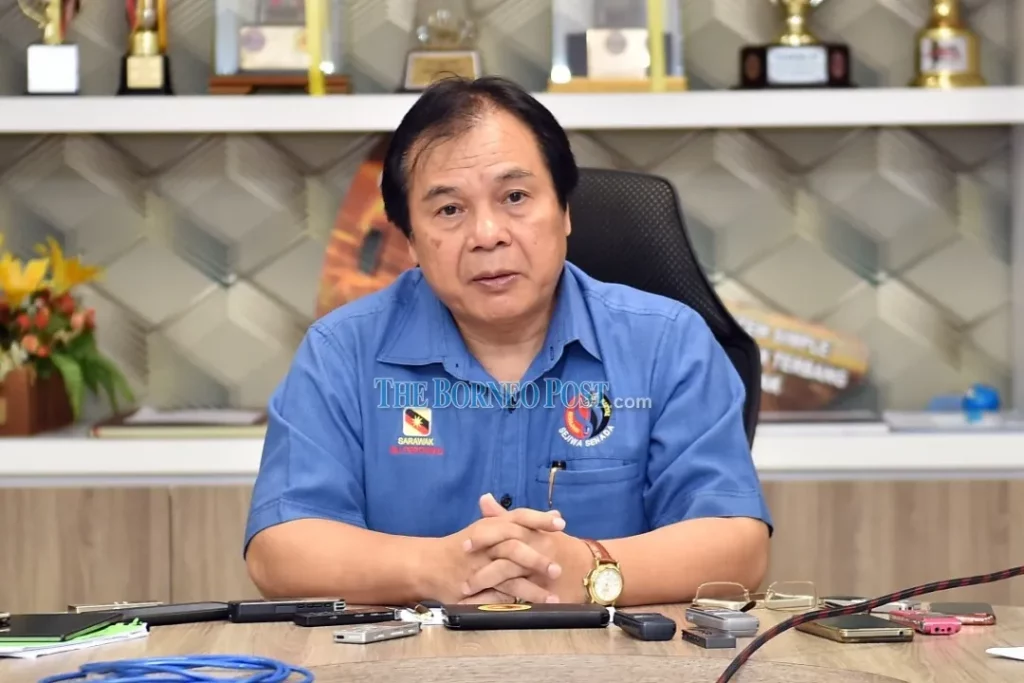
KUCHING (Nov 13): The federal Ministry of Transport is currently in the process of appointing consultants for the feasibility study of the Trans-Borneo Railway project, said Datuk Dr Jerip Susil. The state Deputy Transport Minister said these consultants will conduct the study, funded by the federal government, to evaluate and determine the potential railway models for implementation in Sarawak and Sabah. “The financial models of the Trans Borneo Railway, which are part of the feasibility study scope, will be determined once the feasibility study is completed. “The duration of this feasibility study project will take 12 months,” he said during the question-and-answer session at the State Legislative Assembly (DUN) Sitting here this morning. He was responding to a question from Baru Bian (GPS-Ba Kelalan) on the proposed Trans-Borneo Railway project. Dr Jerip said the Ministry of Transport Sarawak will be representing the Sarawak government on both the technical and steering committees, collaborating with its federal counterpart, relevant federal agencies and statutory bodies, and the Sabah government to coordinate and oversee the study. “Other committee members from the Sarawak government include representatives from the Sarawak Economic Planning Unit, Ministry of Infrastructure and Port Development, Public Works Department Sarawak, Ministry of Natural Resources and Urban Development, and the Land and Survey Department Sarawak,” he added. He said among the scopes of the feasibility study include the technical scope, which involves operational characteristics, cost, alignment, stations and depot locations, and stakeholder management; and commercial scope involving strategic vision and value proposition, demand estimation, high-level implementation model, risk and challenges, and stakeholder engagement. “There is also the socio-economic scope involving economic case for Trans Borneo Railway Project, national economic and social impact, catalytic impact of transit nodes, high-level narratives and stakeholder engagement; and project funding where the scope is to propose project funding or financing structures, phased payment approach by Government of Malaysia, financial model, and benchmarking with other rail operators,’’ he said.
Julaihi: Petros’ role as sole gas aggregator non-negotiable, all parties must comply with law

KUCHING (Nov 13): Petroleum Sarawak Berhad’s (Petros) appointment as the state’s sole gas aggregator is non-negotiable, said Minister of Utility and Telecommunication Dato Sri Julaihi Narawi. He stressed that the Distribution of Gas Ordinance 2016, amended in 2023, is a law that seeks to ensure all parties, including Petroliam Nasional Berhad (Petronas), comply with the licensing requirements set out. “The Sarawak government, through Petros, is still in technical discussions with Petronas to ensure compliance with all requirements under the Ordinance. “These discussions between Petros and Petronas do not involve any negotiations on Petros’ appointment as the sole gas aggregator. “Therefore, I would like to emphasise once again that the appointment of Petros as the sole aggregator is non-negotiable, meaning no other gas aggregator exists in Sarawak except Petros,” he stressed during the question-and-answer session at the State Legislative Assembly (DUN) today. He was responding to a question from Lidam Assan (GPS-Katibas) on whether the appointment of Petros as the sole gas aggregator for Sarawak was fully completed, which was also asked by Safiee Ahmad (GPS-Daro), Royston Valentine (GPS-Tellian), and Iskandar Turkee (GPS-Jepak). “Therefore, I will address all these questions together. The appointment of Petros as the sole gas aggregator is effective from Feb 1, 2024. “There are no other gas aggregators in Sarawak except Petros,” he said. Julaihi added that the latest developments in Petros’ role as the sole gas aggregator in Sarawak include several Gas Sales Agreements (GSAs) which have been signed with downstream gas users including Sarawak Petchem Sdn Bhd on July 22, 2024; Sarawak Energy Berhad on July 22, 2024; and Shell MDS Sdn Bhd on Aug 18, 2024. He said the Ministry of Utility and Telecommunication has issued Retail of Gas licences to 13 upstream gas players and 10 downstream gas players to date. “Failure to comply with the licensing requirement is an offence under Section 20 of the Ordinance,” he said. As the sole gas aggregator, he explained that Petros, a Sarawak government-owned company, is responsible for carrying out all activities related to the procurement, supply, distribution, and sale of natural gas in the state. He said Petros is also accountable for the planning, development, operation, and maintenance of the natural gas distribution network system in Sarawak.
Sarawak gives green light to 450 applicants under S-MM2H
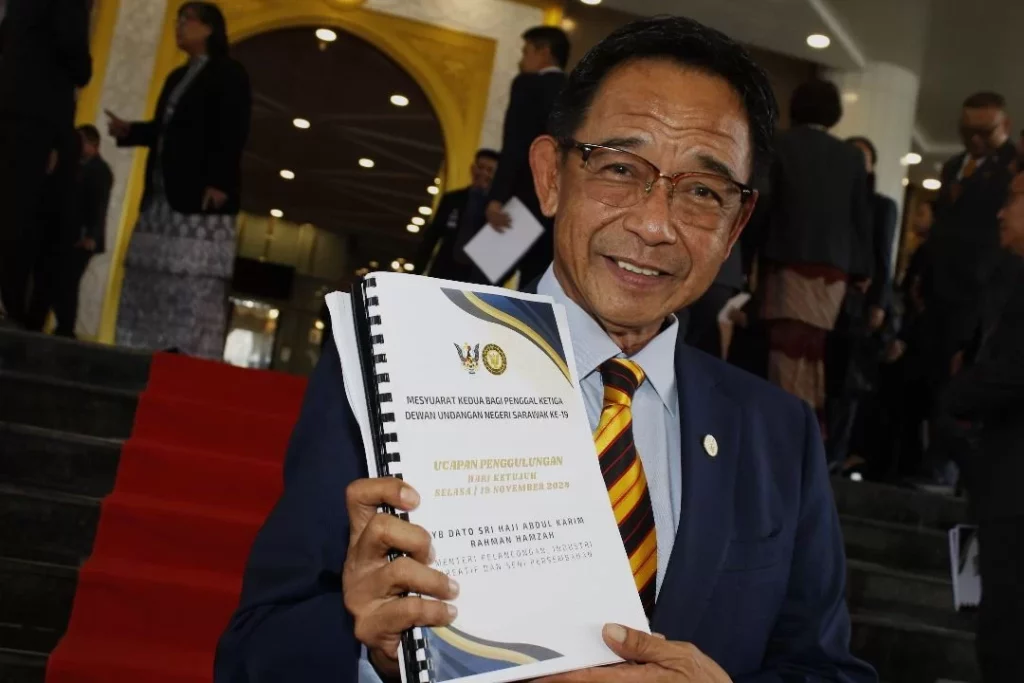
SARAWAK has approved 450 applicants for the Sarawak-Malaysia My Second Home (S-MM2H) Programme with Fixed Deposits (FD) placement of RM90 million in Sarawak local banks as of October this year. Tourism, Creative Industry and Performing Arts Minister Datuk Seri Abdul Karim Rahman Hamzah said that since his ministry took over the S-MM2H programme from Sarawak Immigration Department in 2020, a one-stop panel has been set up to approve and expedite all S-MM2H applications. “From 2007 to 2019, there was only a total of 1,240 participants approved whereas from 2020 to October 2024 under the ministry’s panel committee, there was a substantial total of 1526 participants,” he said in his ministerial winding-up speech today (Nov 19). Abdul Karim further said from 2007, the top applicants for the S-MM2H programme were from China with 408 applicants, United Kingdom (355), Taiwan (265), Hong Kong (260) and the United States of America (216). The Ministry of Arts and Culture (MoTAC) via Commissioner of Tourism has delegated authority under the Tourism Industry Act 1992 [Act 482] and its subsidiary laws to the Permanent Secretary of Ministry of Tourism, Creative Industry and Performing Arts Sarawak according to subsection 4(2) of Act 482 effective Nov 1, 2024 which applies to S-MM2H program in Sarawak through the letter of commission dated Oct 30, 2024, he added. “This represents a significant achievement for my ministry in further expanding the function of the current S-MM2H One Stop Centre to not only processing applications but also licensing of S-MM2H agents,” he said. He also said that his ministry had carried out a lab with S-MM2H panel committee members, which consisted of representatives from MOTAC Sarawak, Immigration Department of Malaysia, Sarawak; State Attorney- General’s Chambers; Sarawak State Health Department; Sarawak Immigration and Labour Management Unit; Sarawak Security and Enforcement Unit; and Royal Malaysian Police to finalise the latest requirements for S-MM2H programme application and guidelines to the licensing application for S- MM2H agents. “A roundtable discussion was also held with all the S- MM2H agents on Sept 5 at The Waterfront Hotel, and subsequently, it was approved by the Cabinet on Oct 24,” he said. He added the S-MM2H programme has been improved and adapted from MoTAC’s new MM2H requirements. Abdul Karin urged those interested to refer to the Tourism, Creative Industry and Performing Arts’ website at mtcp.sarawak.gov.my for the new requirements for S-MM2H applications and licensing of S-MM2H agents. “This enhancement will take effect from Jan 1, 2025,” he said.
Bintulu’s Power Capacity to hit 1GW By 2035 to Drive Industrial Growth
KUCHING, July 23 – Sarawak is set to develop two gas-fired power plants, with a capacity of 500 megawatts each, which will increase Bintulu’s total power generation capacity to one gigawatt by 2035. Sarawak Premier, Tan Sri Abang Johari Tun Openg, said that the initiative is aimed not only at meeting the needs of the local population, but also at fulfilling the demands of investors, particularly in the rapidly growing industrial and green technology sectors in Bintulu. “The comprehensive development plan also includes the construction of an international school in Bintulu, to attract professional workers and foreign investors to reside and settle here,” he said, during the opening of a hotel in Bintulu, here, today. Abang Johari, recalling Bintulu’s development history, said that it began with the discovery of natural gas and subsequent investments in the liquefied natural gas (LNG) industry, which spurred the construction of ports and other essential facilities, such as hotels and accommodation for industry players. He noted that this investment-driven development model has transformed Bintulu into a new growth hub, encompassing not only the Kidurong area, but also extending to Samalaju. “This rapid development necessitates the provision of comfortable facilities, including international-class hotels, to meet the needs of tourists, delegations and investors. “To further support Bintulu’s economic growth, a high-tech autonomous rail transit (ART) system, powered by hydrogen, will be implemented under the 13th Malaysia Plan, connecting three strategic locations – Bintulu, Kidurong and Samalaju,” he said. He added that Bintulu will be the second city after Kuching to have the ART system, which will enhance accessibility, facilitate movement, and promote sustainable development. “As I mentioned in Miri recently, Bintulu is now globally recognised as one of the 36 low-carbon industrial clusters in the world. This demonstrates that Bintulu has become a key global focus,” he said. Source
OTSM, Invest Sarawak ink MoA to drive semiconductor ecosystem, tech hub vision
Choi (right) and Ong exchange the signed document, witnessed by Awang Tengah (standing behind, centre). KUCHING (Aug 8): OCI Tokuyama Semiconductor Materials Sdn Bhd (OTSM) and Invest Sarawak have signed a memorandum of agreement (MoA) today to boost Sarawak’s ambition of becoming a leading regional technology hub. The partnership seeks to develop supply chains, forge strategic collaborations, and build industrial ecosystems to support OTSM’s upcoming high-purity semiconductor-grade polysilicon plant. OTSM chief executive officer Steve Choi said the collaboration would create opportunities for Sarawak businesses and talent while enabling local suppliers to participate in the global semiconductor value chain. “This will strengthen Sarawak’s position as a competitive hub in the global semiconductor industry and drive long-term economic prosperity,” he said in a statement. He added that the initiative was expected to attract significant high-value investments and spur the growth of advanced manufacturing. The MoA was signed by Choi and Invest Sarawak chief executive officer Timothy Ong, witnessed by Deputy Premier Datuk Amar Awang Tengah Ali Hasan at the World Expo in Osaka. Last month, OTSM – a 50:50 joint venture between OCI TerraSus and Japan’s Tokuyama Corporation – broke ground on its RM2 billion semiconductor-grade polysilicon plant at Samalaju Industrial Park, Bintulu. Occupying 13.7 hectares, the facility is scheduled to begin operations in 2029, with an annual production capacity of 8,000 metric tonnes, supplying major technology markets in Korea, Japan, and Taiwan. This marks OCI’s third major investment in Sarawak, following its 2017 acquisition of Tokuyama Malaysia’s solar-grade polysilicon plant, now operating as OCI TerraSus, which produces 35,000 metric tonnes annually. The second investment is a joint venture with Kumho P&B Chemicals to produce epichlorohydrin – a chemical used in epoxy and rubber production – slated to be commenced by year-end. Source
Petros multifuel station in Batu Kawa on track to start operations soon — SEDCE
KUCHING (June 22): The Petros Multifuel Station (MFS) Batu Kawa, the second flagship station equipped with hydrogen supply and 11th station in Sarawak, is on track to being operational soon. Deputy Premier Datuk Amar Dr Sim Kui Hian in a recent visit to the site was briefed on its progress and features by the Sarawak Economic Development Corporation Energy (SEDCE) team. “The physical structure of the MFS is fully completed, and the team is working closely with the regulatory authorities before the station can be operated,” said SEDCE in a statement. MFS Batu Kawa is the second flagship station after MFS Darul Hana, which is designed for conventional fuels, fast EV chargers and hydrogen dispensing. It will be getting its hydrogen supply from MFS Darul Hana, where the onsite hydrogen plant with 150kg production capacity is located, and the hydrogen supply will be transported via tube trailers where Mobile Hydrogen Refuelling System will be used for dispensing the molecules. This distribution model will be the first of its kind in the region. Earlier this year, SEDCE appointed Koperasi Bomba & Penyelamat Malaysia (KOBOPEM) as the operator for MFS Batu Kawa, which aims to support the cooperative as sustainable income stream for its members. SEDCE is responsible for developing the hydrogen value chain and downstream retail oil and gas business in Sarawak under the brand name Petros MFS. To date, there are 10 fully operating stations namely MFS Darul Hana (Jalan Tun Salahuddin), MFS Daro (Jalan Matu-Daro), MFS Kanowit (Jalan Kubu), MFS Kuala Matu (Jalan Daro–Kuala Matu), MFS Brooke Drive (Sibu), MFS Selangau (Pan Borneo-Selangau), MFS Tatau (Pan Borneo Tatau), Kapit (Jalan Bleteh), MFS Sungai Asap (Jalan Bintulu-Bakun), MFS Jepak (Kampung Jepak). SEDCE said with the completion of MFS Darul Hana and MFS Batu Kawa, four more flagship MFS are in the pipeline namely Sri Aman, Sibu, Bintulu and Miri, with construction for Bintulu (Jalan Sultan Iskandar) scheduled to begin in the second half of this year. These flagship MFS are designed to form the backbone of Sarawak’s hydrogen refuelling network along its main cities. In comparison, non-flagship or standard MFS provide conventional fuels and EV charging facilities. Meanwhile, it said three MFS are currently under construction, and more than 40 sites are being processed for construction across Sarawak. Upon completion, these stations will also provide a network of EV charging facilities on top of conventional fuel to its customers. Source